The AI Canvas: Kseniia Serebrennikova on AI’s Revolution in Design
Jump To Key Section
Standing at the crossroads of art and technology is Kseniia Serebrennikova. She is shortlisted for the Russian Lighting Design Award 2025 and earned first place in 3D Visualization and the Audience Choice Prize at ArchIdea-2025. Among the projects in her portfolio are Bar Barin, A Stalin-Era Apartment with French Motifs, and Beauty Co-Working.
Beyond project work, Kseniia created ‘Design Simply’, mentors rising designers, and contributes to Esquire, OK! Magazine, The Voice Mag, 7 Days, and My Decor. Her work features design projects throughout Europe and Russia, as well as an internship in Milan. Let’s get to know about her insights on how AI and Technology are shaping the design industry.
Use of Digital Tools in Kseniia’s Award-Winning Work

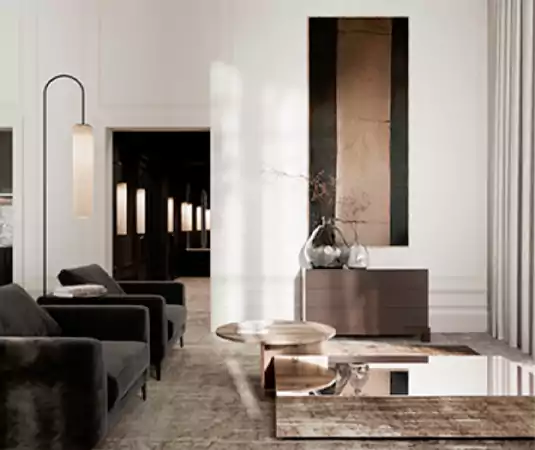
Serebrennikova believes her twin victory at ArchIdea results from an amalgam of aesthetic discipline and technological mastery. Using 3ds Max, she created incredibly precise, photorealistic models that let building crews “build from the picture,” therefore shortening deadlines and cutting errors. Along with this, she combined artificial intelligence technologies to convert static photos into dynamic walkthrough movies. The features include the client’s pet shown in the visual, so customers quickly understand spatial stories within minutes.
Democratizing Design via ‘Design Simply’
Kseniia’s platform ‘Design Simply’ starts from classic design instruction, drawing, collage, and colour theory. Though it now adds artificial intelligence tools as accelerants. She is creating a module in this next phase where artificial intelligence helps with mood board formation, visual selections, and ideation while protecting personal stylistic fingerprints. Kseniia Serebrennikova sees this as a means to rethink design education for more people rather than only a teaching tool.
Lighting as Narrative Force

Light is more than practical for Serebrennikova; it is emotional architecture. She creates lighting that defines atmosphere and well-being in her Five Minutes and Out store and home spaces. Today, algorithms and artificial intelligence reproduce sunlight transitions, shadow behavior, and material surface interaction with light. These tools let her offer setups that highlight texture, form, and even human presence, thereby rooting her work in both accuracy and meaning.
Why Serebrennikova Prioritizes Video over VR/AR

Serebrennikova prefers constructing immersive video representations based on 3D models rather than sending customers inside a virtual reality business construct. Without needing specialized headsets, these cine-style actions enable customers to grasp how color, lighting, and space interact. Technology should, in her opinion, lessen friction rather than provide novelty at the expense of clarity.
Sustainable Material Selection Through AI, along with balancing creativity with the algorithm

Kseniia says that sustainability is a strategic necessity, not an afterthought. Using real data, artificial intelligence tools help to generate meaningful recommendations by examining sourcing, energy footprints, time-varying degradation, and user input across regions. Sites also project how wood or coatings will age over five to ten years, therefore helping consumers to plan instead of hope.
Although algorithms might give perfect layouts or lighting plans, Serebrennikova asserts that every interior starts with a tale, a framework of culture, memory, and emotion. AI offers choices; she filters, adapts, and raises ideas rich in significance. Technology, she contends, adds creative potential rather than substitutes it.
Future Landscape: Designer as Curator

She predicts that designers will progressively assume a curator or editorial role for artificial intelligence outputs over the next ten years. Machines could produce hundreds of design variations, but people will notice which ideas resonate and transform them into locally anchored, emotionally driven customer efforts.
Accessible design is among her most ardent goals. She thinks that AI can reproduce how people with diverse mobility, tastes, or sensory demands engage with space, hence suggesting enhancements prior to the construction of walls. Instead of depending on averages, these systems can customize routes, furniture, and layouts for every customer.