Leadership Strategies for Fintech in an Era of AI and Regulation: Vasyl Soloshchuk
Jump To Key Section
Vasyl Soloshchuk explains what it takes for startups to not just survive but flourish in an age when the fintech sector is confronted with sudden turns from legislative changes and quick AI applications.
Soloshchuk discussed integrating resiliency into fintech businesses, a framework developed over years of cooperation with early-stage companies.
For many entrepreneurs, ‘adaptability’ has entailed working more hours or changing course on a whim. Vasyl Soloshchuk, CEO of accelerator INSART, contends, however, that actual adaptability is structural.
It’s about creating systems, in technology, operations, and culture, able to adapt as laws, markets, or technologies change.
He argues that the 2025 AI Index Report shows a sharp increase in AI adoption, with business use increasing by as much as 78% in a single year, a signal that fintech companies have to treat AI as a fundamental element, not a luxury. For resilience, he offers a basic litmus test: would the firm still hold up if a significant partner disappeared tomorrow, if a regulatory structure changed, or if artificial intelligence disturbed the main value proposition? If the answer is ‘yes,’ the startup could be really flexible.
When AI Is the Baseline, Where Does Competitive Edge Come From?
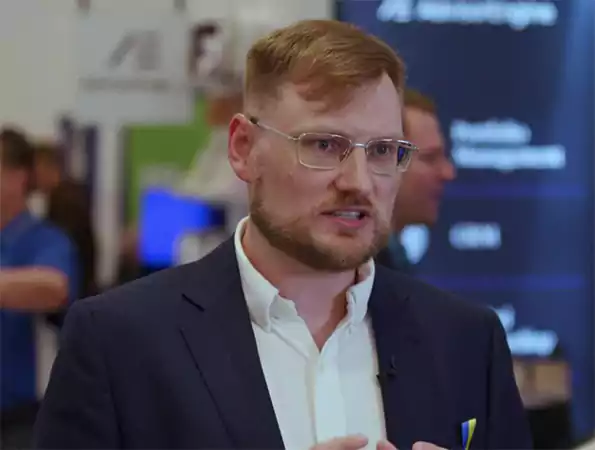
Vasyl Soloshchuk claims that as artificial intelligence rapidly becomes a norm throughout fintech, it is no longer a differentiator on its own.
The true competitive advantage arises, rather, when artificial intelligence is used for the most friction-prone, high-stakes aspects of operations, the ones with risk, security, and trust.
He cites companies like Appli (smart calculators for deposit flows), ZorroFi (fraud-scanning loan applications), Warrant and Kato (automated compliance checks and voice-based servicing) as examples: these players are integrating artificial intelligence into core procedures, not only into elegant front-end elements.
Discipline, Focus and Engineering Integrity: The Difference Between Scaling and Burning Out

Having worked with numerous founders, Soloshchuk notes a great difference between those who burn out and those who scale. The difference is not talent or vision but rather discipline and clarity.
He defines the most successful startups as those whose teams “know exactly what they are building, why it matters, and how to measure progress when the world outside is noisy.”
He emphasizes the AI narrative: rather than quickly labelling itself as an AI business, it started by addressing a daily but unpleasant problem in wealth management, poor client-advisor matching, and then layered artificial intelligence only where it showed real benefit.
Another example, MissionGranted, is active in grant management, a mostly unglamorous sector of fintech, but has prospered via thorough user comments, solid capabilities and engineering dependability.
Bridging Ambition and Delivery: Why Execution Is the Bottleneck?
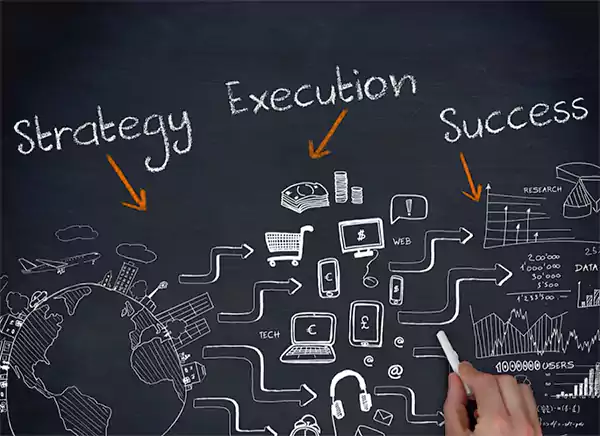
Soloshchuk observes that in fintech, startups usually get bogged down between vision and execution, not a lack of ideas or money. Many entrepreneurs underestimate how much procedure and organization are needed for really rapid execution.
Quickly moving fintech companies are not necessarily those with significant budgets; rather, they are the ones with well-defined architectures, shared documentation, and strong technical leadership.
He argues for early coordination of product, business, and engineering teams. Startups save unnecessary labor and create regular, repeatable delivery cycles when engineers understand why a feature matters and business executives appreciate the true cost of change.
Also Read: Decoding the Future of Fintech PR: A Conversation with Steven George-Hilley
How Does Soloshchuk Lead Teams When Policy and Technology Are in Flux?
Soloshchuk maintains that, particularly in turbulent times, leadership is not about strong control. Rather, he stresses openness, rhythm, and trust. At INSART, teams have quarterly OKRs, biweekly sprint reviews, and frequent one-on-one meetings to rapidly fix problems.
Strategic choices are split out so that teams stay concentrated on execution. Even when outside circumstances vary widely, he thinks this rhythm supports production without micromanagement.