How to Scale a Restaurant Business: Insights from Executive Chef Andrei Malkhanov
Jump To Key Section
- How Technology Has Changed the Kitchen
- Advising the Next Generation of Food-Tech Innovators
- Mandatory Innovations in Commercial Kitchens
- Digital Tools in Scaling U.S. Operations
- Combining Long-Technique Cuisine with Technological Elements
- The Role of Emerging Technology in Culinary Education
- AI and Cuisine Discovery
Executive Chef Andrei Malkhanov demonstrates his culinary expertise through work with upscale dining establishments, high-volume restaurant concepts, and food technology consulting services. His two-decade experience in professional kitchens enables him to connect two distinct culinary domains, which include high-end dining establishments and large-scale restaurant operations.
How Technology Has Changed the Kitchen
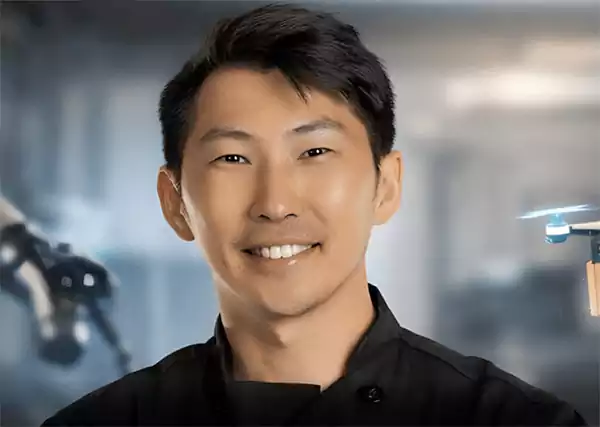
Malkhanov reflects on how kitchen technology has evolved from a background support function to a foundation for reproducible, high-quality results. He figured out that the modern advanced equipment, like intelligence sous-vide systems and automated temperature control systems, now offer reliable outcomes that earlier needed human expertise. He demonstrates that both software-based kitchen preparation systems and programmable kitchen processes enable cooks to produce identical quality results when they work together.
He also points to AI-assisted flavor modeling as a transformative development. Andrei Malkhanov states that these systems examine pairing recommendations while maintaining the correct taste balance between essential components and gathering immediate customer input, which results in shorter kitchen testing periods. According to him, chefs use technology to improve their decision-making process because it does not eliminate their natural cooking abilities.
Advising the Next Generation of Food-Tech Innovators

Malkhanov provides consulting services to food-tech startups that extend beyond his responsibilities at restaurants. He provided consulting services to Kitchen No More by developing methods to maintain frozen food items through texture and flavor preservation, which involved packaging development, ingredient sourcing, and operational growth development. His counsel covers not only technology choices but also pricing strategies, unit economics, and food-safety requirements, which he considers essential for successful concept expansion.
Mandatory Innovations in Commercial Kitchens

Malkhanov predicts future kitchen technologies that he expects to become standard equipment in professional kitchens after a five-year period. The new systems include automated fryers that operate their heating systems and oil filtering processes without human assistance, and Internet of Things-enabled refrigerators that can detect potential hazards before they occur, and systems that can forecast inventory needs through automatic calculations. He anticipates that artificial intelligence-based menu optimization will determine food choices through analysis of financial performance and customer demand.
Digital Tools in Scaling U.S. Operations
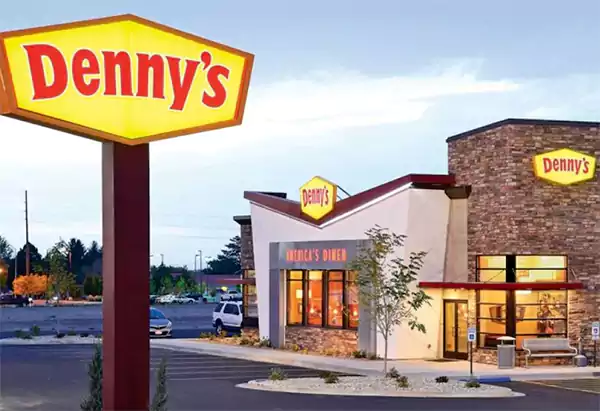
Malkhanov faced real market changes when he converted a Denny’s restaurant into Ayan, which serves Mongolian fusion cuisine in the United States. The business used digital tools such as advanced POS systems and analytics to create accurate demand predictions, which helped them optimize their product range.
The chef demonstrated that the restaurant moved from its previous cooking method to a new predictive system through the process of matching menu choices with actual sales data, which became essential for success in an environment where delivery revenue equals restaurant sales.
Combining Long-Technique Cuisine with Technological Elements
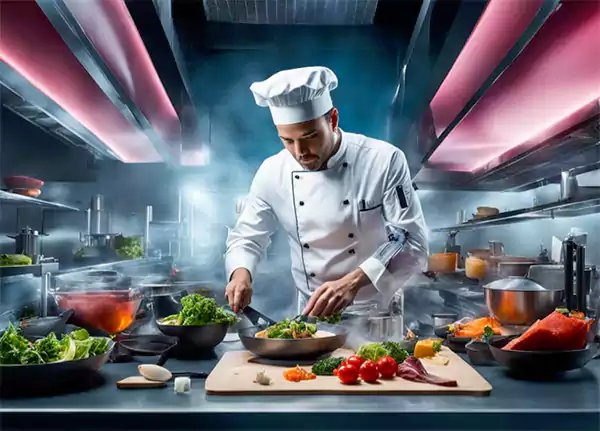
Malkhanov supports technology development, yet he insists that equipment should enhance existing techniques instead of dominating them. Dishes that need long cooking times require specialized equipment, which includes 12-hour lamb and precision-smoked meats.
The culinary industry utilizes sensors together with calibrated devices to produce consistent outcomes that maintain traditional cooking methods at industrial scales. He thinks that technology maintains flavor authenticity, which lets chefs concentrate on their artistic work instead of handling equipment operations.
The Role of Emerging Technology in Culinary Education

Malkhanov sees culinary education and guest experience enhancement through technologies like virtual reality, which extend their impact beyond the kitchen. In his ongoing projects, virtual reality serves as a tool to create an immersive experience that showcases ingredients and process details that show dish characteristics and production methods through sensory elements.
AI and Cuisine Discovery

He believes AI recommendation systems are now strategic tools that validate demand. These platforms assess how specific cuisines might perform in a locale, not as novel experiments but as market-tested offerings. Malkhanov uses AI data to evaluate customer acceptance, which helps him develop products that maintain yak meat and local dishes as authentic dining experiences for regional customers.