AI Agents vs Traditional Automation: Key Differences
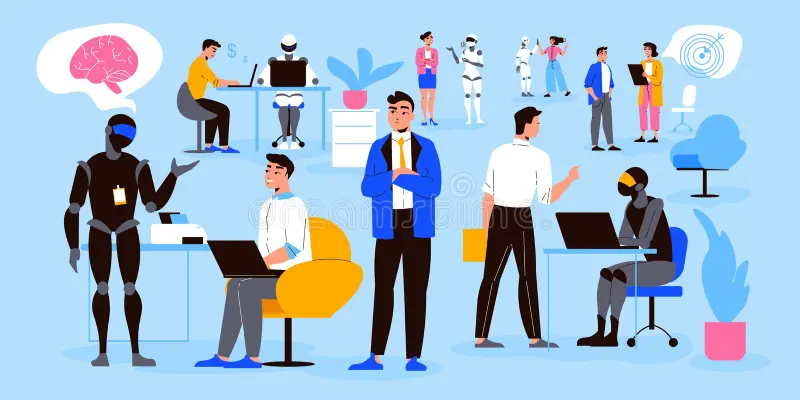
AI agent is widely revolutionizing the way businesses are run these days by providing intelligent guidance, automation and real-time decision-making strengths. They are built in such a way to take seconds to analyze, understand and make decisions.
On the other hand, traditional automation is already in practice in the organizations and helping them to boost their growth. Now, a question arises of which one to rely on and which one is better.
Read this article that shares differences between the AI agents and traditional automation—their usages in the industry and the right one to rely on.
Key takeaways
- The working of traditional automation basically revolves around the conversation with customers using constant messaging.
- A wide range of businesses that were dependent on traditional automation have switched to AI agents for faster growth.
- The right automation technology for any business is the one that suits their specific needs and future goals.
What Is Traditional Automation?
First things first, let’s talk about the traditional automation: a traditional way to interact with customers with constant and fluent messages. This is the best option for a small business that is starting to create its service. Let’s see why.
Rule-based workflows and predefined logic
Traditional automation works by being rule-based, meaning it uses pre-structured messages and sends them according to the customer’s message and its own predefined logic. This means it’s not a single program managing its own messages; there’s a whole system and logic behind it that allows companies to create unparalleled service.
Strengths of traditional customer automation
The main advantage of traditional automation is that, regardless of whether it always provides the customer with an accurate answer, it can always initiate a new process and provide routine guidance on what the consumer needs to manage their sale. It minimizes the management of repetitive tasks, saves unproductive time, and provides full-time availability in any digital business.
Limitations in flexibility and context handling
As its name suggests, this is a traditional tool; that is, a basic tool that focuses only on automation. Therefore, customers will only receive tailored responses based on their previous input. It doesn’t handle individual conversations, so it lacks flexibility and context handling. This means it always follows a predetermined script, and outside that script, it requires additional assistance.
What Are AI Agents?
As we all know, every intelligent tool has an evolution, and with customer automation, this was not the exception. Because some businesses are not happy with traditional automation, others create an optimized tool called AI agents. Let’s talk about what they are.
Core capabilities of AI agents
To give you a concrete idea, AI agents are similar to human agents; they are available to offer flexible and fluid responses in real time. The difference is that they don’t have downtime. This helps them to provide real time guidance from the selected device and in the various languages.
Decision-making and goal-oriented behavior
AI agents work through objectives. This means that they not only focus on sending accurate responses, but also on helping companies achieve their established sales and management goals. Therefore, through their own operation, they can create fluid conversations focused on improving business productivity.
How AI agents operate within customer automation systems
AI agents operate through intelligent programs that reduce management time by 60%. Like a traditional agent, it creates automated actions and reduces response times so that work teams can concentrate on other, more beneficial actions; the difference is that it requires less human assistance, so they can operate individually to improve objectives.
Customer Automation Across Communication Channels
Either tool, traditional automation, can be seamlessly integrated into various communication channels. The difference lies in how they manage this integration to drive effective support.
Email and ticketing systems
To create a reliable service, you need traditional channels. Email allows you to create relevant and professional messages that can be automated. Instead, you can create a ticketing system to communicate better with customers and form long-term professional relationships.
Web chat and in-app messaging
Web chat is essential for making a good first impression. The best way to foster a smooth relationship is through an AI agent ready to engage in a coherent conversation. This encourages engagement and creates an effective and dynamic relationship at all times. Same with in-app messaging, a great platform to create optimal conversations.
Messaging platforms and conversational channels
Traditional automation provides basic and consistent performance to maintain customer engagement. AI agents, on the other hand, create fully personalized support based on artificial intelligence. An example of an effective channel where you can test both is WhatsApp AI, a messaging platform that achieves:
- agent-based customer automation
- more contextual, conversational, and scalable interactions
- rules-based or AI-powered workflows.
The Ultimate Guide to Using WhatsApp Integration – YouTube
Conclusion: Choosing Between AI Agents and Traditional Automation
Even after exploring the detailed explanation of both traditional automation and AI agents, it might be confusing to decide which one is better for your business. Our personal advice for every business is to ask four questions: How big is my business? How many clients are talking every day? What are the tools that my business needs? Do I prefer personalization over speed?
According to the answer, one can make a right decision. For example, if you have a small company where you are not speaking to more than twenty clients every day and you prefer a basic answer, traditional automation is good for you. But in the case of bigger industries, one might need a tool that can interact for themselves with personalized solutions and that can be met with AI agents only.
The important thing is that you can find the best option to optimize your customer service and start to achieve the success that you always wanted.
Ans: As of now, most of the businesses and new startups are sticking with AI agents as they are more intelligent and advanced.
Ans: One of the most common issues why traditional automation is being replaced is its inability to learn and adapt.
Ans: Because AI agents are much more advanced than traditional automation as they are built for advanced operations too; they can analyze, learn and adapt to it.