Best Conflict Resolution Courses Online in 2026 (Top Training Picks)
Are you looking for conflict resolution courses online? Well, your hunt ends here.
According to Pollack Peacebuilding Systems, Employees in United States companies spend approximately 2.1 hours each week involved in conflict. This amounts to around $359 billion in hours paid that are filled with – and focused on – conflict instead of on positive productivity.
As stated above, this makes conflict resolution courses an integral part to ensure more productivity and utilisation of resources. This article, therefore, covers the conflict resolution courses in 2026 and the top training picks and more!
Top Online Conflict Resolution Courses in 2026
In order to ensure conflict resolution in workplaces, employees and staff are provided with conflict resolution courses. Some of these courses are listed as follows:
1. Conflict Resolution Courses– Great Learning (Free Course)
Delivery: Online self-paced (Free)
Duration: ~1.5 hours
Great Learning’s Conflict Management course introduces conflict types, resolution strategies, and communication tools such as active listening and empathy to manage disputes effectively across professional settings.
Key Highlights of this course:
- Free conflict resolution training with a certificate
- Learn about conflict identification and strategies
- Master active listening and empathy skills
- Practical workplace conflict examples
This makes it a favourable course for those with a time constraint and a limited budget.
2. Conflict Resolution Skills – Coursera
Delivery: Online (self-paced)
Duration: 4 hours
This course focuses on communication techniques, negotiation fundamentals, and mediation tools to resolve conflicts constructively within teams and organisations and enhance productivity.
Key Highlights:
- Communication strategies in conflict settings
- Learn negotiation basics and mediation tools
- Practical conflict handling methods
- Certificate available upon completion
3. Mediation and Conflict Resolution – Coursera
Delivery: Online (self-paced)
Duration: 2 weeks
This program teaches mediation essentials, active listening, and structured conflict settlement practices through case-based scenarios and examples.
It specialises in delivering the teachings of conflict resolution with a creative aspect.
Key Highlights:
- Mediation fundamentals and practice methods
- Active listening for conflict settings
- Case study applications
- Certificate available
4. Conflict Management Specialisation – Coursera
Delivery: Online certificate programme
Duration: ~4 weeks
This specialisation covers negotiation techniques, collaborative problem solving, and conflict resolution frameworks for diverse professional environments.
Key Highlights:
- Multi-course conflict management pathway
- In-depth negotiation and mediation training
- Collaborative resolution techniques
- Certificate upon completion
Fun Fact : Conflict is inevitable. In the United States in 2008, employees spent 2.8 hours per week dealing with conflict.
5. Conflict Management Strategies – Coursera
Delivery: Online self-paced
Duration: ~2 hours
This short course teaches early conflict detection, dispute resolution techniques, and methods to turn conflicts into collaborative opportunities.
Key Highlights:
- Learn to spot early conflict signs
- Practical dispute resolution methods
- Collaboration-focused strategies
- Flexible self-paced schedule
6. Conflict Management with Emotional Intelligence – Udemy
Delivery: Online self-paced
Duration: ~8–12 hours
This course blends emotional intelligence principles with conflict handling skills, including self-awareness, empathy, and communication techniques.
Key Highlights:
- Emotional intelligence in conflict resolution
- Behavioural insights for effective communication
- Practical interactive exercises
- Certificate of completion
7. Become a Master at Resolving Conflict – Udemy
Delivery: Online self-paced
Duration: Variable
This course teaches conflict identification, difficult conversation techniques, and structured problem-solving for personal and professional disagreements.
Key Highlights:
- Learn frameworks for conflict resolution
- Techniques for difficult conversations
- Real-world examples and tools
- Certificate available
8. Conflict Management and Resolution – Alison
Delivery: Online self-paced (Free)
Duration: Variable
Alison’s free course covers conflict resolution best practices, peacebuilding techniques, and strategies to build harmonious interactions in organisations and communities.
Key Highlights:
- Free foundational conflict resolution training
- Peacebuilding and mediation concepts
- Workplace harmony strategies
- CPD-accredited certificate option
9. Conflict Resolution & Negotiations – Coursera
Delivery: Online self-paced
Duration: ~2 weeks
This course combines structured negotiation frameworks with conflict resolution methods to create collaborative solutions that respect all parties’ perspectives.
Key Highlights:
- Negotiation techniques for conflict resolution
- Structured mediation methods
- Collaborative solution creation
- Shareable certificate available
10. Conflict Resolution 101 – Peaceful Leaders Academy
Delivery: Online self-paced
Duration: ~45 minutes
This beginner course introduces conflict resolution fundamentals, including a peacebuilding mindset, assertive messages, and psychological basics of conflict behaviour.
Key Highlights:
- Introductory conflict resolution training
- Peacebuilder mindset and communication
- Assertion messaging techniques
- Certificate available
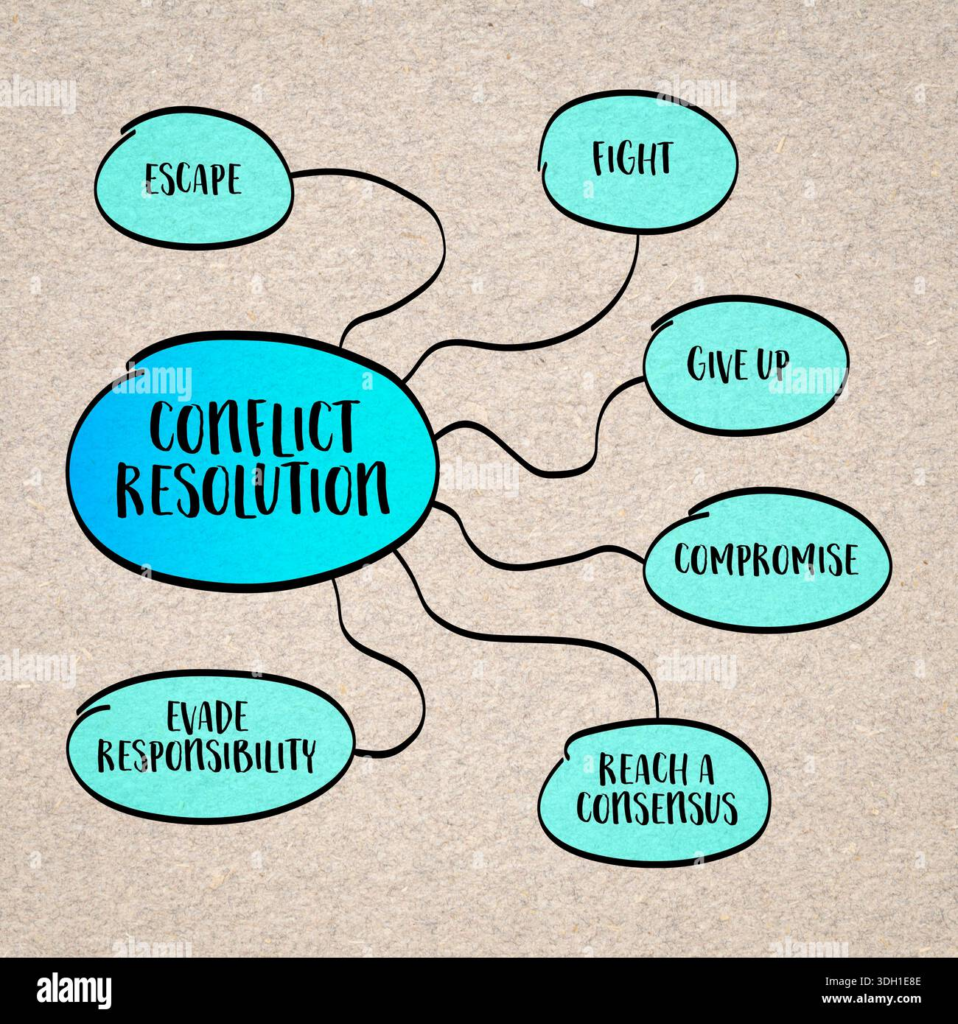
The infographics further highlight the core strategies for conflict resolution :
Conclusion
Conflict resolution skills enhance teamwork, leadership, and communication across personal and professional environments.
Great Learning also provides you with online free courses with certificate, including Conflict Management, helping learners start building practical conflict resolution skills without cost before progressing to deeper programmes.
Ans: The goal of conflict resolution is not to decide which person is right or wrong; the goal is to reach a solution that everyone can live with. Looking first for needs, rather than solutions, is a powerful tool for generating win/win options.
Ans: The number-one reason conflicts do not resolve is that people have trouble settling their emotions before the conversation.
Ans: Some important skills for conflict resolution in the workplace include active listening, assertiveness, composure, empathy and problem-solving.
Ans: The three types of conflict resolution are: third-party intervention, unilateral decision-making, and joint decision-making.