Finding Educational Paths That Match Individual Strengths Through NCAE
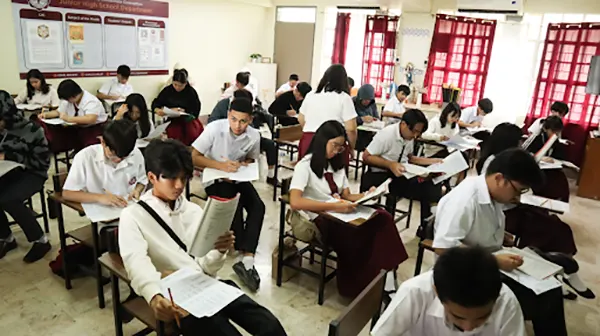
High school is akin to being at a massive crossroads without a map. With the possible exception of you, everyone around you appears to know where they’re going.
While some are still attempting to determine whether they even enjoy math, others are already dreaming of careers in engineering, medicine, or law.
That’s where the NCAE comes in. Using tools like an ncae reviewer, students in the Philippines can start seeing themselves more clearly—not as test-takers, but as real people with real strengths and interests.
In this blog post, we are going to cover more layers of this segment and provide valuable insights to the readers.
Let’s begin!
Key Takeaways
- Understanding why strengths matter more than grades
- Looking at how NCAE is non-judgmental
- Uncovering some practical ways
- Exploring some real-life stories
Why Strengths Matter More Than Grades
Everyone talks about grades like they’re the only thing that counts, but honestly? Grades have no meaning. What people are naturally good at is what counts. A teenage sibling is the only one who can balance a homework assignment and prevent a younger brother from losing his mind over missing socks. Some students excel at solving problems, while others excel at communicating with others and managing chaos. That’s real-life skills in action.
Interesting Facts
A multiple-choice paper-and-pencil test that measures abilities in Scientific Ability, Reading Comprehension, Verbal Ability, Mathematical Ability, and Logical Reasoning Ability, as well as an occupational interest inventory.
The NCAE: A Mirror, Not a Judge
Here’s the thing: the NCAE doesn’t say, “You are X, you must do Y.” It’s more like a mirror, gently showing students patterns in their abilities and interests. And sometimes, seeing those patterns is enough to make someone think, “Wait, maybe I can do this thing I always dismissed.”
The NCAE can point out strengths like:
- Academic abilities (math, science, language, humanities)
- Thinking styles (creative, analytical, practical)
- Interpersonal skills (communication, teamwork, leadership)
- Work and interest preferences
It’s not about being perfect—it’s about awareness.
Picking a Senior High Strand Without Panic
Senior high offers strands in sports, arts and design, technical-vocational-livelihood, and academics. Choosing one can feel like choosing a college major at the age of fifteen for many students. Furthermore, panic strikes quickly. For this reason, using the NCAE as a guide can be very beneficial.
Practical Ways to Use an NCAE Reviewer
Lots of students download the reviewer but don’t really use it. Here’s a more “human” way to approach it:
- Look for patterns, not single scores. Don’t obsess over a number; notice clusters. “Oh, I keep scoring high on communication-related stuff.”
- Think of real-life examples. That leadership score? Maybe it comes from organizing your friends for a school event.
- Notice gaps. Weak areas aren’t failures—they’re just areas you can practice.
- Talk it out. Teachers, mentors, even older siblings can help interpret the results.
- Try things aligned with your strengths. Electives, workshops, clubs—it doesn’t have to be permanent, just explore.
Lea, the doodler, found her design workshop through exactly this process. She didn’t magically become artistic overnight; she just realized her creative thinking had value—and could be applied.
Stories That Make It Real
Now, in this segment, we are going to take a look at some real-life stories that have set a paramount for NCAE format in the education industry
Maria’s Path
Maria wanted STEM because her friends were doing it. NCAE results? Strong interpersonal and communication skills. She took HUMSS instead, joined debate and social research projects, and thrived. She realized enjoyment mattered more than peer pressure.
Luis’s Discovery
Luis loved gadgets but thought he wasn’t academically inclined. The reviewer highlighted strong logical reasoning. He tried tech-vocational courses and discovered he loved problem-solving in real-world settings. Confidence boost: immediate.
These stories show that awareness can completely change outcomes, even if a student doesn’t “ace” every subject.
Common Misconceptions About the NCAE
- It’s not pass or fail.
- It doesn’t dictate the future.
- It doesn’t label anyone forever.
- It helps reflect, explore, and plan.
Counselors often say, “Think of the NCAE as a friendly nudge, not a boss telling you what to do.” Students tend to relax when they hear that.
Making It Fun and Engaging
Exploration doesn’t have to be serious. Students can:
- Try short workshops or electives that catch their eye.
- Shadow older students in different strands.
- Discuss results casually with friends (“Hey, apparently I’m good at problem-solving, who knew?”).
- Pair hobbies with school skills (like photography + arts strand).
Conclusion: The NCAE as a Friendly Guide
Navigating high school and senior high choices can feel messy. Family, peers, and expectations pile on. But tools like the NCAE, with a good ncae reviewer, can clarify things without pressure. Finding innate skills, pursuing interests, and making decisions that feel right are more important than getting flawless grades.