Building Tomorrow’s Networks: Aditi Ranjit Kumar Verma on the Architecture of Telecom Innovation
Very few people are as gently powerful in the world of telecommunication infrastructure as Aditi Ranjit Kumar Verma. Currently a Senior Engineer in Systems Design at T‑Mobile, she has shepherded technologies and platforms that benefit more than 130 million people daily. Possessing technical depth, visionary breadth, and a great sense of mission, she has a U.S. patent under her name, senior IEEE membership, and a passion for public-safety connections.
Early Career & What Drives Aditi Ranjit
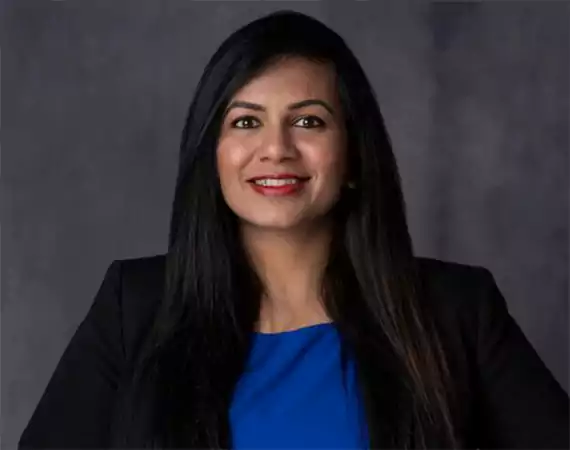
Describing herself as an engineer who spent more than ten years constructing telecommunications networks millions depend on, Aditi Ranjit Kumar Verma, from voicemail systems to satellite-based emergency messaging, her function at T-Mobile is to design vital systems. For her, the driving force is always the actual effects: the reliability of someone’s voice message or enabling a 911 message from a faraway area.
Building a national-scale voicemail platform
Her crowning accomplishment is creating T-centralized Mobile’s voicemail database, which serves over 130 million people. From her perspective, the main architectural change was moving from a monolithic approach to a distributed, horizontally scalable one. Geographically distributed data centres have partitions of voicemail data that allow the system to scale by adding nodes and offer great redundancy in the event of failure.
The tiering approach of the system divides performance: current voicemails and metadata reside on high-speed in-memory caches and SSDs, whereas older communications are delegated to cost-effective health monitoring archival storage. The result is quick retrieval even when the entire saved message volume is very high. Microservices arrange the system into functional modules that interface through APIs, therefore enabling independent scaling of every service.
Availability and security were given equal consideration. Access is validated and reviewed; all data is encrypted in transit and at rest. Monitoring covers the system; anomalies in call completion or voicemail retrieval latency set off alarms, allowing the operations team to react promptly. The system has been able to consistently serve a large user base thanks to the combined design of modular services, smart data tiering, distributed architecture, and strong monitoring.
Managing engineering, scale, cost, and uptime
Designing systems at the scope of 130 + million users (as T-Mobile has) demands equal regard to cost, scalability, and service-uptime as technical elegance. Aditi says that great architecture must also have business sense. Actual methods include utilizing elastic scaling (particularly in the cloud) to reduce resources during off-peak hours; only when mature and reasonably priced should technology be adopted. It also consists of maintaining high availability, targeting ‘five nines’ or 99.999% uptime, even if the initial cost is higher, since outages harm clients and brand reputation more.
She also stresses automation for processes: automated deployments, self-healing services, auto-restarts of failed components, rigorous monitoring and alerting. Cross-functional alignment, however, is equally important: early in projects, she involves finance, product, and business operations teams to set KPIs, cost per user, uptime metrics, and SLA impact. Thus, the objectives of the design are commercial as well as technical.
Moving basic services to the cloud

Aditi guided migrations of several telecom services, SMS, RCS (Rich Communication Services), and T-Mobile’s message store (mStore), into the cloud beyond voicemail. Her approach was slow and phased: instead of a quick cut-over, the migrations were gradual, using parallel systems (active-active), little roll-outs, and continuous testing.
Identify the services that would profit most from cloud scale, for instance, high-volume SMS, file-rich RCS, and big storage for mStore, then re-architect them. employing cloud-native technologies (microservices, containers) and deploying to auto-scaling systems. The legacies and cloud versions ran simultaneously for some time for continuity; data duplication guaranteed no information loss across platforms. The hybrid-cloud approach assisted with the change. T-Mobile, for instance, used Google RCS Jibe platform for carrier interoperability in the RCS migration.