How to Kill ‘Shadow Systems’: Angelina Samoilova’s Guide to Frictionless AI Workflows
In this interview, we will be interacting with seasoned digital transformation expert Angelina Samoilova. She provides her thoughts on including artificial intelligence in everyday business practices.
Building Bridges Between Cultures and Continents

Angelina Samoilova’s trip is as varied as her professional skills. Having resided in nine nations across five continents, she brings a global point of view. Focusing on digital workplace strategy and AI adoption, Samoilova works with technology start-ups and scale-ups all throughout the EMEA area from her Dublin base. Her previous stint at Remote, a quickly expanding firm, helped to scale operations from zero to 2,000 people. She was the first sales representative for the First year. She helped to close more than $1 million in annual recurring income in the APAC region, thereby establishing a strong go-to-market team.
From AI Experiments to Usual Workflows

According to her, resolving real-world corporate problems and designing effective corporate training programs is the secret to successful artificial intelligence integration. “The experiments that stick start with someone saying, I’m spending,” Samoilova says, “Five hours a week seeking data across several systems or we’re manually handling RFPs, and it’s killing us.” Adoption is a natural progression when there are particular sources of pain.
Still, she advises against projects devoid of a clear business case, the ones that fizzle usually start with ‘We should do AI’ without a specified goal. Moreover, trying to apply artificial intelligence throughout every aspect of a firm at once can lead to intolerable complexity. Rather, she recommends first targeting high-impact, low-complexity areas, guaranteeing manageable and measurable results.
Incorporating artificial intelligence (AI) into current processes
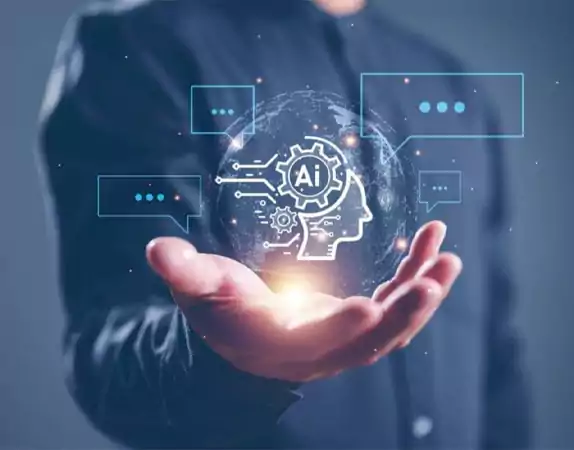
Making sure new technologies fit smoothly into current processes is a major turning point in artificial intelligence adoption. Samoilova stresses how crucial it is to make artificial intelligence systems invisible to users. “AI needs to meet people where they already are, in their communication tools, documentation systems, and daily processes,” she claims. AI will become a rather than an extra tool to control, it complements productivity without interfering with settled schedules and is an integral component of the current infrastructure.
The Human Component in Artificial Intelligence Adoption

Samoilova stresses the need for creativity and human elements in successful AI adoption, even if technology is very important. She advises businesses to emphasize change management, making sure teams have enough training and support throughout the change. She adds that it is not only about implementing a tool, but it is also about cultivating a culture which has innovation and change in its core.
Samoilova stresses the need for ongoing examination of artificial intelligence projects. Organizations can improve processes, scale successful trials, and terminate inefficient applications by tracking measurable results and collecting user input. Iterating on actual performance guarantees, she says, rather than remaining a theoretical experiment, artificial intelligence provides real value.
Looking Ahead: The Future of Artificial Intelligence in the Workforce

Samoilova is upbeat about the ability of artificial intelligence to revolutionize corporate practices, given its changing character. She anticipates a future in which artificial intelligence improves decision-making and strategic planning in addition to automating activities. She forecasts, AI will develop into a reliable companion in the workplace, offering insights and advice that propel company expansion.
Her experiences and insights provide companies trying to properly leverage the power of artificial intelligence with important lessons. By focusing on the human element and integrating artificial intelligence into current processes, businesses may release the full potential of artificial intelligence, hence creating more inventive and efficient operations. For companies trying to negotiate the complexity of digital transformation and guarantee that artificial intelligence turns into a more intelligent helper, Angelina Samoilova’s method of AI integration acts as a blueprint.