Gemini Enhances Google Maps for a Smart Navigation, Hands-Free Drive
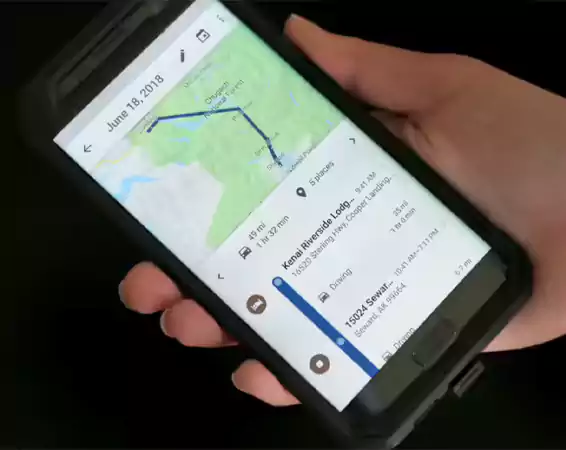
By including Google’s sophisticated generative-AI model Gemini into Google Maps, Google has signaled a new age of map-based assistance and made a conversational, hands-free driving experience possible. Initially introduced in early November 2025 in certain areas on Android and iOS, the update will thereafter include Android Auto support.
Central to the upgrade is the ability for users to issue natural-language commands while in transit, such as “Find a vegan-friendly restaurant along my route” or “What’s the parking like there?”, and receive a follow-through answer while staying focused on the drive. The system can also examine available EV chargers on the fly or add events to a user’s calendar.
ALSO READ: Commute Peacefully With The Best Map And Navigation Apps In 2025
Another interesting aspect is landmark-based route planning. Rather than depending just on rudimentary distance indications such as “turn right in 500 feet,” Google Maps Features with advanced AI technology will use visible actual-world landmarks, restaurants, service stations, and major structures as reference points. Cross-referencing Street View photographs with almost 250 million mapped locations enables this.
The system will not only provide the user with traffic alerts but also constantly update the user with traffic alerts that even he/she will not be able to receive if he/she is not currently negotiating. In the case of an individual using Google Lens to navigate on foot, one can direct his/her camera to a place like a shop, a monument, or a bistro and ask questions such as “What is the most liked here?” or “What is the reason for the fame of this place?”
This is a mere attempt to blend conversational exploration of the surroundings with the use of maps. Google has made a statement that the release will be first in the US, and afterwards it will be slowly made available in other markets. It has also pointed out that the new features are based on verified location data and images, which significantly reduce the risk of AI hallucinations.