Programmable Money Will Be the New Banking Standard: Gleb Kurovskiya
Gleb Kurovskiy’s emergence in the world of financial technology is the narrative that is bridging innovative digital assets as well as conventional monetary systems. Gelb is currently the Chief Digital Officer of Luminary, which is a company developing hybrid solutions by combining traditional banking infrastructure with blockchain-based settlement.
His journey into this niche began with central banking, where he dealt with financial policies and gained firsthand knowledge of how money is produced and distributed on a macro scale. This initial experience was the primary factor in shaping his perception of the global economic system.
Subsequently, Kurovskiy opted for a theoretical approach and received a doctorate focusing on stablecoins and tokenization. At that time, he had his first encounter with blockchain technology and recognized its potential to transform the international transfer of money. His initial trials were not without challenges, including high costs of early blockchain transactions, but the idea of faster and more efficient transfers had a strong impact and eventually led to Luminary’s mission.
Building a Cross-Border Finance Platform for Businesses

The base of Luminary’s strategy is a platform that is designed specially for corporate customers who are looking for simplified and worldwide solutions. Today, many companies are caught in a fragmented financial ecosystem; moving money from one country to another usually means opening multiple bank accounts, using crypto investment, and keeping digital wallets, says Gleb Kurovskiy. Each system operates under its own set of rules and technology, which, in turn, leads to operational friction that might not only slow down settlement but also affect liquidity management.
Luminary seeks to integrate processes of legacy banking systems like SEPA and SWIFT with blockchain-driven settlement methods that are powered by stablecoins. The result is one interface, where businesses can quickly conduct cross-border transitions while getting access to similar tracks of fiat money.
Addressing Real Needs of Digital Asset-Driven Businesses

Kurovskiy stresses that the normal Luminary user is a company already engaged with digital assets, yet still relying on traditional financial systems. Though they still have to deal with banks that could be slow to adopt or grasp digital asset processes, companies are increasingly using cryptocurrencies and tokens in their activities.
For such firms, onboarding with several financial partners, some of whom lack knowledge of bitcoin, becomes expensive and operationally risky. Dealing with the regulatory, risk, and operational elements of both traditional and digital financial instruments, Luminary’s approach is to embrace that intricacy. The aim is simple, which is to offer a complete experience consisting of specialized client support, quick payments, automated exchanges, and financial goods created for hybrid financing.
How Luminary Differs from Traditional Banks

Technology-agnostic approach gives Luminary its competitive advantage. Unlike traditional banks, which could be hampered by many years of old legacy systems, Luminary was created to be flexible from the very outset. The business, from its start, did not give one financial theory more weight than another. Rather, it chose the most efficient means currently accessible to meet the needs of its clients.
This indicates that conventional banking products, as well as Bitcoin features, exist together on the same infrastructure. By dealing with cryptocurrencies and fiat in one single arena, Luminary diminishes overhead, along with simplifying operations for clients and offering a more unified service. In addition to this, this combined infrastructure clears the way for instant enhancements such as improved automation and interconnected liquidity management.
Vision For the Future
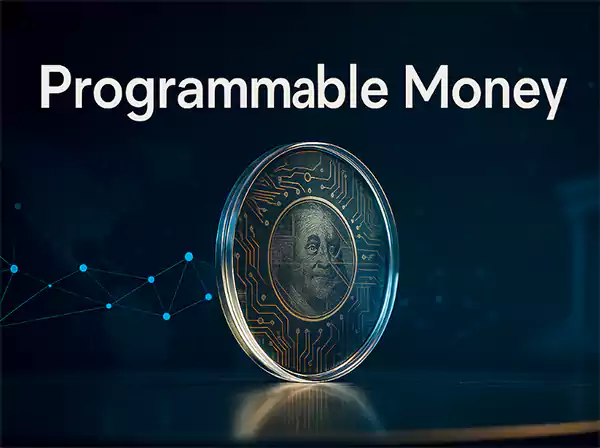
Kurovskiy looks forward to a significant change in the financial industry in the next five years. He also believed that there would be a further extinction of the artificial wall that would separate crypto-oriented technologies and traditional banking systems.