From Rivals to Partners: How Google Gemini is Powering Apple’s Next-Gen Siri Overhaul
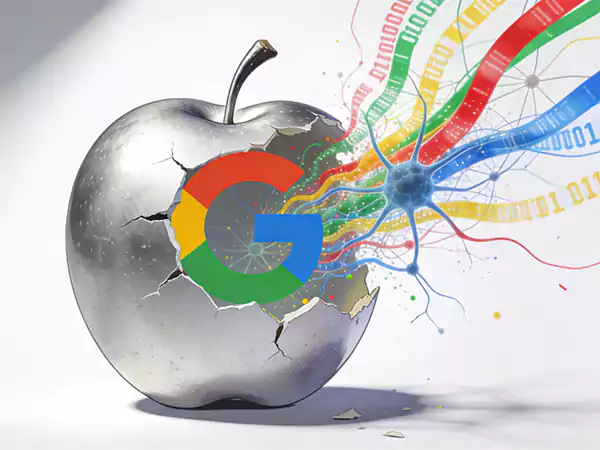
In another major move for the consumer technology market, Apple and Google gradually came closer together, and finally, on Monday, January 12, 2026, they incorporated their partnership for several years into a signed document. The deal conferred the primary status for Google’s Gemini 3, the next-generation of AI-based language models, to be the main driving force behind Apple’s new AI features, which is seen as a total reconstruction of Siri virtual assistant.
In the deal, it is specified that Apple will start the implementation of Gemini in the next software cycle, and the very first features are said to be released in the iOS 26.4 development beta. Although the initial press release did not mention the total financial details of the agreement, the industry analysts have approximated its annual licensing fee of $1.2 billion paid to Google as the value of the deal.
The significant investment aimed at overcoming Siri’s traditional drawbacks by providing deep personal context and having-on-screen awareness. The total technical transformation will let the assistant complete multi-step requests that incorporate a user’s personal data. However, the features will only be available on devices equipped with an A17 Pro chip or newer, as well as M-series silicon found in iPads and Macs. To reassure users about data sovereignty, Apple announced that the new capabilities would be offered only on its Private Cloud Compute servers.
The market was quick to react, and the reactions were quite strong; the share price of Alphabet went up by 4.2 percent in the middle of the day, while Apple’s shares rose by a steady 2.8 percent. This partnership not only establishes Gemini as the most powerful AI platform for smartphone users with the highest revenue globally but also gives Apple the means to secure its place in the high-end market. The public launch of these features powered by Gemini is expected to take place in the second quarter of 2026.