The Swiss Army Knife of Commercial Equipment: An Interview with Andrei Simanenka
Originally from Belarus and now living in New York City, Andrei Simanenka has spent more than 25 years perfecting a wide range of commercial and industrial technologies from HVAC, refrigeration, and commercial kitchen equipment to automation and electronics.
With his specialized knowledge, he assists schools, restaurants, hospitals, government buildings, and other establishments in maintaining their essential equipment running smoothly today as the chief engineer at Sim HVAC & Appliance Repair.
Andrei Simanenka’s trip started in his youth: as a teen in an after-school electronics club, he and his friends built tiny radios to learn how simple elements acted under load.
Early exposure inspired a need to learn “why things break” and how they might be repaired, not just by changing pieces but also by identifying and correcting underlying causes.
He formalized that interest via college and university, earning dual degrees in automation and electronic systems.
His early professional years saw him working in industrial automation and control-system design. Over time, though, he expanded his expertise, now comfortably handling commercial refrigeration, HVAC, electronics repair, diagnostics and a wide range of equipment that demands knowledge of electrical, mechanical and control systems all at once.
Why ‘System-Level’ Thinking Matters in Commercial Equipment?
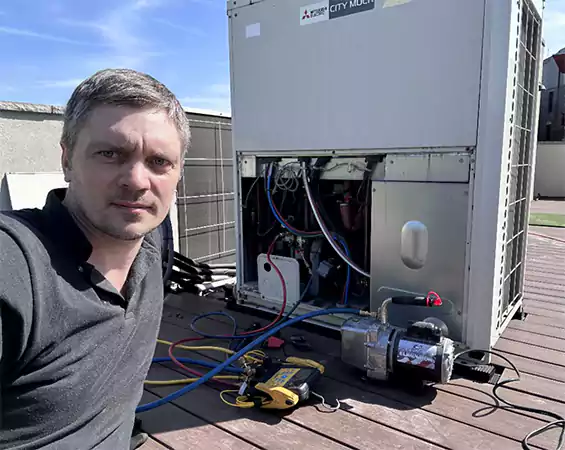
Simanenka’s method, as he explains, is quite different from that of most repairmen. Instead of looking at a malfunctioning machine as a compilation of components, he sees it as a living, dynamic system.
Rather than treating each component separately, he thinks about how electrical logic, mechanical parts, sensors, refrigerant cycles, temperature, pressure, and control panels all affect one another.
This holistic view enables him to discover the underlying causes of failures instead of temporary solutions. While many technicians respond to breakdowns by just replacing the apparently faulty component, Simanenka would rather follow what originally caused the failure: a malfunctioning sensor, a power source problem, or a refrigerant imbalance, and fix the actual culprit.
Particularly in kitchens, walk-in coolers, or HVAC systems, modern commercial systems mix electronics, mechanical hardware, refrigeration, and digital control; hence, this combined perspective is quite valuable.
His capacity to diagnose beyond conventional commercial borders makes the difference for many consumers between ongoing failures and one-time, long-lasting repair.
Tackling the Tough Cases Others Avoid
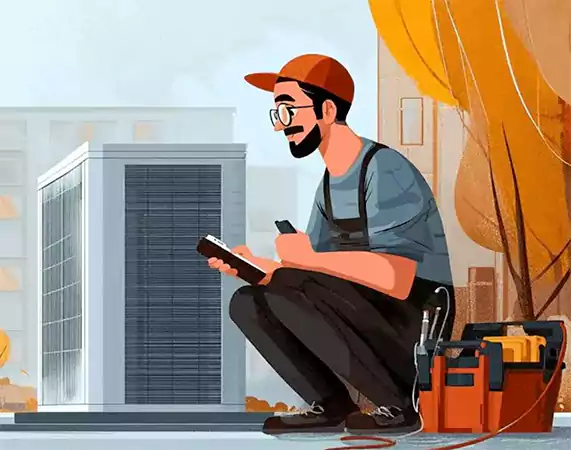
Most service providers specialize quite narrowly: Sim HVAC & Appliance Repair, refrigeration, or electrical. Simanenka’s great power is that she refuses to be pigeon-holed.
As he says, real-world systems don’t follow borders. Simanenka gets contacted when conventional technicians reach their limits, such as when control panels act erratically, refrigerators behave against gauge readings, ovens or ice-machines fail unpredictably.
He does not start by ordering replacement parts when he arrives at a difficult area. Rather, he views every broken machine as a puzzle: he observes its behavior under actual operating circumstances, tracks temperatures, monitors electrical loads and control responses, checks pressures, and only then determines the underlying cause.
This may include rebuilding a control panel, modifying unlabeled configurations, or fixing a design flaw.
Keeping Critical Facilities Running- From Hospitals to Schools
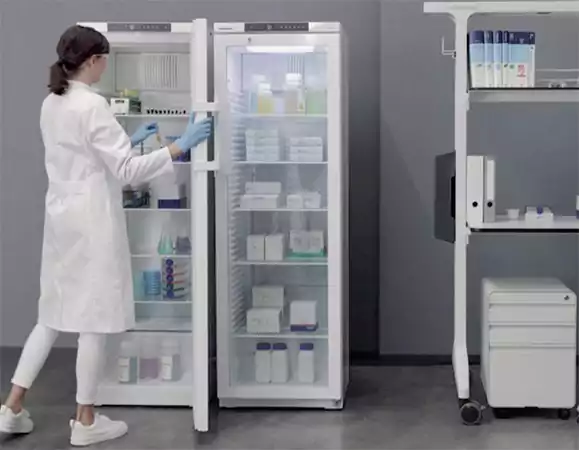
Equipment downtime can be more than just annoying for institutions like hospitals, schools, eateries, government agencies, churches or community centers; it could endanger health, safety, business, or even legal compliance.
Medical refrigerators have to keep accurate temperatures; ventilation and HVAC cannot fail in patient rooms or classrooms; commercial kitchens and food coolers have to stay functioning to prevent waste or regulatory breaches.
Simanenka’s work guarantees that such buildings run smoothly. He usually offers a dependable repair if many technicians have been unable to fix a complicated defect; hence, he serves as the last line of defense against serious failures.
His work, therefore, goes above and beyond straightforward mechanical repairs. He promotes public health, helps maintain safe surroundings, guarantees continuous critical services, and safeguards neighbourhood well-being.