Cultivating a Better Future: Marie Russier on Europe’s Agrifood Revolution
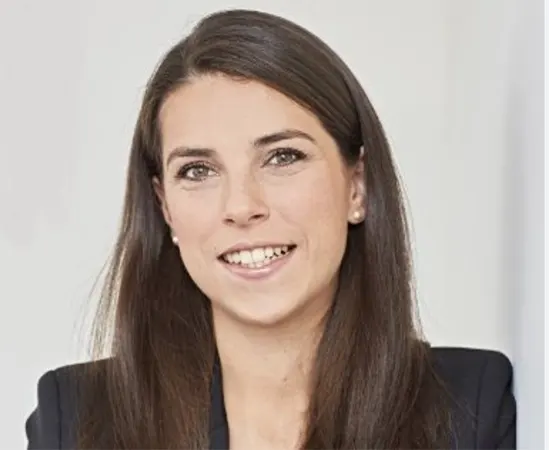
Climate change, inflation, and innovation barriers present major difficulties for European food systems, hence making early-stage assistance more important than it has ever been. Marie Russier, who heads the Entrepreneurship Programmes at EIT Food, got an opening to speak about how this connected architecture is changing support for science-driven entrepreneurs.
With three programmes, EIT Food, the EU-backed food innovation network, takes a holistic approach to entrepreneurship and helps businesses in their path from first idea to scaling. Marie offers a unique perspective on connecting science-based ideas with concrete outcomes thanks to more than ten years of experience in food technology, health innovation, and sustainability. She explains what is truly needed to transform agricultural food businesses into solutions that influence the whole system.
Marie’s background and reasons for joining EIT Food, together with her vision for food industry entrepreneurship.
All of which are closely related and need quick change, food systems, health, and sustainability have been intertwined with her career. At companies including Sanofi, Philips Healthcare, Galapagos, and UCB, she has marketing, strategy, and product innovation experience and has led sustainability projects with groups like Climate-KIC. She was first drawn to EIT Food, and is still inspired by the possibility to assist science-driven entrepreneurs addressing some of the most urgent issues of our time: food insecurity, climate resilience, and public health.
Leading the Entrepreneurship Programs team at EIT Food, she helps companies at different phases of development, from laboratory to market. Her objective is to create a system whereby the best ideas are not ignored and entrepreneurs can get the knowledge, tools, and networks needed for their development. This entails helping them to negotiate legislative channels, find appropriate partners, and finally expand their influence. In a business as important as food, we cannot ignore potential.
What are the primary challenges currently confronting the agrifood system in Europe, and what type of innovation is most urgently required?
Europe’s food and agriculture business is under great strain. With food inflation running at an average of 3.3% year-on-year, the increase in food prices remains the primary cause of the rising cost of living in the EU. Concurrently, climate change is disrupting supply chains; 96.5% of cocoa, for example, is imported from countries extremely sensitive to climatic impacts. Another concern is agricultural emissions. Notwithstanding the European Union’s aggressive climate targets, these emissions have been nearly unchanged since 2005, with only a 2% fall registered by 2022. Apart from these difficulties, there are also challenges connected to waste and fragmentation. Annually generating 59 million tonnes of food trash, the EU costs €143 billion. Particularly for deep tech solutions, support for innovation is often unstructured, with a noticeable gap between early research and market application. Here is where a systematic, stage-based strategy of supporting startups is thought to be very effective.