Prashanth Paladugula on Driving Workday ROI Through Strategic Integration
Leading the Payroll Professional Services team now is Prashanth Paladugula, a Workday-certified expert with over fifteen years of experience throughout ERP systems like PeopleSoft and ADP.
Intecrowd’s Payroll Solution Architect is also Prashanth Paladugula. Dallas-based, he has led comprehensive Workday implementations and aided mergers, divestitures, and AMS (Application Management Services) projects.
What Attracted Prashant to Workday
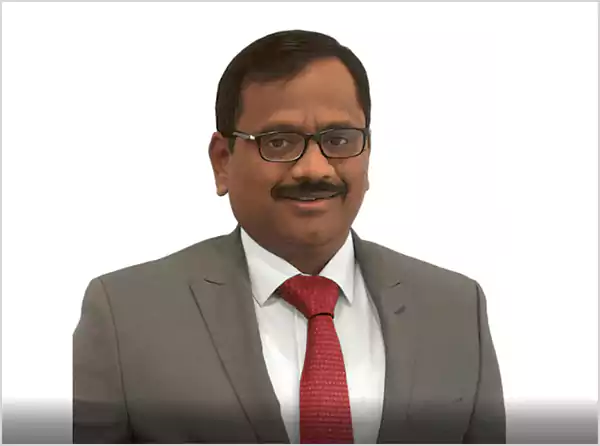
Prashanth Paladugulla said that its cloud-first approach and cohesive architecture propelled his move to Workday. Rather than trying to juggle several legacy systems for HR, payroll, and financial, which typically call for individual upgrades, Workday provides one unified platform. He said that this corporate and technology alignment drastically changed how he saw company changes.
He observed that earlier in his career, his emphasis was mostly on technical and database layers. However, collaborating with Workday drove him to reflect profoundly on business workflows, data ownership, and how system modifications should aid actual, sustainable operational improvements
Building Strong Data Foundations for Long-Term ROI

According to Prashanth, one of the most underappreciated yet vital techniques is doing an early data readiness review. For entities like Worker, Position, Company, and Cost Center, this means mapping legacy records to Workday’s data model and marking gaps.
To handle scale and cut manual effort, he advises automating data transformation with middleware: the structures of legacy systems are translated into Workday-aligned formats before being loaded, therefore reducing errors and human effort.
He also suggests a realistic migration plan: only data from active and recently dismissed personnel is completely loaded into Workday; historical information can be stored in free-text fields on the employee profile.
This enables companies to begin with a tidy, well-governed dataset yet keep context. Post-deployment, he emphasizes the necessity of governance, clearly defined responsibilities, validation processes, and periodic data audits to guarantee data integrity and dependability, therefore maximizing genuine ROI.
Important Lessons from Complex Transitions
Leading complete-cycle Workday and legacy ERP installations over his career, Prashanth noted that stakeholder alignment and accurate data frequently have greater significance than just the technology itself. Prashanth discusses the principle that also underpins how ERP software can revolutionize manufacturing operations.
He stressed that starting right from the design stage, getting HR, payroll, IT, and finance board is crucial. Process design may fail without common knowledge and well-defined ownership, therefore making testing or deployment phases ineffective.
Transforming Processes, Not Just Migrating Systems
Prashanth said that by raising and moving old systems into fresh ones, many companies reproduce inefficiencies. He guides his customers instead toward process re-engineering.
With HR, payroll, and IT teams, he runs group workshops to find data silos, approvals, and manual handoffs. From that point, they create future-state procedures tailored for Workday, paying attention to self-service and automation.
Particularly, he supports the strong Employee Self Service (ESS) and Manager Self Service (MSS) capabilities that allow tasks such as leave authorization, pay-slip access, and personal data updates to be managed without human intervention.
This, he claims, not only raises user experience but also increases efficiency. Prashanth stresses change management to incorporate these changes within the company: critical components are communication, training, and feedback loops so that users really follow and adhere to the revamped procedures
Advice for Young ERP Professionals

Prashanth provides a dual-focus roadmap for the next generation of engineers and consultants entering the ERP market: first, create solid technical basics, system design, business logic, and configuration.
Those who can design scalable, smart workflows will surpass those who only configure; therefore, he urges them to act like process architects rather than simply coders.
He also counsels welcoming artificial intelligence as a partner rather than as a danger; let domain knowledge direct its automation and ideation.
Prashanth ultimately encourages lifelong learning: stay updated on developing tools like Workday Extend, which let consumers create bespoke apps, and increase your grasp of contemporary ERP environments’ development.