Cloud Data Security Solutions are the Future: Insights from Safetica CTO
Evolution of threats pushed Safetica, a firm that concentrates on data protection and insider-risk management, to position itself as a forerunner in cloud security.
Zbynek Sopuch, Safetica’s Chief Technology Officer, has recently shared his ideas about how companies could score a point over their rivals by changing the game regarding cloud data protection.
Sopuch garners more than a decade of expertise in the cybersecurity domain. Usually the one to liaise between security personnel and IT decision makers, he, as CTO at Safetica, conjures up solutions that are smart yet simple by mixing technical mastery with real user needs.
He points out that he is motivated by the need to find solutions to the problems that come along with the use of cloud and AI for companies, and at the same time, making security less of a hassle by not installing elaborate systems.
The Combination of DLP + Insider Risk Management by Safetica

What makes Safetica’s technology different is the fact that it incorporates insider risk management (IRM) along with traditional data loss prevention (DLP). Many small and mid-sized companies find using standalone DLP systems quite difficult, but when DLP is paired with IRM, you get the entire picture, not only over the transfer of data but also over the risky behavior of users.
This method includes on-premises systems, endpoints, and cloud services; thus, it allows companies to be aware of where their sensitive data is located, who is interacting with it, and what its movement looks like.
The unified model reduces the complexity of deployment and simultaneously provides quick returns on the investment made in security.
The Cloud Data Security Market Today: Consolidation and AI Disruption

Zbynek Sopuch reports that the cloud data security market is going through a consolidation process, where endpoint security, email gateways, CASBs, or cloud-only protection, which were the major areas of focus for different solutions, are now merging into the integrated platforms.
This merger demonstrates the extent to which local and cloud workloads are intermixed in the present-day business environments.
At the same time, artificial intelligence is changing the landscape in a very significant way.
As the corporate world is activating new AI-based tools and cloud services for its productive use, sensitive data is flowing and being stored more and more in dynamic and decentralized environments. If not managed properly, the data flows will make traditional security measures useless.
For insights on upcoming trends and strategies, see our feature on The Future of Cloud Data Security in Business.
Determining the Location of Data and Its Accessibility: Data Complexity Management

The first and most significant challenge that companies are facing is their inability to pinpoint the exact locations of their critical data.
This is especially true for data that goes through various stages, such as desktops, cloud applications, emails, and other digital tools, as well as the use of remote devices. Sopuch states that this situation of ‘data overload’ might sneak up on the security team if they are not using the right tools.
Safetica’s solution for ensuring data security in the cloud has the goal of restoring that understanding to the companies.
It works from the very first day for businesses to understand how the data is being used and shared, automatically detecting the risks, and applying the security policies in both on-premises and cloud settings.
Safetica’s Path Forward: Growing, Partnering, and Keeping It Simple
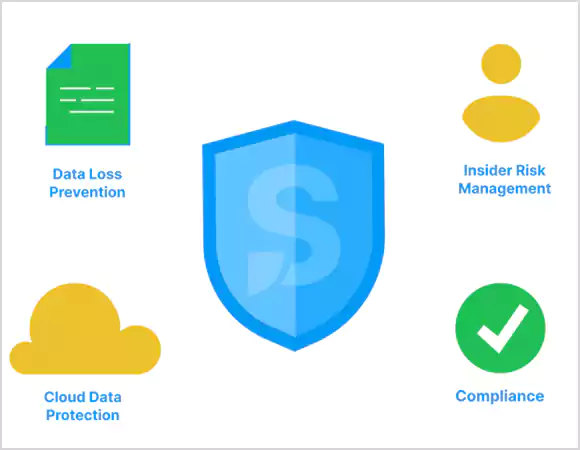
Safetica is open to partnerships and is looking for a number-one partner to grow with on the business side. The company is on the lookout for a partner that would incorporate the above-mentioned security,risk management, data classification, and compliance solutions in the product line.
Sopuch, however, emphasizes user-friendliness in solutions as the foremost thing. As more and more companies move to the cloud and use AI-driven processes, the need for modern, centralized data protection is becoming increasingly urgent.