Sumit Tewari: Elevating Data Quality to Power the Next-Gen AI Enterprise
Currently Senior Manager, Data Engineering at a major international store, Sumit Tewari manages human-capital/ESG analysis systems, governance frameworks, and large-scale data-lake projects. Prior to this, his data-domain career included senior positions in the financial industry spanning over two decades. Tewari claims that his banking-industry background, where he modernised risk, mortgage and finance systems, gave “a solid foundation to address the greatest data-driven problems in retail.”
In his opinion, the change from banking to retailing calls for a recalibration of priorities. Rather than only financial procedures and regulatory data, the retail sector needs strong transaction-scale systems, flexible inventories, customer-centric flows, and high-velocity data processing. He underlines that both industries include contemporary open-source stacks (such as Apache Spark, Apache Airflow and cloud services (AWS, GCP). But in retail, deployment calls for several priorities: flexibility, cost-effectiveness, and reusability.
Modernising Legacy Systems: Where to Start
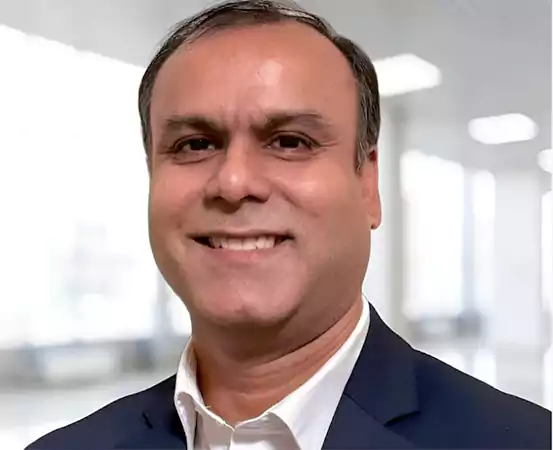
Senior Manager Sumit Tewari considers the legacy-platform problem, especially common in major retail or corporate companies. He contends that starting with a pilot, finding the most high-risk or most high-ROI, is the more sensible course rather than a total ‘rip and replace’. define use-cases, create an architectural sandbox, and verify before full transition from a portion of the legacy stack.
Selecting a data-pipeline framework (Spark for transformation, Airflow for scheduling), and a modern data-store (Snowflake, Redshift, as a part of the proof-of-concept, Google BigQuery. Before cut-over, ensure parallel testing with legacy systems so that performance, dependability, and stakeholder confidence are confirmed; he stresses that this is often a key step.
Building Data Lakes and Quality Frameworks
With decades of expertise, Sumit Tewari highlights how enterprise-grade data lakes are more about governance, quality, and domain-based modelling than about volume. Handling petabytes, which are what used to be hundreds of gigabytes, reliably calls for a robust foundation of data governance and quality assurance, he adds. To provide flexibility and cost-effectiveness, particularly important in retail, where transaction counts and company dynamics change quickly, he champions open-source technology (Spark, Airflow, Apache Hudi) married with public-cloud storage.
One instance he cites is a method to compare pay information across two programs that formerly needed thousands of manual hours. By using cloud data-lakes + faster decision-making for human resources and operations was made possible when analytics drastically decreased both time and cost, and accuracy increased.
MUST READ: Girish Kotte on How AI and Entrepreneurship is Reshaping the Startup
ESG and human capital: data enable sustainability

Tewari is especially interested in how human-capital projects and ESG (Environmental, Social, Governance) can be aided by data engineering. Through three pillars, Opportunity, Sustainability, and Community, he models ESG initiatives and gathers structured and unstructured data across all of them using cloud data lakes. Leading a seven-geographical-market project, he incorporated staff data from HR and IT into a single data lake on the human-capital front.
This gave senior leadership valuable insights and made it possible for the analytic visibility needed to advance diversity, equality, and inclusion (DEI) efforts. Technically, the stack featured Terraform and Kubernetes for tech evolution through learning, automation in addition to BigQuery, Apache Hudi, and Spark for extensive processing. He stresses that automation converts human data-collection into compliant, precise, and timely reporting, absolutely necessary for 10-K filings and governance.
Teams Alignment and Innovation Drive
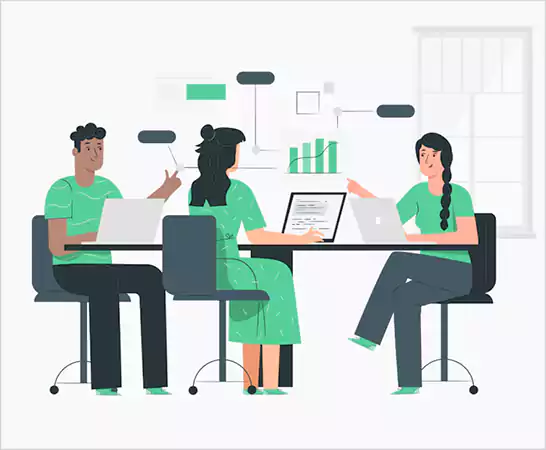
Tewari believes that stakeholders’ alignment is among the most important non-technical elements. He distinguishes between ‘clients’ (long-term strategic partners) and ‘customers’ (end-users) and thinks technology teams should interact like consultants with internal clients while also being service-oriented to customers. To keep his teams engaged, motivated, and trained in emerging technologies like artificial intelligence, machine learning, and robotic process automation. He frequently utilizes agile retrospectives, pulse surveys, hackathons and project sprints. Building high-performing engineering cultures, he argues, depends on empowerment, openness, and input.