Suryakant Kaushik: Redefining Safety in the Age of Connected AI
The Senior Business Operations Manager for Global Support Experience at Samsara, Inc., Suryakant Kaushik, revealed his expertise about creating trustworthy AI systems that provide actual benefits to complicated business systems during his recent discussion with industry experts. Kaushik developed his expertise in fleet safety technology, AI systems, and operational scaling through his work, which combined engineering principles with actual business results.
Balancing Automation and Human Judgment
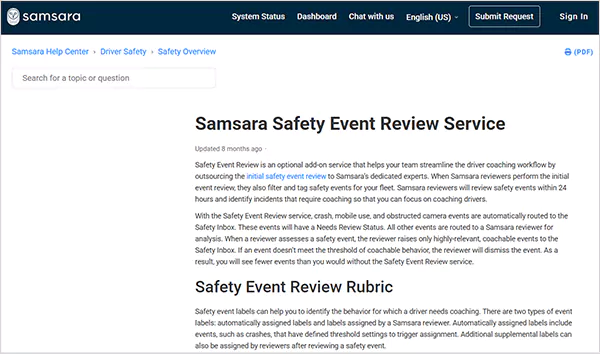
Kaushik explained the original process that his team used to build Samsara’s Safety Event Review system. The existing system from 2022 showed inconsistent behavior because reviewers needed additional time for crucial event identification, which decreased system reliability.
He discovered major differences in review outcomes after testing reviewer behavior with different inputs because of their uncertain guidelines. Kaushik created a design system that used objective anchors for human evaluation through data-based criteria that evaluators followed with their decision-making process.
The hybrid approach achieved two outcomes through its application by decreasing variability while enhancing customer trustworthiness without losing the human ability to assess challenging situations.
Architectural Choices for Speed and Accuracy
Kaushik stated that system performance needs to achieve better speed results, which should not decrease product quality or compliance standards. He discovered that system inefficiencies caused most of the delays in the specialized equipment resources analysis, which needed to be carried out.
Suryakant Kaushik redirected work processes when he changed event preparation procedures, event enrichment methods, event queueing methods, and finalization methods, and developed a new reviewer interface through skill-based routing.
Samsara achieved operational efficiency, which enabled them to complete work processes 10 times faster while keeping their precise results and their compliance with regulations intact.
Rethinking Economics: Margins Versus Quality
Kaushik has shown that people mistakenly believe that businesses must choose between better accuracy and improved margin performance. He discovered that previous financial estimates needed to be updated because reviewing single events had higher costs than they had predicted.
Samsara achieved better profit margins and service area expansion by using AI and automation to handle routine tasks while assigning its remaining reviews to less expensive operational areas. Kaushik became convinced through this situation that quality and efficiency can coexist when organizations base their operational strategy on actual economic facts instead of relying on gut feelings.
Patents Grounded in Operational Reality

Kaushik developed his technical innovations, which include his patented safety event analysis tools and his vehicle spacing tools, through direct observation of operational shortcomings and customer complaints. His first patent focused on structuring safety insights so that fleet managers could intuitively understand patterns and act without expert interpretation.
The development of a dynamic safe-distance monitoring system emerged from customer feedback, which showed that the basic alert system failed to provide accurate, real-world situation alerts. His research focuses on determining the correct balance between false positive results and false negative results, which distinguishes his work from most academic AI research that measures only single performance indicators.
Lessons from Early Operational Work

Kaushik’s early experiences in real-world infrastructure, like power grid fault management, shaped his current design philosophy. His experiences with chaotic environments, which required him to complete tasks under strict deadlines while managing critical situations, showed him that engineers must design systems that can perform better than their expected results.
He also learned the importance of stakeholder alignment, a lesson that carries over into AI systems, where technical solutions must coexist with human expectations and organizational pressures
Kaushik predicts that organizations that want to achieve a competitive advantage must study their customers and use their understanding to create actionable insights through their workflow data. The process of adoption requires simple steps, but organizations must establish proper governance methods while connecting their systems into existing workflows to achieve sustainable benefits.