The Future of Backend: Vivek Mishra on Driving Innovation and Scaling Cloud Infrastructure
The motive of problem-solving and system architecture was the original reason behind Vivek Mishra’s keen interest in new technologies, which later on could be seen from his very first days as an undergraduate student.
Naturally, he chose backend engineering, which turned out to be an ideal sphere that was both a basis for his interests and a source of difficult tasks like the creation of systems that are robust, efficient, and able to scale.
Eventually, he became a specialist in different languages and technologies such as Python, Java, and Kubernetes, which in turn allowed him to work with APIs, cloud infrastructures, and application performance on all channels, like web and mobile.
Notable Milestones: Projects that Defined Vivek’s Career
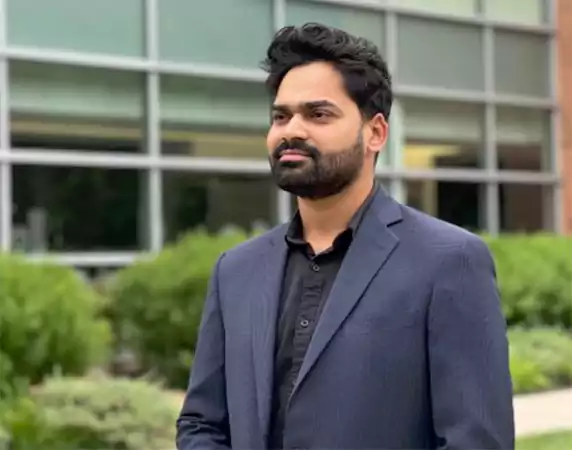
Out of the various achievements in his career, a few definitely got highlighted most prominently. One of the important contributions of Vivek Mishra was to come up with the implementation of cost-saving measures for AWS-based infrastructure, thus resulting in a substantial decrease in the operating costs of various projects.
Another major success in his career was when his team won the prestigious ‘CSES challenge’ on the show that was aired by the consulting firm Capgemini.
The challenge was to automate a meter-to-cash system that was mostly manual, consisting of about 600 meter inspectors who recorded more than 2.8 million meter readings. The automated system not only took away laborious work but also significantly raised productivity.
Vivek was also a big player and a master in API development projects that focused on mobile and online outlet offer display capabilities. The technical skills needed to be present for that task, along with efficient stakeholder management, were the commercial objectives of that work.
Shaping Others: The Role of Mentorship and Peer Review

Vivek’s commitment to guiding the newcomers in the field has been nothing short of vital to his professional life. While at JP Morgan, he was always there for the junior engineers, mentoring them with Python, Java, Kubernetes, cloud technologies, and CI/CD operations.
His compassion was not only for the developers but also extended to other staff as he created an atmosphere of collaboration and increased the overall quality of work through his mentoring.
Also Read: Role of Cloud Architects in Driving Digital Transformation
His interaction with the academic and student community is not limited to this: he has been a mentor in university hackathons and even judged competitions at colleges like Morgan State University and the University of Pennsylvania. Through these activities, he has influenced a large number of beginner developers and managed to reduce the time spent on projects over the period by injecting the best practices and disciplines of the processes.
Navigating Through the Challenges Related to Performance and Costs

Working on cloud infrastructure and backend often comes with certain challenges, and Vivek has also faced some of these challenges. The problem of ensuring that the systems remain scalable and high-performance while keeping the cloud costs within control has always been a tough one.
Read This: The Programmer’s Guide to Integrated Software Development
He has implemented Kubernetes for the orchestration of deployments and observability technologies such as Datadog and Splunk for the monitoring of performance, the detection of issues in real-time, and the management of service reliability.
Vivek’s Advice for Aspiring Backend Developers

Vivek labels himself as a strict teacher in the sense of being based on fundamentals. He lays strong emphasis on the essential role of problem-solving, comprehending basic concepts of APIs along with system design learning.
He suggests gaining experience in cloud services like AWS and highlights the importance of cost- and resource-management skills in backend jobs nowadays. Moreover, he insists on the need for teamwork, whether through hackathons, mentorship programs, or open-source projects.