Custom ERP Development Cost: A Simple Guide for Businesses
“Price is what you pay. But it doesn’t represent the real value you get.”
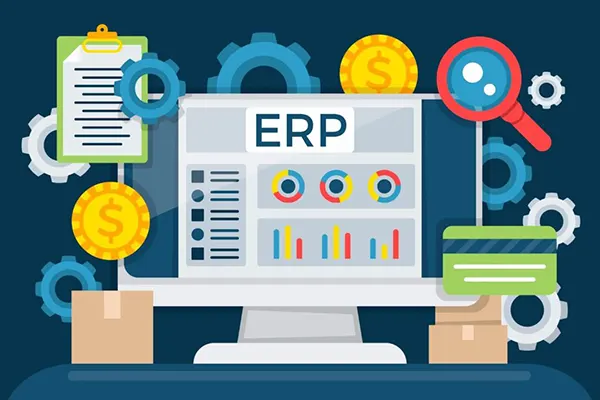
As the business continues to grow, taking enough control over ongoing operations with unstructured tools and spreadsheets that are enough becomes tricky. This is where most companies begin to look for a custom ERP system.
And the popular question that comes across is – how much does custom ERP development cost?
The real answer is – it changes with changing demands and operations. The entire amount depends more on the specific business needs and how advanced features are required.
Explore this guide that will share a detailed analysis of the custom ERP development cost.
What is Custom ERP Development?
Every business runs a little differently, and that’s exactly where tailored ERP comes in.
A custom ERP system is basically a software that is designed specifically for your business needs. It’s built from scratch or tailored to match your processes, which actually means:
- Only the required features will be provided to you
- The system will fit your workflow perfectly
- You will have more control over updates and changes
And all this flexibility affects the cost.
Average Cost of Custom ERP Development
Before diving into details, let’s set expectations with rough numbers.
Custom ERP development cost varies widely depending on size and complexity:
- The cost of a small ERP system is $10,000 to $30,000,
- A medium-sized ERP cost $30,000 to $100,000
- Large and complex ERP costs $100,000 to $500,000+.
These are the rough estimates. Basically, the actual cost depends on your business size, requirements, and development team.
Factors That Affect ERP Development Cost
Now comes the real story. Costs aren’t random; they’re driven by specific decisions.
1. Project Size and Complexity
This is the biggest factor.
If the custom ERP is designed only to handle basic tasks of your business, like accounting and inventory, it will cost less. But if you want a custom ERP that comes with advanced features like automation, analytics, or multi-location support – costs will increase.
Here, the more intricate problem means more development time, more testing, and more resources.
2. Number of Features
With the increase in features, the amount to be paid will rise. A common ERP includes:
- Accounting and finance
- Human resources (HR)
- Inventory management
- Customer relationship management (CRM)
- Supply chain management
If a business wants all these features, then ERP will naturally cost more than a system with just one or two features.
3. Customization Level
If the system is more personalized, the cost will be much higher, i.e.,
- Simple customization (minor changes): lower cost
- Deep customization (unique workflows): higher cost
Highly customized systems require more planning, coding, and testing.
4. Development Team Location
The cost will be impacted by the location of the development team. In North America or Europe, the developers demand higher rates, while in South Asia or Eastern Europe, their demand is more affordable,i.e., in South Asia, the hourly cost can range from $20–$50/hour, and in Western countries it ranges from $50–$150/hour.
This difference significantly affects the total cost.
ACTIONABLE INSIGHT
Outsourcing ERP development to lower-cost regions can potentially save you up to 70% (Source).
5. Technology Stack
In a custom ERP, the tools and technologies that are used also matter a lot.
Some technologies are built much faster and cheaper, while others require specialized skills. If technologies like AI, cloud computing, or real-time analytics are used in your tailored ERP, then the cost will be increased.
6. Connectivity to Other Systems
Tools like payment gateways, CRM software, or e-commerce platforms are already being used in most businesses.
Integration will be added to the cost if you connect your custom ERP with these systems.
7. User Interface (UI/UX) Design
A simple interface will become costly if you add a modern, easy design with visual reports and dashboards. The system will be much easier to use for your team if you invest in good design.
8. Support and Maintenance
After development, the cost will not stop. You’ll also need regular updates, bug fixes, and technical support.
Maintenance usually costs around 15–25% of the initial development cost per year.
Hidden Costs You Should Know
Here’s where many businesses get caught off guard. Beyond custom ERP development, you also need:
- Employees who are trained to use the system more efficiently
- Data migration from old systems
- Security features
- Hosting and server costs
When not managed well, these amounts can result in a major spike in the budget.
Custom ERP vs Ready-Made ERP
Not every business needs a tailored ERP, and that’s okay.
Choose Custom ERP if:
- Your business has unique processes
- You need full control over features
- You plan to scale in the future
Choose Ready-Made ERP if:
- Your needs are simple
- You have a limited budget
- You want a quick solution
Custom ERP is more expensive, but it gives long-term value if built correctly.
How to Reduce ERP Development Cost
You don’t need to overspend to build a solid system. Just stick to the following:
- Start with essential features only
- Build the system in phases
- Choose an experienced but affordable development team
- Avoid unnecessary complexity
- Plan everything clearly before development
Conclusion
Tailored ERP development isn’t cheap, but it’s not just an expense; it’s an investment in how your business runs. Custom ERP development cost seems high, but the long-term benefits make it worth it.
The important step is to understand your needs. If you plan carefully according to your requirements, you can build an ERP system that grows your business without spending more money.
FAQs
Ans: It usually requires around 3 to 12 months, depending on the needs and features.
Ans: It can be worth it if your processes are unique. Otherwise, ready-made ERP is usually more cost-effective.
Ans: Project complexity and the level of customization are the two main cost drivers.