Social Media Dashboard: Track and Analyze Your Online Performance
“The goal is to turn data into information, and information into insight.” – Carly Fiorina (Former CEO of Hewlett-Packard)
A strong social media presence is vital for a business in today’s modern marketing. However, with plenty of social media platforms, with metrics, norms, audiences, and engagement of their own, it often becomes difficult to manage the data and online presence.
The volume of data that is scattered on platforms like Facebook, LinkedIn, Twitter (X), Instagram, and TikTok develops a state of measurement paralysis where marketers get drowned in the numbers, which hinders strategic decision-making.
The social media dashboard fixes this issue by acting as a centralized command center that aggregates, visualizes, as well and interprets the digital chaos. It further transforms raw numbers into a unified narrative.
Social media dashboard as a tool allows organizations to shift from reactive posting to data-driven strategic postings. This tool is no longer just a luxury; it is now an essential element for any business aiming to master its digital footprint.
Key Takeaways
- Social Media Dashboard consolidates all platforms, including Instagram, Facebook, LinkedIn, etc, into a single ‘flight cockpit’ view.
- It makes things easy to understand by turning complex and messy numbers into clear and readable graphs.
- You can get a record of historical data and long-term trends by just looking at single posts.
- Use of AI helps in categorizing audience moods into categories: Negative, Positive, and Neutral.
- Engagement rate is faster with messages and comments combined into one stream for quick customer response.
Understand What a Social Media Dashboard Does
Single-pane view is at the core of a social media dashboard; it is like the flight cockpit of a brand’s entire social ecosystem, centralizing Key Performance Indicators (KPIs) from all connected accounts. It tracks important metrics such as follower growth, total reach and impressions, audience demographics, as well as click-through rates.
These complex data points are presented through intuitive graphs, and the main function of the dashboard is to offer immediate context. This saves time, enables managers to assess platform health across the board and immediately identify the content that is flourishing.
See Your Performance Over Time
Effective social media management is not just about judging single posts; it requires understanding long-term trends. Additionally, using a reliable link shortener can make it even easier. The dashboard offers this essential historical perspective by allowing users to compare performances across custom time ranges, such as month-over-month. This shows cyclical patterns and the genuine impact of the strategic shifts.
For example, it shows that the video content has a broader reach in Q4, or it also highlights how a change in posting can bring a change in audience engagement.
This longitudinal analysis shifts reporting beyond vanity metrics, allowing the teams to link current actions to outcomes of the past, which is crucial for refining the future content calendars as well as campaign budgets.
Fun Fact: ‘Measurement Paralysis’ is a real phenomenon, where excessive data prevents you from making a decision. And, Social Media Dashboards are the ‘antidote’ to it, eliminating all the noise!
Improve Your Engagement Easily
It becomes difficult to track engagement across siloed platforms. The key strength of a social media dashboard is its unified engagement stream, which consolidates all inbound messages, mentions, as well as comments. This centralization allows marketing and customer service teams to monitor and respond to public interactions quickly, which is essential for meeting consumer expectations.
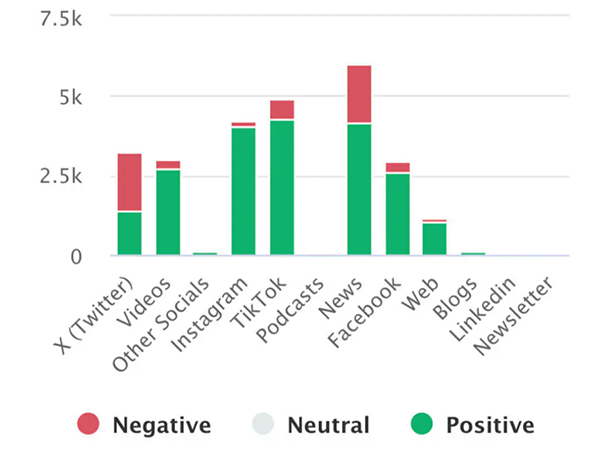
In addition to this, sentiment analysis is offered for many dashboards, highlighting comments as positive, negative, or neutral. This extremely powerful feature allows teams to give priority to urgent customer service issues, making a shift from passive monitoring to an active relationship-building.
Better Insights for Smarter Marketing
Social media data hinges on context; the dashboard, by providing advanced filtering and comparison tools, changes raw data into practical knowledge. Rather than just narrating the event, it helps to clarify the reason why that particular event took place.
Furthermore, it is strong in competitive analysis, providing companies with the opportunity to compare their performance with that of the most important competitors in the market. These comprehensive insights help in smarter content creation, and the social media management platform’s marketing team knows where the creative energy and the budget need to be utilised for the next campaign.
Make Reporting Simple And Clear
A lot of time and resources are drained in the task of manually collecting data from different sources and then compiling it to create a stakeholder-friendly report. The social media dashboard automates this hectic task, hence making reporting instant, effortless, and transparent.
Most of the dashboards have a pre-built feature or highly customizable reporting templates that can be generated in just a few clicks. These dashboards automatically generate reports that make use of clear and easy-to-read charts to visualize the complex data, effectively communicating success metrics to stakeholders.
The automation process significantly reduces the chances for any human error, freeing up analysts from time-consuming data manipulation tasks, making sure that the entire organization is looking at the same set of verified performance metrics.
Did You Know?Modern Dashboards have the feature to include ‘Competitive Benchmarking’, which allows you to see engagement rates and top-performing posts of your competitors, without leaving your screen.
One Tool to Stay Ahead Online
The rapidly evolving digital landscape has new platforms and shifting algorithms, demanding that businesses adopt tools for continuous strategic adjustment and agility. The social media dashboard offers this competitive edge by centralizing all the performance data, which further fosters a culture of data-driven decision-making over guessing.
The dashboard serves as the single source of truth on the social media platforms, ensuring that strategic planning, budget allocation, and content creation are all informed by solid evidence. For modern enterprises to thrive and scale, adopting this unified dashboard is the best way, which allows for managing the complexities of a multi-platform strategy.
A strong social media dashboard is an unavoidable command center that empowers businesses to manage, optimize, and measure their online performance, transforming scattered responsibility into a strategic function for success.
Frequently Asked Questions
Ans: Yes, it can. It alerts you whenever your brand is mentioned through sentiment analysis and keyword monitoring.
Ans: Yes, most of the dashboards have the feature to schedule posts across several platforms simultaneously from one tab.
Ans: No, not at all! Most of the tools use ‘one-click’ integrations to safely sync with your existing social media accounts.