Turning Unseen Articles into Search Hits Using Semrush

This post is sponsored by Semrush. When you purchase through links in this article, we may earn an affiliate commission from Semrush.
When I finished my best article so far, I thought everything was great and perfect: the storytelling, narration, and advice were well researched. I expected my article to blow up and reach a big audience, but that didn’t happen.
The analytics page stayed empty for a long time, and I didn’t know why. I realized that creating great content is only half the work.
Read this blog to learn how to turn Articles into Search Hits Using Semrush
Decoding Why Well-Written Pieces Stay Hidden
Like many writers, I used to think search engine optimization as an afterthought. I believed that if a work were entertaining and nicely written, search platforms would themselves find its quality and give it to the right people. But search engines do not read essays like humans do. They look for clear signs, useful topics, and clear answers to clear questions.
When I stepped back to see why my work failed to find organic visitors, I saw I had depended fully on clever titles and creative language. To find what’s going on, I turned to Semrush to check my work against actual search demand. The data was eye-opening. People were searching for answers related to my topic; they were using totally different words and terms than the ones I had picked for my work.
Aligning Editorial Vision with Audience Demand
To confirm your work really gets to the people who need it, the editorial process needs to have creative expression with useful research.
- First, finding useful search questions gives you a clear window into reader interest. By using Semrush to compare keyword chances, you can pick whether a topic has an existing audience or if the area is very saturated.
- Second, studying search plans helps you create the depth and style of your writing. When I check question metrics in Semrush, I look at what users want to find: a fast, good guide or an entire answer.
- Finally, managing the narrative with clear, descriptive headers lets both readers and search crawlers follow your main points easily. Using knowledge from Semrush provides those headers naturally show the main ideas people care about most.
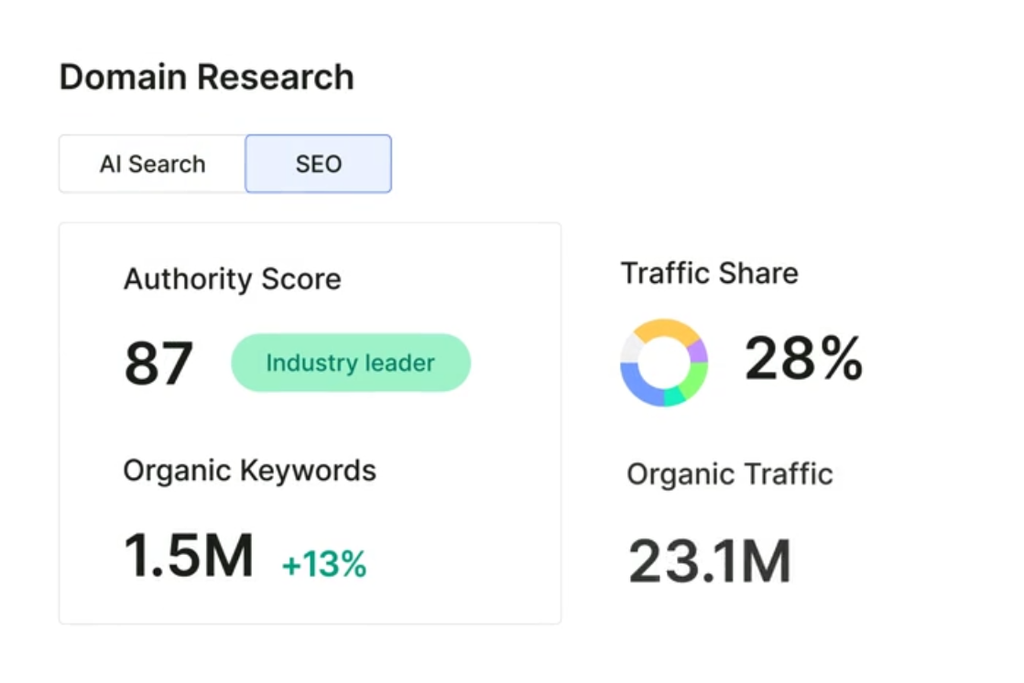
Combining Semrush into my research fully changes how I post. Not just leaving visibility to chance, placing honest storytelling with real search data makes sure that every work has the chance to join with an active audience.
Frequently Asked Questions
Ans: It helps you understand where your audience searches and creates content. It tracks performance in different channels and optimizes for AI-driven search experiences.
Ans: Target the right keywords, make sure your content meets the search intent, and update your content regularly. Make sure your content is original, build your brand beyond the website, and use an internal linking strategy,
Ans: To build an SEO strat with five main rules: Research keywords and prompts, create quality content, optimize on-page elements, maintain technical health, and earn links and brand mentions.