Benefits of Smart Lockers in Offices: A Smarter Way to Manage Workplace Storage
Jump To Key Section
Modern workplaces are evolving quickly. With companies rethinking how they manage everyday necessities like storage. Regular lockers with metal keys are no longer practical in a dynamic working environment.
This is why smart cabinets and storage come in; they do much more than just provide storage, they help businesses operate better. In fact, workplace inefficiencies cost companies approximately $8.6 billion each year and outdated systems are often part of this loss.
So, let’s see how smart lockers and cabinets are transforming offices and why they are becoming essential.
Key Takeaways
- Key Features of Smart Lockers
- Improved security, authorization, and monitoring
- Support for Hybrid models
- Helps hit sustainability goals followed by scalability
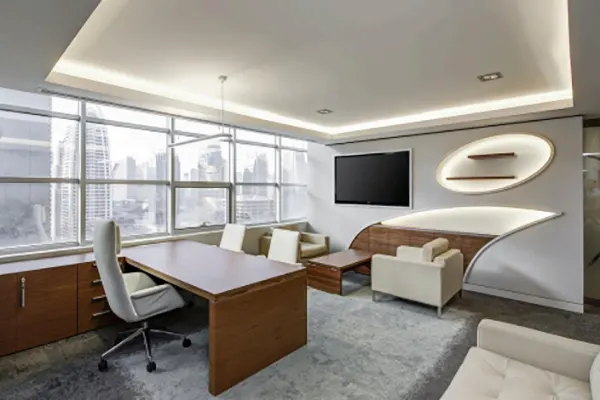
What Are Smart Lockers?
Smart lockers are intelligent, automated storage objects that can even be controlled with a mobile app, supporting hybrid functionality.
How Smart Lockers Work
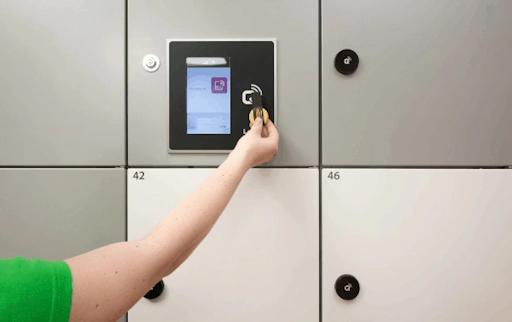
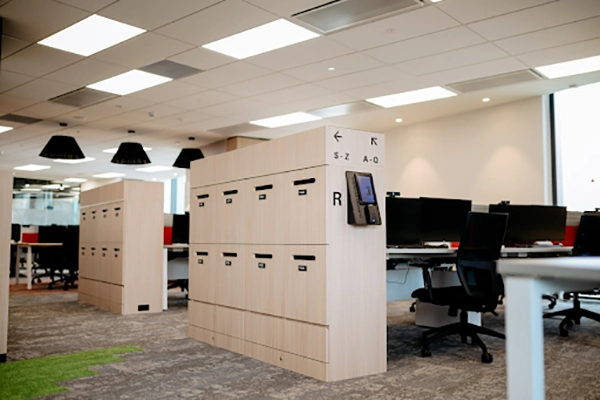
Smart lockers are digitally controlled storage devices that use PIN codes, RFID cards, mobile apps, or biometric access instead of traditional keys. Employees receive secure access credentials and can open the locker with just a tap or scan.
Unlike traditional lockers, these systems are connected to cloud-based software that allows administrators to manage access remotely. This makes it incredibly easy to track usage, assign lockers, and monitor security.
Main features of Smart Locker
Some common features include:
- keyless access
- real-time usage tracking
- Integration with HR or access control systems
- automatic notifications
These features contribute directly to the overall benefits of smart cabinets in offices, especially in larger or hybrid workplaces.
Improved Security and Access Control
Traditional lockers rely on physical keys or combination locks. The keys are lost. The combinations are shared. This creates a security risk.
Smart cabinets solve that issue completely. Each user has an individual access credential that can be used whenever they prefer. If an employee leaves the company, access can be removed with one click.
Considering that $8.6 billion is lost each year due to security inefficiencies, upgrading cabinet systems becomes much more than a convenience. It will be a strategic decision.
Real-time monitoring and audit trail
The strongest advantage of smart cabinets in offices is transparency. Administrators can see who has access to the locker and when. This audit trail increases accountability and reduces disputes.
For industries that handle sensitive documents, equipment, or confidential material, this level of monitoring is critical.
Supporting Hybrid and Flexible Work Models
Hybrid work has now become common. Many offices no longer require employees to work from their fixed office desks. Intelligent lockers allow employees to store their belongings even while using shared workspaces.
This flexibility is one of the main advantages of smart cabinets in offices, as it supports modern working models without compromising on organization or security.
Adapting to changing workforce needs
Studies show that 69% of operations leadersare investing in better workplace technologies to improve efficiency and adaptability. Smart cabinets fit perfectly into this trend.
They allow companies to adjust cabinet assignments daily, weekly, or monthly without manual effort. This adaptability reduces operational friction and improves the employee experience.
Increasing Operational Efficiency

Handling traditional lockers requires manual tracking, key changing, and maintenance. This takes time and resources.
The cabinets straight up automate these tasks, remote access management, generation of instant reports, etc. For organizations that lose $8.6 billion each year due to operational inefficiencies, automation is an easy solution.
Streamlining package and asset management
With the rise of office delivery and shared devices, smart cabinets can also act as secure package storage or delivery points for IT resources.
Employees receive alerts when items are placed inside the locker. This reduces lost packages and eliminates the need for reception staff to manually handle each delivery.
These features clearly highlight the practical benefits of smart cabinets in offices beyond personal storage.
Enhancing Employee Experience
Employees appreciate things that make their day a bit easier. With app-based access, they wouldn’t even forget or have to worry about carrying extra keys or remembering tough combinations.
A positive workplace experience increases satisfaction and productivity. With 69% of operations managers focusing on improving employee engagement through smart systems, a smart cabinet is an easy upgrade.
Promote a clean and organized environment
Cluttered desks and unsecured items can make the office look unprofessional. Smart lockers encourage employees to store belongings properly while keeping the workplace tidy and clean.
A well-organized office not only improves aesthetics but also increases focus and morale, further demonstrating the benefits of smart office cabinets.
Did You Know?
Companies need not replace existing lockers; they can just retrofit the old ones with smart locks, instantly upgrading to an app-based locker system.
Cost Savings Over Time
Traditional cabinets may seem cheap initially, but long-term expenses add up. Changing locks, duplicating keys, and dealing with damage add up to costs over time.
Smart cabinets decrease these expenses. With better management, maintenance of itself becomes easier to handle and predictable.
Given that businesses lose $8.6 billion each year due to inefficiencies, investing in better systems helps prevent hidden operational losses.
Optimization of office premises
Smart Lockers can be used on demand instead of being permanently assigned. This means that fewer cabinets are needed overall, saving valuable office space.
As 69% of operations leaders look for ways to optimize real estate costs, flexible storage solutions are becoming a strategic asset.
Better Data and Insights
Smart cabinet systems collect valuable data. Companies can analyze how often cabinets are used, the maximum usage time, and occupancy.
This data helps management with their decisions and future plans about space planning and resource allocation. Data-driven decisions are one of the main reasons why the benefits of smart cabinets in offices are gaining attention.
Planning for future development
With access to usage analytics, companies can scale their cabinet systems based on actual needs instead of guesswork. This ensures cost-effective expansion.
Organizations are aware that $8.6 billion is wasted each year due to inefficiencies, and they understand the importance of data-driven investments.
Supporting Sustainability Goals
Smart lockers eliminate the need for paper-based tracking logs and reduce physical key generation. It contributes to environmental sustainability.
Energy-efficient design
These cabinets are energy efficient as they operate on a low power consumption rate and integrate with building management systems.
As 69% of operations leaders prioritize sustainable practices in the workplace, the use of smart cabinets is in line with wider environmental strategies.
Scalability and Integration
Smart lockers’ credentials can be activated with employee ID cards, building systems, and HR software. This creates an independent ecosystem in the workplace.
The integration enhances the overall benefits of smart lockers in offices by simplifying administration and improving the user experience.
Scalable for growing organizations
Whether a company has 50 employees or 5,000, smart cabinets can easily be scaled up. Additional devices can be added without overhauling the entire system.
For businesses aiming to reduce losses that contribute $8.6 billion each year, scalable technology ensures long-term value.
Conclusion
The modern offices require better solutions. Traditional storage systems are just outdated and no longer fit the changing needs of hybrid working and security requirements.
The benefits of smart lockers in offices include improved security, increased flexibility, improved employee experience, operational efficiency, and long-term cost savings.
With inefficiencies costing businesses $8.6 billion each year, and 69% of operations managers investing in intelligent workplace technologies, smart cabinets are no longer a luxury. They are a practical necessity.
By adopting smart cabinets, companies can create a safer, organized, and future-ready office environment.
Ans: The benefits of smart lockers in offices include increased security, automated administration, support for hybrid working models, improved usability, and long-term cost savings.
Ans: They use digital access controls, eliminate physical keys, provide audit trails, and allow administrators to manage permissions remotely, reducing the risk of unauthorized access.
Ans: Yes. Smart cabinets are scalable and can be adapted for small, medium, or large businesses, depending on storage needs.
Ans: Absolutely. Considering that businesses lose $8.6 billion each year due to inefficiencies, automation, and better space utilization can help cut down on unnecessary expenses.
Ans: 69% of operations leaders believe that digital tools improve efficiency, employee satisfaction, and long-term sustainability. Smart cabinets are part of the wider change.