What the Global Tech Summit Revealed About AI’s Next Role in Business

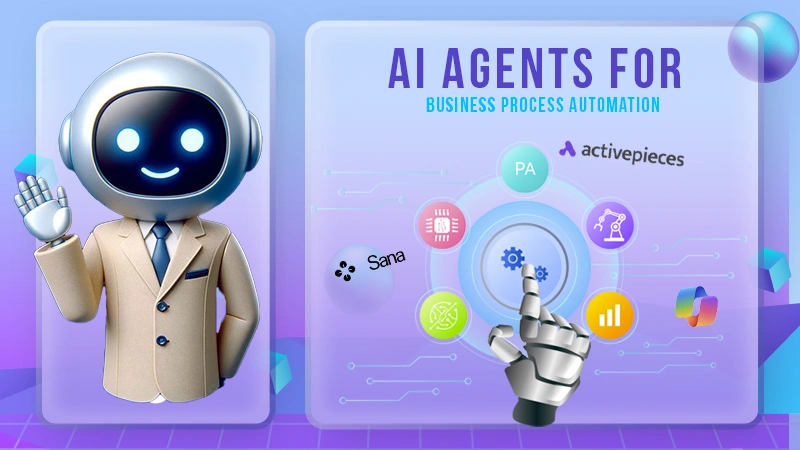
You might be shocked to know that 63% of organizations intend to adopt AI globally within the next three years. The recent global tech summit shared details and facts like these about tech and AI. It points out how AI is slowly but effectively shifting from a helper, supportive “co-pilot” role to becoming an autonomous “agent” that is well aware and capable of doing complex tasks independently.
Now growth and evaluation involve AI moving into physical operations (shocking but a fact), becoming embedded within exciting software (“invisible”). Apart from this, it specializes in specific industries (“vertical” AI), prioritizing safety, ethics, and sustainability.
Also, in this summit, AI is actually discussed less as an experiment and more as a practical engine for growth, productivity, and everyday decision-making globally. Let’s dive in and learn in details of this global tech summit.
KEY TAKEAWAYS
- Global tech showed that AI is now seen as a useful tool for simply helping businesses grow and work better, moving from the experiment phase to actual everyday use.
- AI is commonly used in firms to improve sales prediction, find fraud, and help with customer service acting, as an assistant instead of a replacement.
- To use AI successfully, businesses need a careful plan that includes good data, strong security, realistic timelines, and starting with a small project before growing.
- It’s actually important to have clear rules and responsibility in AI to build, lower risks, and ensure long-term growth, while also getting workers ready for changes.
From Hype to Daily Operations
Executives provided examples of how artificial intelligence helped in improving the sales forecast, identifying fraud, and supporting customer service teams. Some firms are also experimenting with tools such as an AI Avatar to scale customer communication and marketing without adding headcount.
In a lot of cases, routine analysis is handled by algorithms, and employees concentrate on relationships and decision-making. That shift matters. It shows AI working best as an assistant, not a replacement, across finance, retail, manufacturing, and logistics.
In many cases, speakers notice measurable gains within months in customers’ satisfaction, speed, and accuracy. Still, leaders warned against chasing tools without preparation. Strong data, security controls, and realistic timelines kept coming up.
Organizations that start small, carefully measure their impact, and scale are the ones experiencing long-term benefits rather than stalled pilots in the larger global tech and AI landscape. This disciplined approach, they argued, separates practical adoption from expensive experiments that look impressive but fail operationally. Consistency, not hype, defines maturity globally today.
Responsible AI Moves to the Center
Responsibility surfaced as often as performance. During an open discussion of privacy, bias, and cybersecurity risks, leaders agreed that now competitive advantage is shaped by trust. Clear governance, transparency, and accountability were framed not as brakes, but as foundations that allow AI systems to scale confidently.
A lot of participants worried that the proactive regulations would reduce surprises, reputational damage, and pricey regulatory missteps. Workforce impact sparked quieter but serious reflection. Most speakers rejected simple replacement narratives, predicting a redesign of roles instead.
As AI takes on repetitive tasks, the need for analytical thinking, creativity, and ethical oversight grows, making training and communication critical for long-term alignment. Leaders emphasized preparing people early rather than reacting later, as expectations shift across industries and regions at different speeds globally.
The closing sessions carried urgency. AI was recognized as the main factor in competitiveness, resilience, and growth. Companies that delay adoption risk falling behind faster-moving peers. Leaders suggested beginning with high-impact use cases, reliable data, and cross-functional teams designed for execution. Momentum, they noted, builds confidence and internal support.
Experts emphasize adaptability. AI strategies must evolve alongside regulation, markets, and customer expectations. The next phase is disciplined execution rather than experimentation. Organizations that act deliberately today are better positioned to lead as AI continues to shape business norms worldwide. This focus differentiates long-term leaders from followers in uncertain environments.
Ans: India has been announced as the host for the next major global AI summit (2026).
Ans: The purpose behind it is to bring global leaders together to make artificial intelligence safe, useful, and accessible to everyone, not just a few rich countries.
Ans: Its key takeaways included advancing AI for the public good, bridging the digital divide for the global south, and launching a coalition for sustainable AI with 61 countries.