In the global e-commerce market, the seamless integration of speed, reliability, and security is an advantage as well as an absolute necessity. As online storefronts expand their reach across continents, bridging geographical distances to deliver a consistent, high-performance user experience becomes the ultimate challenge.
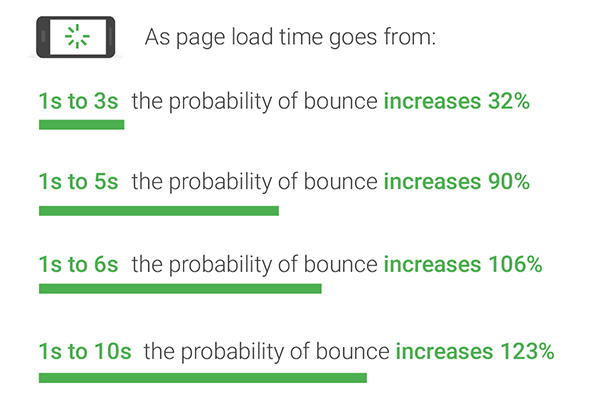
More than half of the people who visit a website on their phone (exactly 53% of them) will leave if the page doesn’t load within three seconds. (Source: Think With Google)
It is the CDN that truly extends this efficiency globally, to foster brand loyalty and drive sales in every corner of the digital marketplace.
Let’s learn deeply about it.
KEY TAKEAWAYS
The role of CDNs is significant, delivering cached content from nearby servers, significantly reducing website page load times for users.
By distributing traffic, CDNs manage high volumes and reroute traffic during failures, minimizing downtime.
It enables efficient content delivery worldwide, boosting accessibility and effortless scaling.
To safeguard e-commerce sites from cyberattacks, CDNs offer DDoS protection, SSL, and WAF.
CDNs optimize rich media for all devices, ensuring a faster, smoother mobile shopping experience.
How CDN Plays a Crucial Role in eCommerce?
1. Accelerates Website Load Times
A CDN stores the cached website’s content on computer networks distributed across different demographics. Presence-based delivery is essential for e-commerce platforms worldwide, as it ensures that the content is delivered to the target audience in the most efficient manner possible. This is partially because users can access the website from any location in the world.
In addition to providing a fast-loading website, a better user experience affects the actions customers take. It has been demonstrated that three seconds is the minimum duration for users when loading a website. Even a moment’s delay on an e-commerce landing page can cause sales to fall and bring about problems with customer satisfaction. A CDN handles this problem, so your website loads seamlessly for all site visitors.
2. Enhances Website Reliability and Availability
E-commerce websites should occasionally experience unexpected volumes of traffic. This occurs notably during sales, promotions, or festive seasons. CDNs manage the traffic surge effectively by sharing the content across multiple servers. In case one server goes down or gets overwhelmed, it transfers the traffic to the next available server. It minimizes the downtime, ensuring a seamless shopping experience.
Having integrity like this helps prospective clients trust the company. In the event your website fails to continue working, your company’s track record may suffer, and you could lose profits. The presence of a CDN set up gives your e-commerce operating system the ability to maintain a good performance level even when things get tough.
3. Improves Global Reach and Scalability
With a CDN in place, E-commerce businesses scale effortlessly. It facilitates the distribution of content to the worldwide audience. Along with the conversion improvements to maximize the foreign market presence, your website’s accessibility also rises with the greatest global reach.
Additionally, a system’s ability to scale matters a lot during times of rapid growth or distribution of discounts. In case your online store has a sharp improvement in visitors, using a CDN allows it to address them all speedily without negatively impacting how it works. As a result, starting up in unfamiliar areas and marketing on different channels becomes considerably less complicated.
4. Boosts Website Security
Website security is a primary aspect of any e-commerce firm dealing with sensitive customer data. CDN is hooked up with robust defensive features like DDoS protection, Secure Sockets Layer (SSL) encryption, and Web Application Firewall (WAF) support. Due to the effectiveness of these tools, your web presence will be safe from cyberattacks, and private data will stay secure.
Because online shops globally deal with threats originating from all over, dispersing security measures is very useful. A CDN blocks attacks that keep them away from your origin server. Apart from securing your customers, it means your facility security systems will deal with less stress.
5. Optimizes Mobile and Media Content Delivery
The CDN role is not merely restricted to content delivery, although it also ensures optimization for mobile devices. By using less bandwidth, compressing pictures, and adapting material to several devices and screen sizes, it maximizes the transmission of rich media. It led to a faster and smoother mobile experience.
Since mobile shopping is crucial to e-commerce in many countries, problems with media can leave users annoyed and lead them to give up. Having a CDN sets up your inventory images, promotional videos, and interactive features to ensure they appear correctly and immediately for all users, keeping them interested and progressing through purchase.
Useful Fact Studies have shown that for every 100-millisecond improvement in page load speed, conversion rates can increase by an average of 1.11%.
Check for more with the help of the infographic below.
Summing Up
In the fast-evolving world of global e-commerce, delivering a seamless and speedy online experience is non-negotiable. A Content Delivery Network (CDN) acts as a powerful backbone that helps these demands by offering fast load times, reliable uptime, enhanced security, and a consistent user experience across borders. CDN plays a crucial role in maintaining your e-commerce site’s performance and reputation, from optimizing media content to handling sudden traffic spikes.
As more consumers shop online from practically every corner of the globe, investing in a robust CDN is no more a technical upgrade; it is a strategic move that builds trust, drives conversions, and opens doors to new markets. Whether you are a growing e-commerce brand or an already established global retailer, incorporating a CDN into your infrastructure is vital while trying to meet customer expectations and stay ahead in the digital marketplace.
Ans: A CDN is a global network of servers that stores and delivers your website’s content from the server nearest to the user.
Ans: It reduces data travel distance, cutting latency and speeding up page loads for users worldwide.
Ans: Yes, CDNs distribute traffic loads, ensuring your site remains fast and available during peak periods.
Ans: Yes, many CDNs provide DDoS protection, SSL encryption, and WAFs to defend against cyber threats.