How to Align IT Services With Business Outcomes Using a Unified Model

Are you marvelling at how to ensure that IT services actually contribute to your business outcomes? The answer lies here, in aligning your IT services with your overall business goals—and doing it in a way that’s structured and unified.
According to the National University,77% of companies are either using or exploring the use of AI in their businesses.
This article explores how to align IT Services with business outcomes using a unified model, steps that lead you to this result and benefits that follow.
Key Takeaways
- The disconnect between IT and Business Goals
- What Is a Unified Model?
- What is CSDM
- Steps to Align IT Services With Business Outcomes Using a Unified Model
- The Benefits of Aligning IT Services with Business Outcomes
The Disconnect Between IT And Business Goals
It’s a common scenario: your IT department works hard to keep the lights on, ensuring systems run smoothly and data flows seamlessly.
Meanwhile, your marketing, sales, and operations teams are focused on delivering on business goals, like increasing revenue or enhancing customer experience.
But if IT services and business goals aren’t aligned, things can go off track.
Misalignment between IT and business can lead to:
- Inefficiencies
- Wasted resources
- Missed opportunities
- And even customer frustration.
For example, imagine a scenario where IT introduces a new tool to streamline operations, but the marketing team doesn’t fully understand how it contributes to their objectives.
What happens in such scenarios is that the tool doesn’t get used properly, and the investment doesn’t pay off.
In order to avoid this misalignment, you need to make sure that your IT services are actually pushing your business forward.
And the key to doing that is to establish a unified model that ties everything together.
What Is a Unified Model?
A unified model is all about creating cohesion between different parts of your organization. It’s a framework where your IT services, business processes, and goals work in harmony to deliver tangible outcomes.
It is an orchestra-shaped model. Every section (IT, sales, operations, etc.) plays its own part, but they all follow the same sheet of instructions, and work in sync.
When this alignment happens, efficiency improves, and simultaneously, customer satisfaction also rises, leading to a smooth and quick movement of business.
To analyze the working of a unified model in practise, here is an infographic that depicts the unified process :
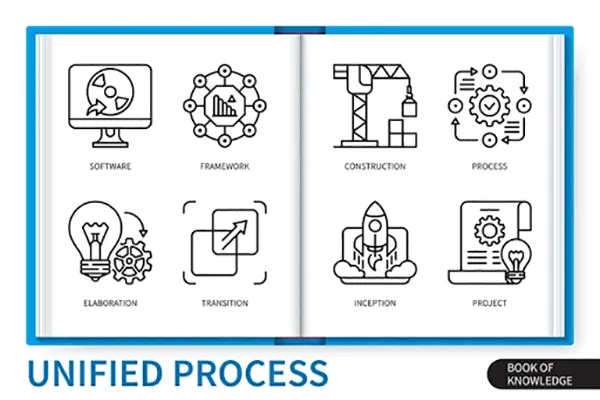
But how do you achieve this? That’s where frameworks like CSDM come into play.
What Is CSDM (Common Service Data Model)?
When discussing IT, the primary question that arises is what is CSDM?
It is a standardized framework that helps you structure and manage your IT services in a way that aligns with business outcomes.
In simple terms, it’s like a blueprint for organizing your IT services and data, making it easier to connect IT with your business requirements and achievements.
Using CSDM allows you to create a clear map of IT services and identify their role in supporting business goals. This makes it much easier for teams across your organization to collaborate, understand the bigger picture, and make data-driven decisions.
Steps To Align IT Services With Business Outcomes Using a Unified Model
Now the question arises: How do you align your IT services with your business outcomes using a unified model? Here’s a simple, step-by-step guide to get you started:
1. Start with Business Objectives
Before you can align anything, you need to know exactly what your business goals are. Whether it is to improve customer satisfaction, drive more sales, or increase operational efficiency.
These goals form the foundation of everything that comes next. The IT services you provide should directly support these objectives.
For example, if your goal is to improve customer experience, then your IT services should focus on systems that help enhance communication, track customer interactions, or streamline service delivery for the best results.
2. Develop an IT Strategy That Supports These Goals
Once you know your business objectives, it’s time to craft an IT strategy that supports them.
Your strategy should outline how IT services will help meet those goals—whether it’s through faster data processing, better customer data integration, or improved security to protect customer information.
By mapping your IT strategy directly to your business objectives, you ensure that every tech decision made is contributing to the larger mission of your business.
3. Use CSDM To Create Clear Service Visibility
By implementing CSDM, you can create a clear, structured view of all your IT services and see how they fit into the larger business picture.
This helps you connect the dots between IT and business services instead of disparate systems that don’t connect.
For example, let’s say your customer service team uses a ticketing system to handle customer issues, and your business goal is to improve customer satisfaction. Through CSDM, you can map this service to this specific business outcome and have a clear view of how IT and business goals align.
4. Create Continuous Feedback Loops
Aligning IT services with business outcomes isn’t a one-time task. It’s an ongoing process.
The IT services should evolve with your business goals. This means creating feedback loops where you regularly evaluate how well IT services are supporting business objectives and make adjustments as needed.
This approach ensures that your IT services remain agile and responsive to changing business needs.
5. Foster Cross-Functional Collaboration
One of the biggest roadblocks to alignment is the gap between IT and business teams.
To have a clearer understanding, there should be regular meetings, joint planning sessions, or shared tools and dashboards that allow for transparent communication.
When IT and business teams work together, it’s easier to ensure that technology is being used in ways that directly benefit the business. The adjustments to strategies become more accessible.
Fun Fact : 7.2 percent of this traffic comes from people searching the term ‘Google’.
The Benefits Of Aligning IT Services With Business Outcomes
So, why go through all this effort? What’s in it for you and your organization? Plenty!
1. Improved Efficiency
When IT and business work together, you can streamline processes and reduce surplus. This leads to better resource allocation and faster decision-making.
2. Faster Time-to-Market
With a clear, unified strategy in place, your organization can adapt quickly to new opportunities.
Whether it’s launching a new product or responding to a market shift, alignment allows for a quicker and more coordinated response, ensuring a stable market position.
3. Better Customer Experience
By aligning your IT services with business objectives, you ensure that technology is helping you deliver the best possible experience to your customers.
Faster response times, better data security, and more personalized acts as an enabler of customer satisfaction.
4. Data-Driven Decisions
CSDM gives you the data visibility you need to make informed decisions.
Instead of flying blind, you can track the performance of IT services in relation to business outcomes, allowing for more strategic decision-making.
Conclusion
Aligning IT services with business is essential for success in today’s competitive landscape. By adopting a unified model and leveraging frameworks like CSDM, you can create a cohesive, efficient, and responsive IT ecosystem that drives your business forward.
Ans: The Strategic Alignment Model aligns business and technology across strategy and infrastructure/process layers. Use the four domains (Business Strategy, Org Infrastructure, IT Strategy, IT Infrastructure) to diagnose where fit breaks and to sequence fixes.
Ans: The 5 Ps—Plan, Ploy, Pattern, Position, and Perspective—offer a toolkit for leaders to think beyond the linear view of Strategy as a document.
Ans: To achieve the four key goals of network security – data confidentiality, integrity, availability, and network performance – practical steps are taken.
Ans: CRM, fulfillment, manufacturing, finance, and HR constitute the five processes that drive organizational value within business process management frameworks.




© 2026 allinsider.net All rights reserved