The Advantages Of Courier APIs Integration To Your Logistics System
The ease of delivery has become a competitive battleground in the world of complex supply chains. Businesses, regardless of size, are under immense pressure to ensure every package arrives swiftly, reliably, and with full transparency.
This demand shows why the global API logistics market is exploding, valued at an estimated USD 1.48 billion in 2023 and projected to skyrocket to an anticipated USD 5.23 billion by 2030, boasting a Compound Annual Growth Rate (CAGR) of 20.2% (Source: Grand View Research).
Well, this isn’t just growth; it’s a clear signal that integrating Courier APIs is no longer a luxury, but a strategic move. Therefore, this article will unveil how adding these powerful application programming interfaces directly into your logistics system can automate processes, slash errors, and reshape your delivery operations for unprecedented efficiency and scalable growth.
KEY TAKEAWAYS
- Courier APIs streamline tasks like labeling, tracking, and scheduling, significantly reducing manual errors and saving time.
- Real-time tracking and proactive notifications powered by APIs build customer trust and reduce service inquiries.
- Access to various courier services from a single platform allows for cost optimization and tailored shipping solutions.
- APIs standardize logistics processes, enabling businesses to effortlessly manage increased order volumes and expansion.
- Automation minimizes human error in data entry, leading to more reliable deliveries and fewer customer complaints.
- APIs provide rich data on performance metrics, empowering businesses to make informed strategic choices for logistics optimization.
Improving Operational Efficiency
One of the benefits of using courier APIs and integrating them effortlessly into the platforms of logistics operations is that it enables companies to automate most of the mundane operations previously carried out manually. Labeling, comparisons of rates, tracking of updates, and scheduling of delivery can be performed with minimal to no human intervention. This eliminates the possibility of human error and saves time, allowing staff to focus on other, more strategic aspects of the business.
When the exchange of information between courier services and internal systems can be done in real-time, businesses can track the delivery process in real-time. This makes the handing-off between the processing of purchase orders, packing, and shipping easier, and this not only optimizes the coordination in the company but also entails quicker delivery. The requirement to automate these touchpoints is notably useful to companies that have a high number of shipments within a day.
INTERESTING FACT
“Integrating Courier APIs can reduce manual processing time in logistics by over 50%, directly translating to significant operational cost savings.”
Enhancing Customer Experience
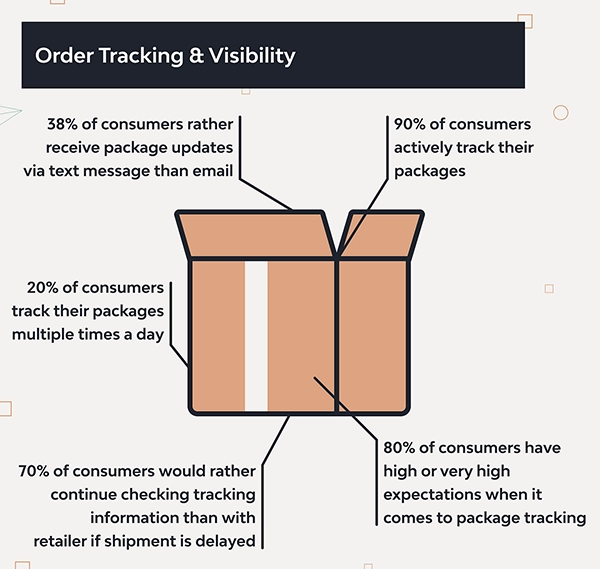
The shipping market has improved drastically in customer desires; the majority of customers prefer checkups in real time and quick delivery options. Courier APIs play a part in implementing these requirements by allowing direct shipment of real-time tracking information to customers. Such transparency earns it loyalty and decreases the volume of customer service questions in regard to order status.
The automated systems, with the inclusion of courier APIs, enable merchants to provide more precise delivery timings and notify customers in case of any delay. This kind of transparency will improve the relationship with the customer, given that he or she can see an active approach to service. Customers become much happier when they understand what to expect next, and when they are frequently informed about it, as it may induce them to be more retentive and make repeated visits.
Accessing Multiple Courier Options
With the guidance of the courier API integration, an enterprise can find a variety of courier services on one platform. It is critical in case of shipping to different areas, the shipping of different types of packages, and the balance between speed and cost. Businesses are now free to move beyond a single service provider and select the most favorable one based on the requirements of the particular order.
Such a multi-courier strategy is suitable to achieve cost-efficient shipping because it allows the system to compare prices and discover the cheap shipping options when most appropriate. In the long run, this might save it plenty of money without having to sacrifice reliability in terms of delivery. The opportunity to switch shippers according to weight, location, or urgency is leveraged to give them a superior advantage where those firms are operating in high-volume markets or in short-term markets.
Supporting Scalable Growth
As businesses diversify, managing logistics manually is becoming increasingly unsustainable. Courier APIs are flexible because they standardize and automate key operations and logistics processes. Regardless of whether the number of orders sent will rise on a seasonal event or remain constant following expansion in company size, the courier APIs would allow those systems to cope with the higher level of work without noteworthy changes.
Once the correct arrangement is ready, firms can add new delivery areas, new courier partners, or connect to other warehousing and fulfillment centers without revamping their circulation chain processes. Such flexibility is vital to sustain the standards of delivery and productivity in times of growth.
Reducing Delivery Errors And Delays
What occurs when orders are transported manually is the potential of making shipping information inaccurate, printing wrong labels, or wrong courier. The possibility of these risks is diminished with the integration of a courier API, as it does not allow manual data entry and makes data flow between systems seamless and free of errors. The process of validating addresses, generating accurate labels, and automatic tracking updates plays a crucial part in making delivery more reliable.
There will also be reduced errors, which translates to reduced complaints due to fewer returns, customer complaints, and saving time as far as delivery issues are concerned. This ensures an effortless total logistics process and internally generated resources that would be thrown into other sectors of the business. These shifts in the long run will result in decreased costs in operations and better brand credibility.
Providing Data For Strategic Decisions
The immense quantity of information is created and worked on by Courier APIs and can be relied upon when conducting logistics and business planning. Real-time monitoring is possible of performance metrics, including courier reliability, delivery times, and shipping costs alike. Later, this information can then be used to evaluate shipping services that are applicable to companies, as well as where there exists the need to make changes.
Having access to comprehensive analytics, companies can follow the developing pattern over time and compare the regular problems, like regular interruptions with specific carriers in the regions, altering prices with the carriers, etc.
Such knowledge can be extremely beneficial whenever entering into contracts, prognosticating future demand, or deciding on the next advancements in logistics. This tendency to make informed policies based on correct and updated information provides businesses with a clear positive difference in their operational procedure.
Conclusion
The incorporation of courier APIs into your system of transportation and delivery has dozens of advantages to your business, ranging all the way to error reduction, efficiency and growth as well as customer experience.
Automation of vital activities and access to live data will allow businesses to have more control of their shipping potential, without necessarily diminishing the benefit of flexibility that comes with shopping for cheap shipping when it is necessary.
Not only does it provide a courier API substitute that represents a technical shift in a world where veracity, timeliness, and transparency are taking on the rapidly increasing importance of successful markets and business growth/expansion strategies, but it is on a totally different level. API replacement is also a critical step that enables a company to stay efficient in the new world.
FAQs
Ans: A Courier API–Application Programming Interface, allows your business’s software systems to directly communicate and exchange data with various shipping service platforms and automate delivery processes.
Ans: It automates manual tasks such as generating labels, comparing rates, scheduling pickups, and updating tracking information to reduce human error.
Ans: Yes, you can access multiple courier providers through a single integrated platform, allowing for optimal choice based on specific needs.
Ans: API integration is increasingly valuable for small and medium-sized businesses looking to scale efficiently, reduce costs, and offer competitive delivery experiences.