10 Common E-commerce SEO Issues You Can Spot in an Audit
Jump To Key Section
- 1. Faceted Navigation and the Crawl Budget Trap
- 2. The Copy-Paste Syndrome (Duplicate Content)
- 3. The Empty Shelf (Thin Content)
- 4. Digital Dead Ends: 404s and Broken Links
- 5. Mismanaged Out of Stock Items
- 6. Site Speed
- 7. Schema Markup
- 8. Keyword Cannibalisation: Competing with Yourself
- 9. Messy URL Structures
- 10. Visual Blind Spots (Missing Alt Text)

Do you find it tough to identify mistakes in ecommerce seo audit? If the answer is yes, the solution is here.
According to the Charle Agency 43% of all e-commerce traffic comes from Google search.
In this article, you will learn how to spot the structural flaws that typically affect a store’s performance.
We will talk about everything from navigation nightmares to the subtle coding errors that keep your pages from shining in search results.
Key Takeaways
- Faceted Navigation and the “Crawl Budget” Trap
- The copy-paste syndrome
- The empty shelf
- Digital dead ends
- Mismanaged out-of-stock items
- Site speed
- Schema markup
- Keyword Cannibalization
- Messy URL structure
- Visual blind spots
1. Faceted Navigation and the “Crawl Budget” Trap
Filters that come in handy for different sizes, colour and prices are a convenient tool for shoppers, but it is these filters itself which causes the greatest problems for SEO.
Every time a user clicks a filter, a new URL is generated. This creates thousands of near-identical pages, which can turn out to be very irritating.
This eats up your crawl budget, which is a fancy way of saying the limited amount of time Google’s bots spend scanning your site.
2. The Copy-Paste Syndrome (Duplicate Content)
It’s tempting to use the product descriptions provided by your manufacturer. But whenevery other site has the same description, you’re stuck with duplicate content.
Search engines reward original value. But if you are a part of copy-paste syndrome, where your text resembles that on other sites, it is nearly impossible to outrank other competitors.
3. The “Empty Shelf” (Thin Content)
Thin content happens when a page lacks enough substantial text to prove its worth.
In the world of e-commerce, such texts hold little value, as they can just hit the category pages.
To Google, these pages look like “low-value” placeholders. Adding a few hundred words of helpful, context-rich copy can turn a “thin” page into a ranking powerhouse.
4. Digital Dead Ends: 404s and Broken Links
Clicking a link only to hit a “Page Not Found” error is the digital similar to entering a store only to find closed signs on every turn.
These 404 errors signal to search engines that your site is neglected.
A solid audit helps you tackle this problem and reduce the bounce rate of customers.
Fun Fact :Global e-commerce sales are expected to hit 8 trillion by 2027.
5. Mismanaged “Out of Stock” Items
What happens when a product sells out? If you simply delete the page, you lose all the SEO authority that the page earned over time.
This is a massive missed opportunity. Instead of a hard delete, smart SEOs use 301 redirects (permanent “forwarding addresses”) to send users to a similar, updated product, keeping the traffic flowing and the “link juice” alive.
6. Site Speed
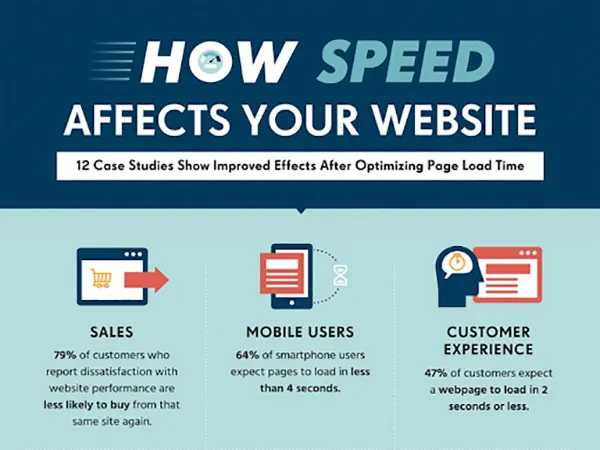
In an age where everything happens at a multiplied speed, a slow site is a dead site. Large, unoptimized product images are usually the primary lead weight dragging down your load times.
If your pages take more than a couple of seconds to render, your customers and your rankings will vanish.
The infographic here clarifies how speed affects your site :
7. Schema Markup
Search engines are smart, specification of your productis a necessary call to take .
This is where Schema Markup (or structured data) comes in. It’s a specific snippet of code that tells Google: “This isn’t just text; it’s a price, a star rating, and an ‘in-stock’ status.”
Using Schema is how you get those eye-catching “rich snippets” in search results that significantly boost your click-through rate.
8. Keyword Cannibalisation: Competing with Yourself
If you have three different pages all trying to rank for “leather boots,” you’re essentially fighting yourself.
This is called keyword cannibalisation. It confuses Google, making it unsure which page is the “true” authority.
An audit helps you consolidate these pages, so your ranking power isn’t spread too thin.
9. Messy URL Structures
A clean, logical URL is a minor but vital ranking signal.
- Bad: shop.com/index.php?id_product=8821&query=shoe
- Good: shop.com/mens/footwear/leather-boots
A descriptive URL tells both the user and the bot exactly what they’re about to see, which builds trust and improves relevance.
10. Visual Blind Spots (Missing Alt Text)
Google’s AI is impressive, but it still can’t “see” an image the way a human can. Alt text is a short description embedded in your site’s code that describes an image.
Without it, your products are invisible to Google Image Search, a massive source of traffic for e-commerce, and you’re missing out on a key opportunity to reinforce your primary keywords.
The Bottom Line
By tackling these ten common issues, you’re not just chasing an algorithm – you’re building a more professional, reliable, and profitable business.
Building a well-optimised website can multiply your customer retention, improve yoursales and ultimately turn out as a profitable investment.
Ans: It helps search engines understand the content and find the website.
Ans: The main limitation is the limited connection with customers.
Ans: The most common SEO mistake is site speed.
Ans: The two techniques are black and white hats.