The Insider’s Guide to Uk Marketplace Selling: Are You Leaving Money on the Table?
The UK’s e-commerce market is a global powerhouse, ranking as the third-largest in the world, trailing only China and the U.S. This robust digital landscape offers immense opportunities for businesses to expand beyond domestic borders.
According to a 2023 report from the Department for Business and Trade, UK digital exports reached a record £114 billion, with a significant portion of this revenue generated through international marketplaces.
While many UK sellers are focused on driving sales and optimizing ad spend, a surprising number overlook a critical area of profit erosion: hidden fees in international transactions, says the House of Commons. These seemingly small charges—primarily from unfavorable foreign exchange rates—can silently eat away at revenue.
This guide provides an inside look at how to identify and eliminate these hidden costs, ensuring you retain the maximum profit from every international sale and unlock new capital for business growth.
KEY TAKEAWAYS
- Instead of letting the marketplace convert your earnings, use a multi-currency account to receive international payouts in their original currency.
- Receive payouts in USD/EUR accounts instead of letting the marketplace auto-convert them to GBP.
- Use the foreign currency in your multi-currency account to pay international suppliers directly, avoiding costly GBP conversions.
- Pay your overseas taxes directly from your foreign currency accounts to eliminate another round of unnecessary conversions and fees.
- The money saved by optimizing payments isn’t just extra profit; it’s capital that can be reinvested into key growth areas like marketing, inventory, or product development.
The profit leak you’re not tracking
You pay keen attention to pre-sale costs, but what about the money you’re earning? After the sale, an invisible process can eat away at your profits, a hidden leak you’re not tracking. Furthermore, in reality, the UK has the third-largest e-commerce market in the world after China and the U.S., and only a fraction of e-commerce sellers regularly audit their marketplace payment and foreign exchange costs. They’re so centered around the checkout that they forget to check the finish line.
The two main leaks are:
- Mandatory FX conversion: A portion of your revenue is taken out of your account before it reaches your UK bank account when you sell on an international marketplace such as Amazon.com or Amazon.de. These platforms frequently convert your USD or EUR earnings to GBP at an unfavorable exchange rate.
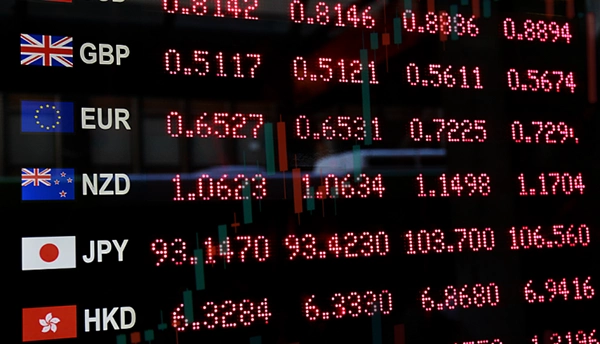
- Hidden fees: The wage differential between the real, mid-market exchange rate and the rate the competition gives you is a hidden fee, often costing you between 2% and 5% of your total payout value. It’s a substantial amount that can add up to thousands of pounds over time.
Let’s put this from the right perspective with a clear example. Think of a situation where you have a €10,000 payout from your European sales. You get £8,200 in your UK bank account after the marketplace converts this for you. However, the real exchange rate €10,000 might be closer to £8,500. That’s a £300 loss on a single payout—money that went to a hidden fee instead of a rival or an advertising campaign. This is a leak in your profit margin that’s happening on every international transaction.
The insider move: take control of your payouts
Taking in-charge of your money the moment it’s paid out is the key to plugging. Set up a method to get international payouts in their original currency, rather than allowing the marketplace’s default settings to determine your profit. This is a core tip that savvy sellers use to protect their margins.
The answer is to receive payments straight into a single multi-currency account from global payment gateways and online marketplace platforms. This effective strategy enables you to take full visibility of your marketplace payments and encourages you to take control of your funds. It offers flexibility with smart online marketplace payments and FX tools that further improve your payment experience. The money lands in your account as USD, not GBP, when a payout is due.
INTERESTING FACT
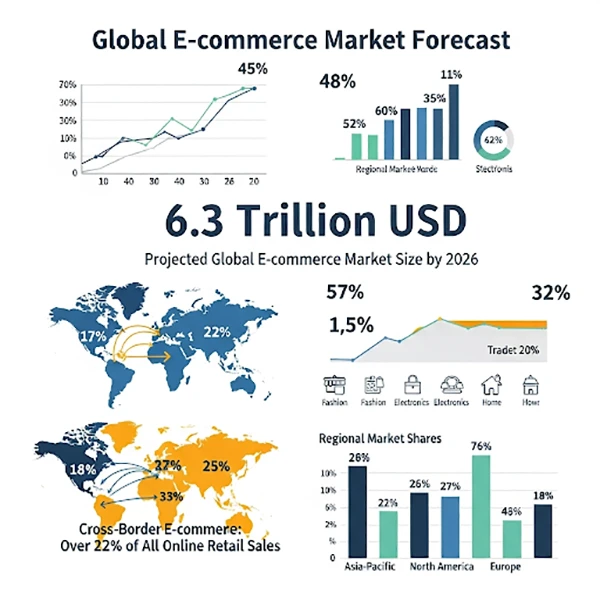
The global e-commerce market is projected to reach over $6.3 trillion by 2026, with cross-border e-commerce accounting for more than 22% of all online retail sales.
Three leaks to plug immediately
Here are some strategies for addressing some of the most frequent profit leaks for UK sellers, as well as some hacks that only experienced players are aware of:
| The Leak | How You’re Losing Money | The Fix |
| US/EU Sales | Your marketplace automatically converts your USD/EUR payouts to GBP at a poor exchange rate, leading to significant profit erosion. | Set up a US Dollar or Euro receiving account. Make sure the marketplace has these account details so that local currency is used for payouts. You control the conversion, getting a better rate. |
| Paying International Suppliers | You convert GBP from your main business account into USD or CNY to pay for stock from overseas suppliers. This often includes poor exchange rates and high transfer fees from traditional banks. | Use the foreign currency funds you’ve gathered in your US Dollar or Euro accounts to pay suppliers directly. This bypasses the need for costly GBP conversions. |
| Managing VAT/GST | You are forced to pay from your GBP account when you need to pay VAT or gst rates in india on your international sale. This means another round of costly currency conversion and fees. | Pay your overseas tax bills directly from the foreign currency accounts where you’ve collected your sales revenue. This eliminates unnecessary conversions and keeps more of your money in your business. |
These are fundamental shifts in the ways you manage your finances as a global seller. You’re building a strong financial infrastructure that works for you, not against you, by putting these fixes into place, not just saving a few pounds here and there.
Reinvesting your saved margin
The money you obtain by optimizing your payments is the capital that can be cautiously reinvested into your business to fuel growth. Consider the two to five percent that you save as an untapped source of funding that is already present in your company.
That £300 set aside on your €10,000 European payout? That’s your upcoming PPC campaign funded. The 3% reduced expenditure on paying your US supplier? That’s a huge inventory order, meaning you could never sell out of your bestseller again.
Additionally, that money can be used to invest in new product development, hire a virtual assistant, or improve packaging. Not only you save money by taking control of your payments, you create a stronger, more resilient business with a clear path to scale.
Wrap-up
The biggest competitive advantage can come from optimizing the parts of the business that everyone else ignores for UK marketplace sellers. Managing your foreign payments effectively is now a must for increasing your profit and obtaining the funding you require for expansion, letting the marketplaces dictate your profit margin.
You’ll discover the capital you need to scale is already in your business when you take control of your money after the sale.
Ans: The main profit leak is the mandatory currency conversion performed by the marketplace, which often uses an unfavorable exchange rate, 2% to 5% of their total payout value.
Ans: A multi-currency account allows you to receive international payouts in their original currency, giving you full control over when and at what rate you convert your funds to GBP.
Ans: You can reinvest the saved capital into your business to fuel growth: funding a new ad campaign, increasing your inventory, or investing in new product development.
Ans: Be aware of high transfer fees from traditional banks when paying international suppliers, and the extra conversion costs incurred when paying VAT or GST from your home currency.