How to Choose the Right Cookie Cutter for Perfect Shapes Every Time
There’s a special joy in homemade cookies, but getting those picture-perfect shapes can be tricky. Many home bakers spend hours perfecting their dough, only to see their creations emerge from the oven uneven. While a great recipe is essential, the secret to beautiful cookies often lies in small details: the right cookie cutter.
This attention to detail is vital in a world where the global bakery products market was valued at USD 551.55 billion in 2023, and is expected to reach USD 789.78 billion in 2031, with a Compound Annual Growth Rate (CAGR) of 4.59% (Source: Markets and Data)
Whether you’re preparing treats for the holidays, a birthday celebration, or simply for the pleasure of baking, choosing the correct tool makes all the difference.
In this comprehensive guide, we’ll drive you through everything you need to know about selecting the ideal cookie cutters for clean, consistent shapes, ensuring perfect results every time.
KEY TAKEAWAYS
- Before buying, consider the occasion, dough type, and whether you’ll be decorating.
- Metal offers precision, plastic is kid-friendly and durable, while 3D printed options provide unique customization.
- Choose cutter sizes (mini, standard, large) that fit your baking needs and prevent overcrowding on sheets.
- Look for cutters with sharp, well-defined edges to ensure crisp, undistorted cookie shapes.
- Simpler designs are easier to use and yield more consistent results, perfect for adding flair with icing.
- Opt for dishwasher-safe materials or ensure metal cutters are dried thoroughly to prevent rust and maintain organization.
Understand Your Baking Needs
Before selecting a cookie-cutter, ask yourself:
- What’s the occasion? A Christmas tree shape may be ideal for December, but not for a spring picnic.
- What type of dough are you using? Stiffer doughs maintain their shape better and can support more intricate designs.
- Are you making cookies for decorating? If you are hoping to ice your cookies, opt for simpler shapes with wider surfaces.
Choose the Right Material
Cookie cutters come in three different materials, and each has its advantages and disadvantages:
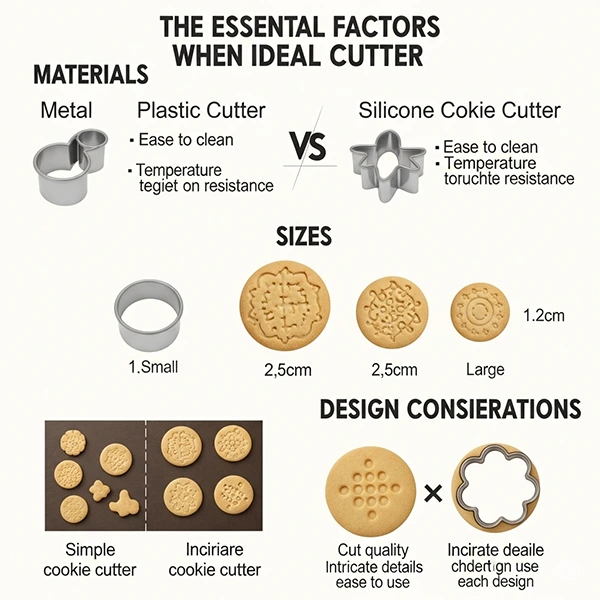
Metal Cookie Cutters
- Best for precision: Thin metallic blades (typically stainless steel or tin) cut through dough cleanly.
- Pros: Long-lasting, sharp edges, ideal for detailed designs.
- Cons: Can bend out of shape and rust if not dried properly.
Plastic Cookie Cutters
- Best for kid-friendly baking: Softer and safer for little hands.
- Pros: Dishwashers are durable, safe, and often come in fun, colorful sets.
- Cons: Thicker edges actually do not cut as cleanly through certain doughs.
3D Printed or Custom Cookie Cutters
- Best for themed baking: If you want a personalized shape (like a favorite cartoon character), custom cutters are ideal.
- Pros: Personalization and distinctive designs.
- Cons: May lack the sharp edges of metal and can be more expensive.
Consider the Size
Size matters when it comes to cookie cutters—not only for appearance, but also for baking consistency.
- Mini Cutters (1–2 inches): Great for party displays or edible decorations.
- Standard Cutters (2.5–3.5 inches): Suitable for most recipes and evenly baked cookies.
- Large Cutters (4+ inches): Perfect for displaying cookies, but may spread or break without difficulty if the dough is too soft.
Tip: Keep in mind that your baking sheet accommodates your chosen size without overcrowding.
Look for Sharp Edges and Clean Lines
The primary component to a clean cut is sharp, well-defined edges. Whether metal or plastic, the cutter you use should slice through dough without dragging or tearing it. Stay away from cutters with overly rounded edges, as they often generate vague shapes that distort when baked.
FUN FACT
According to Guinness World Records and Immaculate Baking Company, the largest biscuit/cookie ever measured 754 square meters (8,120 sq ft) and weighed 18 tonnes (40,000 lbs).
Opt for Simple Designs for Better Results
While it’s naturally tempting to identify the most intricate design on the shelf, simpler shapes are expected to yield more consistent results. Detailed cutters can accumulate dough in tiny crevices, making it exceptionally difficult to release the cookie intact.
Select basic shapes like circles, stars, or hearts for a reliable bake, and experiment with icing or sprinkles to add decorative flair.
Check for Handles or Stamps
Numbered cookie cutters come with built-in handles or stamping mechanisms to press patterns throughout the dough. These distinctive characteristics can be helpful if you’re just looking for decorative cookies without using icing.
- Handled cutters are less challenging to press down evenly, especially for thick dough.
- Stamps can present design details without any extra decorating.
Easy to Clean = More Fun Baking
Cookie cutters should be effortless to clean and store. Search for dishwasher-safe materials for a low-maintenance alternative. If you opt for metal cutters, ensure that you dry them thoroughly after washing to prevent rust.
Pro tip: To maintain the organization of your collection, store your cookie cutters in a labeled container by theme or season.
Final Thoughts
While it may appear to be a minor detail, selecting the appropriate cookie cutter can significantly influence the final product. The ideal cookie begins with the correct shape, which is determined by the tool used.
By taking into account the material, size, design, and ease of use, you can ensure that your cookies are consistently shaped beautifully.
Therefore, the next time you are preparing for a baking session, select your cookie cutter with care and prepare to be impressed by the professional-looking results that you can achieve in your own kitchen.
Ans: Stiffer doughs work best with intricate metal cutters as they hold their shape, while softer doughs may spread or distort with detailed designs.
Ans: Metal cookie cutters, with their thinner and sharper edges, are generally better for achieving precise and detailed designs.
Ans: Cutters with rounded edges tend to drag or tear the dough, leaving vague shapes that can distort during baking, making it harder to get clean lines.
Ans: Standard cutters typically range from 2.5 to 3.5 inches, which is ideal for most recipes, ensuring even baking and suitable portion sizes.
Ans: Handled cutters provide a better grip for even pressure, especially on thicker dough, while stamps can add intricate design details directly onto the cookie without needing extra icing.