In today’s world, everyone has a desire to buy their own dream house, and because of today’s skyrocketing prices of properties, people mainly go for buying it on loans with high interest rates.
But sometimes, the inability to pay back your money can lead you towards some severe consequences, and mostly corresponds to home repossessions.
When the prospect of repossession looms over your head, it can feel as if the ground has been pulled out from beneath you. Stop House Repossessions; they don’t always have to happen.
You can still preserve your home and your peace of mind by acting quickly and considering all of your options. In this article, you will learn the seven simple yet vital ways to stop house repossession to protect your future.
Let’s begin!
Key Takeaways
Discussing important things with lenders before the situation gets worse
Taking a detailed look at the finances
Discovering the role of debt advisors
Checking what support you can get rapidly
Talk to Your Lender Before Things Get Worse
Remember, most lenders do not want to repossess homes unless absolutely necessary. If you speak with your lender early on, you may be able to arrange smaller payments, extend your mortgage term, or even set up a short-term repayment plan that relieves the pressure.
Furthermore, being upfront shows you’re trying, and that honesty can make a big difference in buying yourself more time.
Intriguing Insights
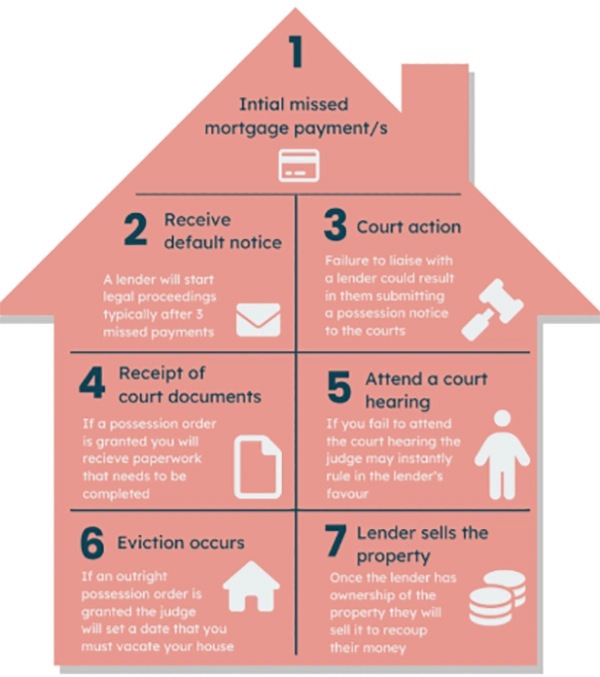
This infographic shows the stages of house repossession
Take a Proper Look at Your Finances
Sitting down with a clear view of your income and expenses gives you a proper idea of what you can adjust. Sometimes it’s the small cuts, like streaming services you use or takeaways that add up, that free up extra funds for your mortgage.
Additionally, you might discover debts that you can simplify by restructuring. You’ll feel more in charge and be able to make meaningful changes if you know where your money is going.
Get Help from Debt Advisers
Professional debt advisers know the rules, they understand the options, and they can explain the support available for your situation. A good adviser will walk you through options, caution you against choices that could boomerang, and nudge you towards solutions.
Having an expert on your side relieves some of the burden and helps you avoid mistakes that could cost you your home.
Check What Support You Can Access
In some countries, depending on your circumstances, there are government programmes that can help with mortgage payments. Local housing services may have schemes that keep you afloat while you get back on track.
These supports exist to prevent repossessions, so it’s worth the effort to find out what you qualify for. Even if it’s only for a short time, that breathing space can help to stabilize your finances.
Interesting Facts Landlord possession actions showed a mixed picture, with claims falling 4% and warrants declining 6%, but orders rose 3% and repossessions increased 5%
Think About Selling Before Repossession
It’s never easy to let go of a home, but in some situations, selling before repossession is the right choice. Doing this on your own terms means you can pay off debts and keep your credit record from taking a major hit.
Selling quickly puts the decision back in your hands rather than leaving it to the lender or the courts. While it may not be the desired outcome, it is a way to regain control and safeguard your future.
Look at Ways to Restructure Your Mortgage
Take note that lenders offer different mortgage restructuring options that can ease the pressure. This includes switching to interest-only repayments for a period of time or extending the term of your loan.
In either case, your monthly repayments decrease, giving you some breathing room. While it’s not an eternal fix, restructuring your mortgage keeps things steady to stop problems from turning into a repossession.
Protect Your Future Today with Stop House Repossessions
You can strengthen yourself by confronting your lender, being aware of your financial situation, getting professional advice, and looking into available resources.
Sometimes a reorganization is the right decision, but whatever you decide, the earlier you act, the more control you’ll have. It’s much more likely that the faster you can act to protect your home, the better your chances of preserving your future.
Ans: Although this factor varies from lender to lender, it mostly happens after a timeline of 3 months of constant missed payments.
Ans: The most important thing that you can do is to inform your lender about your financial difficulties and demand a repayment time extension.
Ans: Ans: They can mostly offer 3 settlement plans, like:
A new repayment plan
Temporarily switching to interest-only payments
Extending the term of the mortgage.