Requirements for Buying an Investment House

Real estate stands out as a highly reliable avenue for building wealth, and for good reason. Its numerous advantages include value appreciation, leverage that can act as collateral, equity buildup, and serving as a hedge against inflation. Additionally, it offers tax benefits and generates cash flow, particularly for those who choose to rent out their properties.
In fact, the real estate market is expected to reach about 655 USD by the end of 2025. For further insights, visit https://www.newsweek.com/. The real estate market is composed of two main types of consumers: personal use buyers and commercial use buyers.
Those who invest in real estate intend to generate returns through future resale at appreciated values, rental income, or a combination of both. Keep reading this guide to discover what you need to know about buying an investment property.
KEY TAKEAWAYS
- Financial preparation and strategy are the first investment property.
- Market research and property search are other critical steps.
- In Acquisition, due diligence occurs, where they make an offer and secure loan approvals.
Roadmap to Your First Investment Property
Are you a beginner who has just stepped into the real estate investment and has very little or even no idea how to go about your first investment house purchase?
If this echoes your situation, you don’t need to be anxious. If you follow these guidelines, you’ll be fine.
Financial Preparation and Strategy
Transparently outline your goals. It eventually lets you figure out if they are realistic and attainable in the first place. Remember that what works for another investor might not work for you, and vice versa. Key pointers to note down include:
Clarity on Investment Goals
Understand this with an example, as some investors are more interested in massive value appreciation than cash flow. As a result, such investors favor property resale. On the other hand, an investor who focuses more on cash flow will find rental income better suited.
Budget
This kind of investment is generally highly capital-intensive, which is a primary reason why many people are not into it. You must therefore decide on your budget because it affects many things. For instance, it impacts where you can afford to invest and even what you can invest in.
Thanks to the creditors who are willing to back investors in this market. Getting a mortgage would be the conventional method, but for some people, eligibility is a big worry.
It is the rigidity and time-consuming nature of such credit services for some people, besides eligibility concerns. Thankfully, there are hard money loans and a few other approaches that can be explored. Nonetheless, before using any credit services, investors need to be fully aware of their implications.
Market Research and Property Search
Having your house as an investment fund in the right location and the right state improves your chances of investment success. Therefore, don’t purchase a home merely for the sake of it. Look for a property with excellent investment prospects. To do this, you are to:
Identify and Choose the Right Target Market
If you choose properties in certain areas, you have a better chance of success. These include regions with strong or great potential for:
- Job Growth
- Population Increases
- Strong Local Economy
- Security
- Amenities – Recreational parks, transportation, and schools, among other things
Do some additional research each time you identify such areas. For instance, find out what rent costs on rental demand, average, and property value trends. You should distinguish between timelines while doing this.
Check out these steps to conduct market analysis as well.
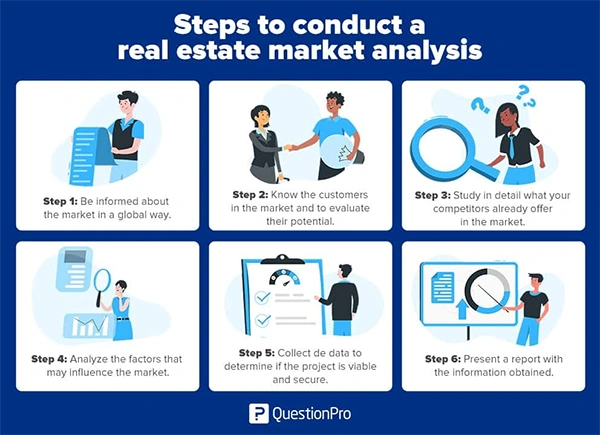
Define the Ideal Property Criteria
You have to select the type of property to go for. Would it be a condo, multifamily, single-family, or townhouse? Understanding the marketplace demand can help you make an informed choice.
Line up the layout and sizes of the property. These things are most valuable for the bedroom, bathroom, and kitchen. Determine what the ideal layout and sizes are for your target audience.
Inspecting the property to make sure it is in good condition is the fundamental rule. While this rule still applies, it is not generally required to ensure that the property is in perfect condition. It is just so that they can get the actual value for investors.
Even properties need repairs/renovations at very cheap rates, but still, some investors are ready to buy. They get their returns on investment through resale, rental income, or both after making the needed repairs/renovations.
Use the Right Tools
You can take help from some online platforms for search and research. For this purpose, only use credible and analytical platforms. Another smart move is to work with seasoned real estate brokers. Hiring a good professional service requires a high investment, but definitely worth it.
With several options and then perform a comparison, the ideal thing would be to end up. Ensure that your comparison is thorough. For instance, account for things such as taxes, insurance, and upkeep while comparing properties.
USEFUL FACT
Proficient investors consider holiday homes as one of the great investment properties.
Acquisition
Acquisition is not only about stepping down the agreed amount and receiving the property. There are a lot of different sides to the proper acquisition of an investment house, including:
Due Diligence
Hire an expert to conduct a property inspection. This is especially critical for uncovering the issues that can arise in the near/distant future.
Examine the paperwork because it is not advisable to rely solely on the seller’s verbal statements. Ensure that everything checks out, and that includes verifying rental restrictions (if any), disclosures, and HOA. You also need to be particular about the property’s legal owner to avoid dealing with the wrong person/people.
Make an Offer
On credible and current data, you should base your offer. Rather than on sentiments, this is done by you and the seller. When you make your offer, remember contingencies, such as inspections.
Secure Loan Approval
Credit services are used by most investors in the real estate market fund. Thus, it is understandable if you would be doing the same.
If you are, ensure you do all that is required to secure the loan. This essentially calls for you to facilitate a property appraisal and give your lender the updated documents they request. Just click here to find out more about property appraisal in the real estate industry.
Conclusion

There are a lot of sides to buying the right investment property. Financial readiness, market research, goal setting, and property selection are some requirements we discussed here. Regardless of their industry experience, investors will benefit most by adhering to these recommendations. In the future, keep this in mind.
Ans: Yes. Anyone can buy a property, even as a first-time purchaser.
Ans: Real estate has advantages like value appreciation, equity buildup, and protection against inflation.
Ans: It should not be less than 620 in case of an investment property loan.
Ans: Depending on the market, it can take from a few weeks to a few months longer.