Lime stabilization boosts the load-bearing capacity of soil, making it ideal for stronger foundations.
It reduces soil plasticity, which stops soil from swelling and shrinking with wet and dry weather.
Lime also helps soil pack better, reducing air pockets and making the ground more stable.
You can add lime to increase soil strength and shear capacity, helping the structure last longer.
Using lime in construction is cost-effective and environmentally friendly.
It can be used in many types of soil, offering flexibility for different construction needs.
Did You Know?
According to Research and Markets, the global market size of lime stabilization is projected to grow from 26.82 billion USD to 36.84 billion USD by 2030.
In construction projects, stabilization is a crucial process for building strong and lasting structures. For achieving this, many people use a popular method of lime stabilization. Studies also show that using lime helps improve soil strength and stability, making it better to handle heavy loads.
Understanding how beneficial lime for soil stabilization can be in a construction process can help builders to choose the best way to improve ground conditions and make sure the project lasts for years.
Are you still not sure about the procedure? Hold on here, delve into this written guide to deeply gain knowledge about the soil stabilization process.
More Load-Bearing Capacity
Soil-bearing capacity enhancement using lime stabilization is well-documented. Lime works in your soil by starting a chemical reaction that ultimately helps solidify the soil structure.
Thus, it helps strengthen the soil, reducing the plasticity of the soil, which helps in withstanding heavy loads. That results in stronger, more resilient underlying structures less likely to fail.
FUN FACT Lime is a chemical compound of calcium carbonate, often misinterpreted as lime fruit by many people.
Soil Plasticity Reduction
Construction on high plasticity soil can be difficult, mainly because the composition of the soil is changed by lime, which makes it less plastic. This even reduces the natural tendency for the soil to swell and contract with dry and wet conditions.
Eventually, it can be very helpful in places that experience alternating dry and wet periods. Lime helps to stabilize those changes, making cracks and other structural problems less likely.
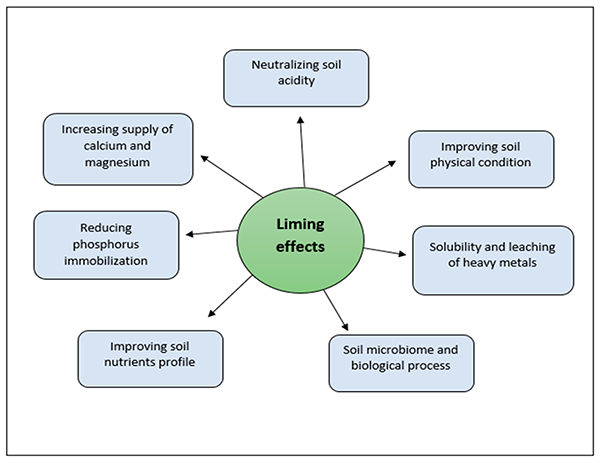
A quick view of the positive effects of lime on soil and its characteristics.
Enhanced Compaction
You need to pack the soil well to give it a strong supporting structure. Soil treated with lime can be compacted better, resulting in a dense and solid base. By compacting this way, the voids within the soil are reduced to yield a higher volume concentration and increase the strength and stability of the structure.
The better the compacting technique, the more stable the ground on which projects sit, and thus constructions are secure throughout the years.
Increased Soil Strength
Lime incorporation usually results in high compaction strength in soil. Lime binds with the soil particles through pozzolanic reactions, resulting in a more sturdy material. The added cohesion causes the soil to end up stronger, with greater shear strength.
This makes it more suitable for supporting buildings and frameworks. Greater strength also means that less material might be required, again reducing costs.
Moisture Control
Lime has a major impact simply because it is one of the most reliable ways to control the moisture level in the soil. According to the Federal Highway Administration, lime treatment reduces the moisture sensitivity of soil, thus preventing common problems associated with water retention, including erosion and instability.
This moisture protection is particularly beneficial in places that are prone to heavy rains or flooding. Lime also keeps moisture away and hence gives a superior, solid, reliable base to build upon.
Durability and Longevity
Lime-stabilized soil is highly durable, and hence the structures built on it tend to last longer. Enhanced soil properties minimize the risks of settlement and movement, which can cause structural damage.
Long-lasting buildings and infrastructure are transformed into long-term economic benefits that come in the form of less maintenance and repair.
Environmental Benefits
One of the sustainable benefits of using lime for soil stabilization is its natural origin. Lime is natural, so using it helps to limit the use of synthetic chemicals. It is advantageous as it has less impact on the ecosystems.
Less excavation also minimizes the emissions from transporting materials, making construction a greener service.
Cost-Effectiveness
A cheap solution is lime stabilization, which improves soil characteristics and decreases the demand for extra materials and workforce. It is a relatively easy process, due to which a given task can get done in a shorter time.
All these elements lead to reduced overall investment in construction, thus lime appears to be the first choice for several builders and developers.
Multi-Use in Different Soil Types
Lime can potentially be applied over a large range of soils. This gives added versatility when moving from job to job in an urban center as opposed to a rural site.
This versatility allows lime stabilization to be used on many other types of projects, including roads and highways, as well as residential subdivisions.
Conclusion
Using lime for soil stabilization has a lot to contribute in every construction project. Lime is effective and sustainable due to the positive qualities it offers, from boosting load-bearing capacity to the environmental benefits it provides.
Not only does lime alter soil characteristics, making structures stable, but it also helps provide a practical and environmentally friendly construction process. Adopting this approach will make the projects substantially more resilient and sustainable.
Ans: Lime, when mixed with soil, improves soil strength, reduces plasticity, and makes it better for construction.
Ans: Absolutely yes, being a natural material, it’s better for the environment.
Ans: Yes, from clay-rich soil to sandy soil, this stabilization process is surely useful.
Ans: Lime provides strong outcomes, reducing the need for extra material and labor, as well as saving time and money on projects.