Selecting an appropriate kindergarten in Melbourne for your child constitutes one of the most significant decisions you will encounter during their formative years.
Kindergarten establishes the groundwork for enduring education, facilitating the development of social competencies, autonomy, emotional acumen, and an enthusiasm for exploration.
With so many options available across Melbourne, such as Uniting Vic Tas’ kindergarten, it’s easy to feel overwhelmed.
This guide delineates essential considerations that every parent ought to evaluate prior to enrolling their child in a Melbourne kindergarten.
Let’s begin!
Key Takeaways
Understanding the varied variations of kindergartens in this place
Discovering some eligibility and enhancement factors
Decoding the availability of perfect ratios
Looking at some important facilities
Understand the Types of Kindergartens in Melbourne
In Victoria, kindergartens (often called “kinder”) can operate through long day care centres, standalone sessional kindergartens, or as part of a school. Here’s a breakdown:
Sessional Kindergartens: These typically offer shorter programs (e.g., 15 hours per week) and operate during school terms.
Long Day Care Kindergartens: These include kindergarten programs within full-day childcare settings—ideal for working parents needing extended hours.
School-Based Programs: Some primary schools offer integrated kindergarten programs, which can ease the transition to Prep.
Choose the format that best fits your child’s temperament and your family’s lifestyle.
Interesting Facts Melbourne is a major city in Australia with a significant population of young children, and it has a strong focus on education, including early childhood development. (Source)
Check Eligibility and Enrolment Dates
Children in Victoria are eligible for kindergarten if they turn four by April 30 in the year they attend. Kindergarten for three-year-olds is becoming more accessible, thanks to increased state government funding in Melbourne suburbs.
Most kindergartens open enrolments a year in advance—some even earlier. It’s essential to register on time, especially in high-demand areas. Many local councils manage a central registration process, so visit your local council’s website for specifics.
Location and Convenience Matter
While curriculum and staff quality are vital, location also plays a practical role. Think about:
Proximity to home or work
Parking availability
Access to public transport
Ease of drop-off and pick-up during peak hours
A convenient location can reduce daily stress and support consistency in attendance.
Quality of Teaching and Curriculum
Not all kindergarten programs are created equal. Look for:
Qualified Educators: Teachers should hold an approved early childhood teaching qualification.
Curriculum: Victorian kindergartens follow the Victorian Early Years Learning and Development Framework (VEYLDF). Ask how a centre implements this framework.
Learning through Play: Reputable kindergartens provide rich, play-based learning environments that encourage cognitive, social, and emotional development.
Child-Centred Philosophy: A strong program follows children’s interests, offers flexibility, and supports different learning styles.
Ask for a tour to see how the curriculum is brought to life.
Teacher-to-Child Ratios and Group Sizes
According to Victorian regulations, there must be at least one educator to every 11 children in a kindergarten group. Smaller group sizes and lower ratios generally mean more individual attention for your child. Ask about:
Daily group size
Number of educators per room
Support staff such as aides or assistants
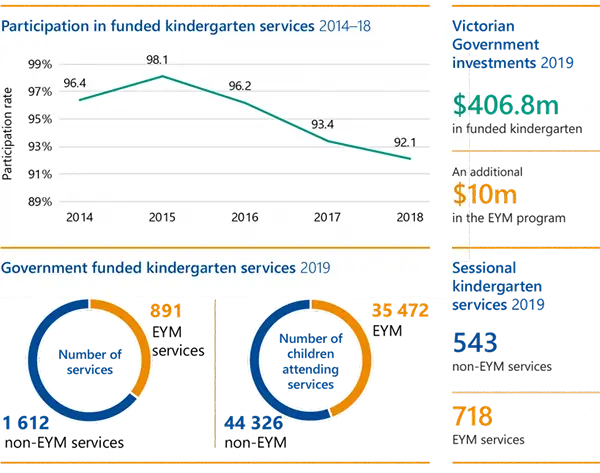
Intriguing Insights
This infographic shows numerous facts about Melbourne kindergartens
Facilities and Safety Standards
During your visit, assess whether the facilities are clean, well-maintained, and safe. Important items to search for are:
Secure entry and exit points
Outdoor play spaces
Indoor learning areas with age-appropriate furniture and resources
Clean bathrooms and child-accessible handwashing stations
Safety protocols (e.g., first-aid trained staff, allergy management plans) should be clearly outlined.
Parent Involvement and Communication
Strong partnerships between families and educators benefit children’s learning. Ask about:
Regular communication (e.g., newsletters, apps, meetings)
Opportunities to volunteer or participate in events
Feedback processes and responsiveness to concerns
A kindergarten that values parent input builds a more supportive, inclusive community.
Fees and Government Subsidies
While the Victorian Government funds many kindergartens, especially for 3- and 4-year-olds, some costs may still apply (excursions, materials, extended care). Always ask:
What is included in the fees?
Are payment plans available?
Is the service eligible for government subsidies or Child Care Subsidy (CCS)?
This transparency helps families plan ahead financially.
Trust Your Instincts
Ultimately, no amount of research can replace your gut feeling. During tours, observe how staff interact with children. Do they show warmth, patience, and respect? Are children engaged and happy? Do you feel welcomed as a parent?
A kindergarten should feel like a second home—safe, nurturing, and stimulating for your child.
Final Thoughts
Enrolling in a Melbourne kindergarten is a big milestone for both you and your child. By understanding your options, asking the right questions, and planning ahead, you’ll find a program that aligns with your child’s needs and your family values. When your child starts school, they will feel confident, interested, and happy if they have the right base.
Ans: From interactive museums and kids’ festivals to exhilarating outdoor adventures and wildlife parks, you’ll discover a whole host of fun things to do with the family.
Ans: From its reputation as Australia’s cultural hub to its renowned food scene, sports events, and stunning architectural design, Melbourne is a city that offers something for everyone.
Ans: Melbourne is not just Australia’s best student city, it is also ranked as Australia’s ‘most liveable’ city and #4 in the world’s behind Copenhagen, Vienna and Zurich. Across 5 broad categories, Melbourne scored a perfect 100/100 in Healthcare and Education.