The Journey of Earning a Psychology Degree: What to Expect
KEY TAKEAWAYS
- Understand the requirements to get a psychological degree
- Learn how to stay organized and develop good study habits
- Discover ways and benefits to get involved in the psychological field
Have you ever been curious why people think, feel, or behave the way they do? If yes, then there are high chances you can pursue psychology. And this degree can open the gates to amazing careers for you.
Getting a psychology degree is a journey where you learn to understand complex human behavior and mental processes. This path also equips students with tools to improve mental health and organizational effectiveness.
This special journey offers many maxing careers from counseling to research and many more. But before diving into that, it is important to understand what you can expect from this path.
This guide will provide a clear picture of what to expect from a journey of earning a psychology degree.
Understand the Requirements
Keep one thing clear in mind that psychology is the study of human behavior and mental processes, so if you are interested in this kind of thing, you can go ahead. To earn a bachelor’s degree in psychology, students typically have to complete 120 credit hours of general and psychology classes.
Psychology majors also take core courses like developmental psychology, social psychology, abnormal psychology, and research work. Some programs require lab work and internships. But this depends on the school or university.
The main elements to pass the exam are a set number of credits, passing the exam, and maintaining the minimum GPA.
FUN FACT
The term psychology comes from the Greek word ‘psyche,’ which means ‘spirit, soul,’ and ‘logia,’ which means ‘study, research.’
Stay Organized
Whether you are a student of psychology or any other course, staying organized is very important to focus on your studies.
This can be done by doing simple things. If you often miss deadlines for submitting assignments and research papers, you can make planners or use digital tools to set the timing for deadlines.
You can also make a chart of exam dates with subject names, so that you don’t forget any of them.
By following these strategies, you can easily stay organized and able to boost your performance.
Develop Good Study Habits
Are your study sessions not fixed, and you often procrastinate? If yes, then focus on the solution, break big tasks into small ones so that you can do them easily.
Create consistent study plans with weekly goals. At the start of each semester or week, outline your assignments, reading, and review materials to set a timeline for your study.
Try to find a study group, because studying with friends or classmates makes studying more enjoyable, and with their help, you can understand concepts better.
Take essential water and relaxation breaks after studying for a while. These healthy study habits can help you a lot in earning a psychology degree.
Get Involved in the Field
Have you ever heard this quote by Albert Einstein: ‘The only source of education is experience’? If yes, then it might be easy for you to understand that until you get involved, you can’t learn what actually matters.
Grab every opportunity that you think can help in your study or increase your knowledge. Ask your friends, find online, or take help from your professors to get a chance to work in internships, as a volunteer, or even part-time work that can give you experience in Psychology.
what skills can you gain from a psychology degree? Maybe knowledge of how to handle different human behaviors or mental stages, right? But the thing is, until you learn the skill that actually needs to deal with these things, it will just stay in theory.
So try to get involved as much as you can to gain the hand on experience or extra knowledge.
Seek Help When Needed
It’s quite impossible that you don’t get stuck at points in your study, or struggle with some topics. Whenever this kind of situation stands in front of you, don’t hesitate to ask for help.
Professors are there to help students, and if you ask them, they will try their best to make you understand and clear your confusion. You can request them for study resources, too. So don’t hesitate, it’s perfectly okay to ask for help.
Not every college, but a lot of colleges provide academic support too, like tutoring and study skill workshops. If it’s available in your college, take advantage of it as well.
All About Earning a Psychology Degree
Keep one thing in mind: don’t rush. The journey of earning a Psychology degree takes time, effort, and proper planning.
It basically involves understanding your interests, picking the right program, fulfilling requirements, gaining experience, and thinking about the future.
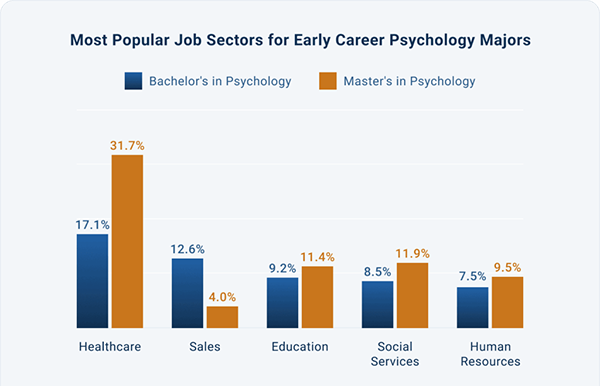
Psychology is an amazing field that can open many doors for you. If you do a master’s or doctoral degree in this field, you can become a psychologist, counselor, or therapist. Here are some more popular sectors you can work in:
The thing that matters more than what degree you are getting is your dedication and determination, because they can completely change your life.
Frequently Asked Questions
Ans: An undergraduate bachelor’s degree typically takes three to four years.
Ans: No, a therapist is not actually a psychologist. A psychologist may function as a therapist, but not all therapists are psychologists.
Ans: The United States, the United Kingdom, Australia, and Canada are considered to be the best places to study psychology because of their high-quality education.
Ans: It helps you understand yourself better and other humans too, also it improves your communication and critical thinking skills, and provides various career paths for you.