Engaging in roofing activities is recognized as one of the most perilous occupations within the construction sector. Annually, numerous roofing professionals encounter severe accidents, with a substantial number leading to fatalities.
The hazards linked to roofing, particularly falls from elevated positions, are considerable, thereby rendering roof safety an imperative concern.
Among the most essential components of safety equipment that can significantly influence outcomes on the job site is the roof safety anchor.
These safety roof anchors are vital for ensuring the safety of roofers and other workers who must perform tasks at height.
However, it is essential to understand the nature of these anchors and their significance for every roofing professional. Let us elucidate this matter!
Key Takeaways
Understanding what roof safety anchors are
Discovering why every roofer needs this tool
Looking at some reliable approaches
Decoding how to choose the right one
What Are Roof Safety Anchors?
A roof safety anchor is a device that is securely fixed to the roof structure, providing a stable point for attaching fall protection systems such as harnesses, lanyards, or lifelines. These anchors are designed to safely absorb the force of a fall and prevent the worker from being injured or falling off the roof.
In simple terms, roof safety anchors act as the “lifeline” between the roofer and the roof, offering an effective way to prevent dangerous falls. They are typically installed at specific points on the roof where workers are most likely to be working at height or in vulnerable positions.
Roof safety anchors come in different styles and materials depending on the type of roof and the nature of the work being done. Some common types include:
Permanent anchors: These are installed during the roof’s construction or during a major renovation. They are built to last for the life of the roof.
Temporary anchors: Used for specific projects or during maintenance, these can be installed and removed as needed.
Tie-off anchors: These anchors are designed to connect to a fall arrest system, such as a lanyard or lifeline, to keep workers secure.
Interesting Facts According to a report from Growth Market Reports, the global roof safety anchor point market is projected to grow significantly, driven by increasing safety regulations and a focus on worker well-being.
Why Every Roofer Needs Roof Safety Anchors
Now that we understand what roof safety anchors are, let’s look at why every roofer needs them as part of their safety protocol.
Preventing Falls from Height
The most obvious and critical reason roofers need safety anchors is to prevent falls. According to the Occupational Safety and Health Administration (OSHA), falls are the leading cause of fatalities in the construction industry. Roofers who work without a secure point to anchor their fall protection gear are at risk of death. Safety anchors provide the necessary attachment point for workers’ harnesses, ensuring that even if they lose balance or slip, they won’t fall from the roof.
Compliance with Safety Regulations
OSHA and other regulatory bodies require fall protection systems to be in place for workers working at heights of six feet or more. In many cases, safety anchors are essential to meet these standards. Failure to use fall protection equipment, including roof safety anchors, can lead to hefty fines, penalties, and potential legal consequences for contractors and businesses. By using safety anchors, roofers not only protect themselves but also stay compliant with workplace safety regulations.
Reduced Injury Risk
Even if a fall doesn’t result in death, the potential for serious injuries is high. A roofer falling from a height can suffer broken bones, spinal injuries, head trauma, or internal injuries. Using roof safety anchors significantly reduces the chances of a fall occurring, thus lowering the likelihood of serious or life-changing injuries.
Enhanced Worker Confidence
Knowing that safety measures are in place can boost the morale and confidence of workers. Roofers who feel safe and secure while performing their jobs are likely to be more productive and efficient. When workers feel that their safety is a priority, they’re more likely to focus on their tasks without distraction, leading to higher-quality work and fewer mistakes.
Intriguing Insights
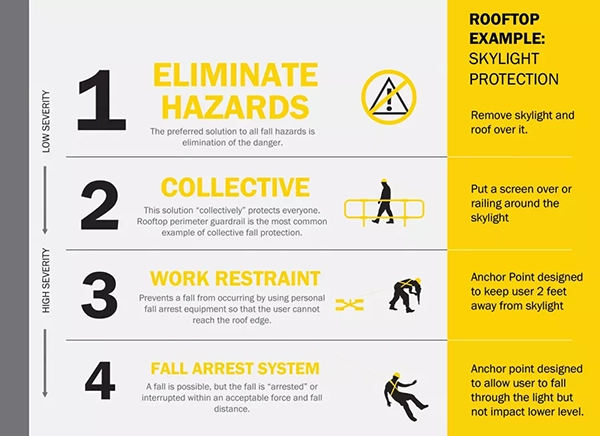
This infographic shows numerous safety approaches for working on a roof
Versatility for Various Roof Types
Roof safety anchors are extremely versatile and can be used on all types of roofs, including flat, sloped, and pitched roofs. Different anchors are designed to fit different roofing materials, such as asphalt, metal, tile, and more. This means that roofers can use safety anchors in virtually any situation, regardless of the roof’s design, offering reliable fall protection.
Long-Term Cost Savings
While investing in roof safety anchors requires an initial outlay, it can save contractors money in the long run. The cost of medical bills, workers’ compensation claims, legal fees, and OSHA fines following a fall can be significantly higher than the cost of investing in proper safety equipment. By using safety anchors, roofers reduce the likelihood of accidents and thus avoid these expensive repercussions.
Protecting Reputation and Credibility
Roofing companies that take the time to implement proper safety measures, such as roof safety anchors, demonstrate their commitment to worker safety. This can enhance the company’s reputation and attract clients who prioritize safe working practices. On the other hand, if a company is known for failing to implement safety protocols, it can harm its reputation and lead to lost business opportunities.
How to Choose the Right Roof Safety Anchor
When selecting a roof safety anchor, consider the following factors:
Roof Type: Ensure that the anchor is suitable for the specific roof material and structure.
Load Capacity: Choose an anchor that can withstand the forces generated by a fall. OSHA typically recommends a 5,000-pound strength rating for anchors.
Ease of Installation: Depending on whether the anchor is temporary or permanent, it should be easy to install without damaging the roof or structure.
Weather Resistance: Roof safety anchors must be weather-resistant, especially if they are exposed to the elements over time.
Conclusion
Roofing is a physically demanding and dangerous job, but safety doesn’t have to be a risk. Roof safety anchors are critical tools for providing fall protection and ensuring the safety and security of roofers working at heights. These anchors help prevent falls, meet safety regulations, and reduce the risk of serious injury or fatalities. Investing in roof safety anchors is not only a smart move for the well-being of workers but also a responsible choice that protects businesses from legal and financial repercussions.
For any roofer, whether on a commercial or residential project, using roof safety anchors is an absolute must. By incorporating proper fall protection, such as roof safety anchors, into daily work practices, roofing professionals can stay safe, compliant, and confident while completing their tasks at height.
Ans: They are permanent or temporary fixtures installed on a roof to provide secure attachment points for safety harnesses. These devices serve as a critical component in fall protection systems, ensuring workers have a safe and reliable point of attachment when working at heights.
Ans: Working on a roof comes with inherent dangers, and falls are a leading cause of serious injury or death. Fortunately, roof anchors can serve as a critical line of defense, providing secure attachment points for fall protection systems
Ans: Wedge anchors are one of the strongest anchors available. They come in nine different diameters and several different lengths.