Understanding the Core Benefits of Salesforce Data Integration

“Data is the new oil, but it’s only valuable when it’s refined and flowing through the right pipes.”
Data plays an essential role in today’s business world; however, it becomes useless if it is stored in separate systems. Companies make use of Salesforce as their Customer Relationship Management (CRM) to unlock its real potential by linking it with other major software, such as marketing tools and finance.
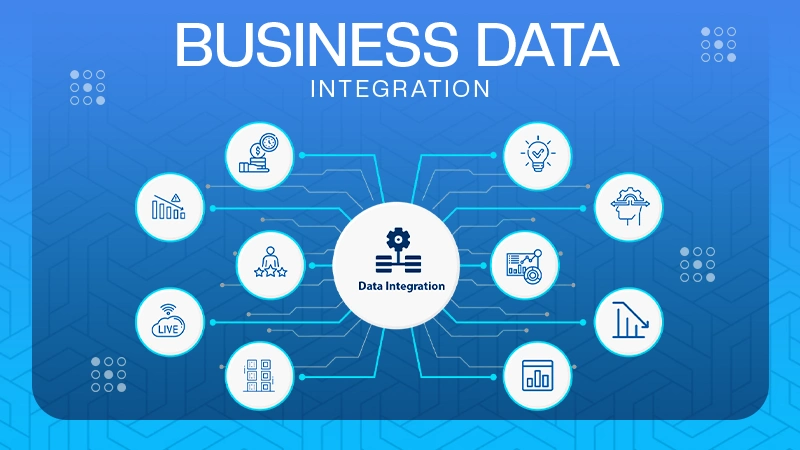
The process is referred to as Salesforce data integration and acts like a bridge. It collects all the scattered pieces of information into useful and clear insights. By connecting various applications, businesses develop a strong digital system. This unified connectivity is now non-negotiable to stay competitive in the business.
Key Takeaways
- Data Integration saves the task of employees from having to type the same name and address into different programs.
- Since everything is in one single place, there is no need to send an email to the Finance team to check if the client has paid their bill.
- The whole job can be done from one single browser tab instead of shifting back and forth from one window to another.
- Data centralization makes it easier to manage duplicates and stay relevant with strict privacy laws such as GDPR.
- Support teams get a 360-degree view of the customer, helping them understand what the client’s issue is
Streamlined Data Access
Salesforce integration brings about an instant improvement in data access for all users. In the absence of this integration, employees are forced to undergo a time-consuming process of hopping from one application to another to locate the data they need, which in turn leads to delays and increased pressure.
The data integration, on the other hand, has a remedy by establishing a ‘Single Source of Truth’ (SSOT). The data gets to be up-to-date between the different systems through the use of tools like MuleSoft or APIs, enabling the user to see everything in one place, right within Salesforce.
Improved Decision Making
Data-driven decision-making and leadership need to be efficient and accurate, and not just based on intuition. The sales data from Salesforce in isolation does not reflect the entire operation of the business, as it neglects the inventory or finance context, which are very crucial.
However, integration overcomes this problem by bringing together the various data and making available a complete, panoramic business view, which is a prerequisite for strategic planning. An integrated system allows for the use of advanced analytics and predictive modeling as well. The case where revenue forecasting is improved due to the combination of CRM with financial data is a good example of this.
Did You Know?
Salesforce hasn’t been a platform since always! It began as a simple cloud CRM, but its decision to open its API to other developers is what helped it to become the central brain of the modern business ecosystem.
Enhanced Team Collaboration
When departments are cut off from one another, it results in inflexibility of the whole organization. Miscommunication within the company is one of the consequences when there is no common information among teams like Sales, Marketing, and Finance.
The integration of Salesforce functions as a digital bridge, which not only removes these barriers but also fosters the conditions of mutual understanding and transparency. Increased systems’ compatibility results in operational unification.
Connecting support tools helps account managers stay updated about problems. This being the case, no department will be working with outdated or incorrect information; thus, there will be a reduction in the number of emails and status meetings.
Increased Productivity
The manual data input process is characterized by inefficiency; it is not morale-boosting and consumes the time of the employees that could have been used for more productive tasks that are similar to re-typing order details. The integration of Salesforce eliminates any such issues through the automation that it brings in as its main advantage.
The two-way data transfer initiates the activation of intricate, zero-touch workflows throughout the systems; for instance, when a sale is closed in Salesforce CPQ consultancy, an invoice and a fulfillment request can be generated automatically in the background.
Better Customer Experience
Today’s consumers demand that even the businesses they deal with know them perfectly and understand their needs across all the different ways they interact. When the systems are not connected, they cannot meet this expectation, so customers have to provide the same information over and over again, which leads to dissatisfaction.
Integrating Salesforce creates a single view of the customer that instantly connects the support staff to the client’s tickets, past purchases, and payment records. The availability of such rich background knowledge turns the whole personalization process into a business that sells.
Fun Fact: Have you ever wondered how Amazon stays aware of where your package is? It is because of data integration that we know where the package is, even though it moves between different planes, ships, etc.
Simplified Data Management
The usage of distributed IT systems decreases governance, thereby giving rise to data quality issues, mistakes, and compliance (for instance with GDPR) risks. The integration of Salesforce takes away the complexity of data management by giving control in one place.
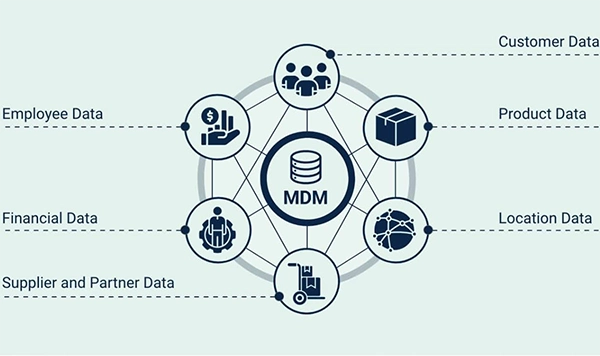
Through Master Data Management (MDM), you can specify which database holds the essential data fields, making it clear and eliminating duplicates. The centralized strategy also makes it easier to comply with rules and regulations since the process of data deletion requests can be applied to and thoroughly executed on all the united platforms with ease.
Understand the Core Benefits Of Salesforce Data Integration
Salesforce integration is a must-have for every business nowadays. The technology aspect is only one part of the whole picture; the main point is that it delivers high-impact results to businesses. The whole process makes the company more stable, flexible, and smart.
What is the western world’s first integration that leads to the development of an enterprise capability allowing multi-dimensional use of the data, which is further enhanced by smooth interaction between different departments? A solid integration makes operations future-proof by unlocking fast growth and changing directions at the speed of light; this is where adopting a new age digital-centric business model comes from.
Frequently Asked Questions
Ans: Its task is to take a request from one system, deliver it to Salesforce, and then bring the response back, which allows them to communicate.
Ans: An integrated system allows customers to delete their data across all the connected platforms from one single command center.
Ans: No. Tools such as MuleSoft or no-code connectors can be linked with apps with simple drag-and-drop interfaces by businesses.