A data center tier is a systematic procedure to rank the data center infrastructure based on the reliability and resilience of the data center.
In Tier 2 infrastructure, you’ll find all the features possessed by Tier 1 infrastructure, but with added backup options.
Tier 3 is the most appreciated choice for companies looking for a balance of reliability and cost.
A Tier 4 data center is the most advanced one, and costs twice as much as a Tier 3 center to build.
Tier 1 & Tier 2 are fine for small businesses, and large companies that require support 24/7 should go for Tier 3 or 4.
As a business leader in today’s digital world, you must know of the fact that the backbone of your company’s IT infrastructure lies in the reliability of its data center.
Consequently, understanding how data center tiers are arranged can make a world of difference and help you make smarter and safer choices.
What else you need to know is that poorly planned operational strategies can lead companies to waste up to $5,600 every minute (Source: Atlassian).
This blog aims to take you step by step through the tiers and explain their requirements, redundancy levels, and guaranteed uptime.
What are Data Center Tiers? Advantages of Opting for Data Center Tiers
Data Center Tiers are fortified levels (Tier 1 to Tier 4) that define the reliability and resiliency of a data center.
Tier 1 is the most basic, with limited backup systems, and Tier 4 is top of the line, with full redundancy and zero downtime.
The benefit of opting for this approach is that if you select a higher-tier data center, your site or application will be available more often and less likely to crash.
In addition, you’ll get better security, quicker recovery from problems, and more customer trust.
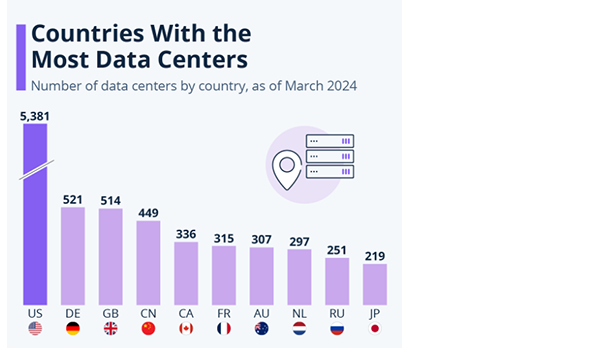
The statistic below provides a snapshot of the distribution of data centers around the world.
How is a Data Center Classified into a Particular Tier?
The tier within which a data center is classified corresponds to how structurally sound, dependable, and high-performing the center is.
The classification system has four tiers, with Tier I holding basic infrastructure and Tier IV having high dependability and fault tolerance.
These categories help businesses pick a data center that meets their needs for availability and performance.
1. Data Center Tier I
Typical uptime: 99.6+%
Tier 1 infrastructure only has one path for power and cooling, and lacks redundancy to every key system.
Staff are also required to take complete operational downtime for regular maintenance or emergency repairs.
Tier 1 facilities require:
An uninterruptible power supply (UPS) for any power spikes or outages.
A designated area for the IT systems.
An engine-generator.
Standalone preferred cooling equipment that functions outside of office hours.
In addition to these, it requires processes and equipment in place to ensure functionality outside the regular business hours during the night and weekends.
2. Data Center Tier II
Typical uptime: 99.7+%
Similar to Tier One, a Tier Two data center also has a singular method for offering power and cooling.
To meet the requirements of Tier 1 data centers, Tier 2 data centers must acquire the following:
Partial power and cooling redundancy
No more than 22 hours of downtime per year
99.741% uptime.
What makes it partially redundant is that it comes with added equipment on-site for mitigating any potential power issues.
Do You Know? The world’s first data center was built in the 1940s at the University of Pennsylvania.
3.Data Center Tier III
Typical uptime: 99.98+%
The businesses seeking a balance of reliability and cost, Tier 3 has always been their ideal choice as it offers a high level of uptime and maintenance flexibility.
A Tier 3 facility requires EVERYTHING a Tier 2 data center possesses, but with N+1 redundancy:
‘N’ denotes the minimum capacity required to accommodate IT expectations for full functioning.
‘+1’ signifies an extra piece solely for covering any failure scenarios.
N+1 redundancy ensures that another component will start operating if the primary one fails or if it is removed for scheduled maintenance.
4. Data Center Tier IV
Typical uptime: 99.99+%
The fourth classification of a data center is Tier 4, and is the most advanced one, which usually costs twice as much as a Tier 3 center to build.
In addition to meeting all the requirements of tier 3, a tier 4 facility must ensure:
All units are backed up by a set of two generators, two UPS, and two cooling units.
Each distribution path should operate separately, so that a single failure in one does not affect the others.
The operation will maintain at least 96 hours of run time after a local or regional power outage.
The power supply is completely isolated from any external connections.
The last thing to be mindful of is that the Tier 4 data center features either 2N or 2N+1 redundancy.
How to Choose the Right Tier Data Center For Your Business?
Which tier data center should be chosen depends entirely on your business requirements.
Such as, Tier 1 is basic service with some downtime; Tier 4 is high reliability with almost zero downtime.
Most small businesses will do fine with Tier 1 & Tier 2, and large companies requiring support 24/7 should go for Tier 3 or 4.
You can even take into account criteria like budget, uptime requirement, and growth plans.
Consequently, you should always align the capabilities of a data center with the required operations of your enterprise and future goals.
Wrapping Up!!
Picking up a data center isn’t just about tech—it’s about ensuring that your business is running devoid of any interruptions.
It becomes simpler to determine your requirements after understanding what the various tiers represent.
Regardless of whether you have just started or are in a growth phase, the appropriate selection will enable you to prevent downtime and remain on schedule.
Finally, I hope this blog has made everything easy to understand and has given you the confidence in your decision.
Stay tuned, and you will learn everything that you need to know without the confusion.
FAQs
Ans: A data center tier is a standardized procedure to classify the data center in terms of reliability and resilience.
Ans: A Tier 4 data center is the highest-tier data center that offers the highest level of availability.
Ans: A Tier 2 data center requires power and cooling redundancy, no more than 22 hours of downtime per year, and 99.741% uptime.
Ans: The right choice of tier data center depends on your business needs, such as Tier 1 & Tier 2 are fine for small businesses, and large companies that require support 24/7 should go for Tier 3 or 4.