How Much Does It Cost to Paint Kitchen Cabinets? A 2026 Guide to Cabinets, Countertops, and Kitchen Remodeling
Jump To Key Section
- How Much Does It Cost to Paint Kitchen Cabinets in 2026?
- What Affects the Cost to Paint Kitchen Cabinets?
- DIY vs. Professional Cabinet Painting
- Is Painting Kitchen Cabinets Worth It?
- Painting vs. Refacing vs. Replacing Cabinets
- When Cabinet Painting Becomes Part of a Bigger Remodel
- Choosing Cabinets, Countertops, and Finishes Together
- How to Budget for Cabinet Painting
- How to Save Money Without Cutting Corners
- Final Thoughts
- FAQs
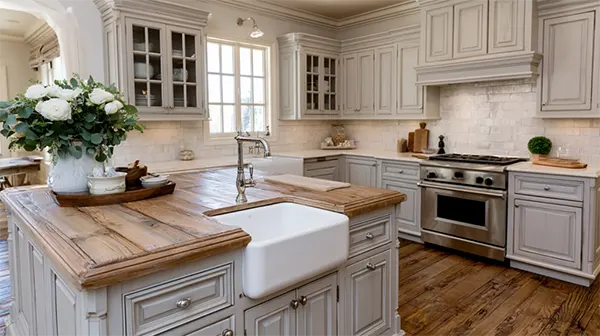
One of the most practical ways to give a kitchen a new look without spending the money on a whole remodel is to paint the kitchen cabinets. Changing the colour of your cabinets can give a tired space a new lease on life, making it look cleaner and more contemporary, if the cabinet boxes themselves are in good shape.
But before taking on the project, most homeowners have one major interest: how much will painting kitchen cabinets cost?
The cost of painting kitchen cabinets depends on a number of factors, including the size of the kitchen, the number of doors and drawers, the condition of the cabinets, the type of paint used and whether or not the work is done by yourself or a professional.
Here’s a practical breakdown of what affects the cost, when cabinet painting is worth it, and how to decide if painting, refacing, replacing, or remodelling makes the most sense for your kitchen.
Key Takeaways
- Kitchen cabinet painting in 2026 typically costs between $1,000 and $3,500, depending on kitchen size and project complexity.
- Major cost factors include cabinet condition, material, number of doors and drawers, paint quality, and labor requirements.
- Proper preparation, including cleaning, sanding, priming, and curing, has a major impact on finish quality and durability.
- Painting existing cabinets can be a cost-effective option when cabinet structures are still functional and in good condition.
How Much Does It Cost to Paint Kitchen Cabinets in 2026?
A lot of the cabinet painting jobs in 2026 are in the range of about $1,000 to $3,500 depending on the kitchen size and complexity. Smaller DIY projects can run you a few hundred dollars in paint, primer, supplies, and basic tools.
Larger professional cabinet painting jobs can cost several thousand dollars, especially if the cabinets require repairs, stripping, sanding, detailed masking or a sprayed finish.
Some cost guides price cabinet painting by square foot, while others estimate by linear foot, by cabinet door, by drawer front, or by the full project scope. A small kitchen with flat cabinet doors will usually cost much less than a large kitchen with detailed trim, tall cabinet boxes, an island, and dozens of doors and drawers.
The most important thing to remember is that cabinet painting is not just about the paint. Most of the cost comes from prep work, labor, and finish quality.
What Affects the Cost to Paint Kitchen Cabinets?
Each kitchen is different so the final price depends on how much work is needed before the first coat of paint is applied. Cabinets take more abuse than walls do because you touch them every day, they get cooking grease on them, they’re cleaned often and opened and closed all the time. A durable finish is not simply a matter of brushing paint on a surface.
Cabinet Condition
Cabinets in good condition are usually less expensive to paint because they need less repair and prep.
If the surfaces are smooth, clean, and structurally sound, the process is more straightforward.
Costs can go up if cabinets have peeling paint, dents, water damage, loose veneer, heavy grease build up, scratches or old finishes that need to be stripped.
Any cracks, chips, or damaged areas should be repaired before painting. Skipping this step may save money upfront, but it can lead to a finish that chips or fails faster.
Cabinet Material
The material of the cabinets also affects pricing.
Cabinets made from solid wood that have been cleaned, sanded and primed correctly are often good candidates for a coat of paint
Laminate, veneer, and thermofoil cabinets may require speciality primer and extra attention to adhesion.MDF can also be painted, but it needs careful preparation as it can absorb moisture if exposed.
Some cabinet materials are simply better suited for painting than others.
Number of Doors, Drawers, and Details
A kitchen with more cabinet doors and drawer fronts will naturally cost more to paint. Each piece typically needs to be :
- Removed
- Labeled
- Cleaned
- Sanded
- Primed
- Painted
- Dried
- and reinstalled.
Detailed cabinet doors also increase labor time.
Raised panels, grooves, trim, glass inserts, and decorative molding take more time than simple flat-panel or shaker-style doors. The more details a painter has to work around, the more time the project will require.
Paint Type and Finish Quality
Cabinet paint needs to be durable enough for daily use. Higher-quality cabinet enamel, primer, and topcoat products may cost more, but they often provide better adhesion, smoother coverage, and improved resistance to chipping.
It also matters how you apply it. Sprayed finishes tend to be smoother and more professional than brush-and-roll painting, but spraying often requires more set-up, masking, ventilation and equipment.
You can still get a nice-looking job with a careful brush-and-roll, but you may see more texture or brush marks.
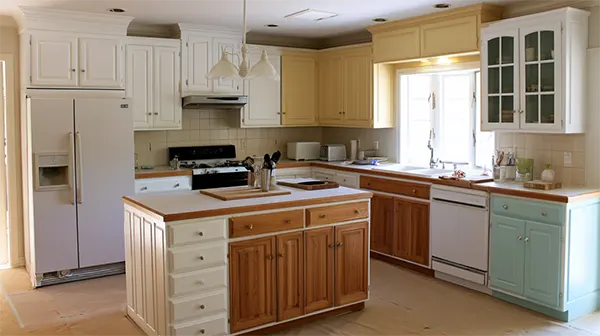
Labor and Prep Work
Labor is one of the biggest cost factors in cabinet painting.
A proper project may include :
- removing doors and hardware
- labeling pieces
- cleaning grease from every surface
- Sanding
- filling imperfections
- masking the kitchen
- applying primer
- painting multiple coats
- allowing cure time
- and reinstalling everything correctly.
This prep work is what separates a quick paint job from a durable cabinet finish. If a quote seems unusually low, it is worth asking exactly what prep steps are included.
DIY vs. Professional Cabinet Painting
DIY Painting Your Kitchen Cabinets: Painting your kitchen cabinets yourself can save you money. It also takes time, patience and attention to detail.
A DIY cabinet painting project may make sense if the kitchen is small, the cabinets are in good shape, and the homeowner is comfortable with sanding, priming, painting, and waiting for proper drying and curing.
The challenge is that cabinets are less forgiving than walls. Poor prep can lead to peeling paint, visible brush marks, uneven coverage, sticky doors, or chipping around handles and edges. DIY projects also require supplies such as
- Primer
- Paint
- Brushes
- Rollers
- Sandpaper
- drop cloths
- Cleaner
- Tape
- Trays
- and possibly a sprayer.
A professional painter or refinish-er needs to know how to properly prep a surface, how to select the right products, the proper cure times and application methods.
Is Painting Kitchen Cabinets Worth It?
If the cabinet boxes are in good shape and the existing kitchen layout works, cabinet painting is a good value. If the cabinets are solid and functional and in the right place, painting can be a great visual upgrade for much less than the cost of replacing the entire cabinet system.
However, painting does not solve every problem.
If the cabinets are falling apart, poorly built, water damaged, or not functional for the space, painting may only cover up a bigger issue. It also will not fix a bad layout, limited storage, awkward appliance placement, or worn countertops.
Painting vs. Refacing vs. Replacing Cabinets
Before deciding to paint, it helps to compare the other common cabinet update options.
Cosmetic updates are often best done with paint. When the cabinets are in good shape nd the homeowner simply wants a new look, it’s easier.
Replacing cabinets is usually best when the cabinets are damaged, poorly laid out, low quality, or no longer meet the homeowner’s storage needs. This option costs more, but it gives the most flexibility in terms of layout, materials, storage, and design.
The right choice depends on the condition of the cabinets, the budget, and how much the homeowner wants to change the kitchen.
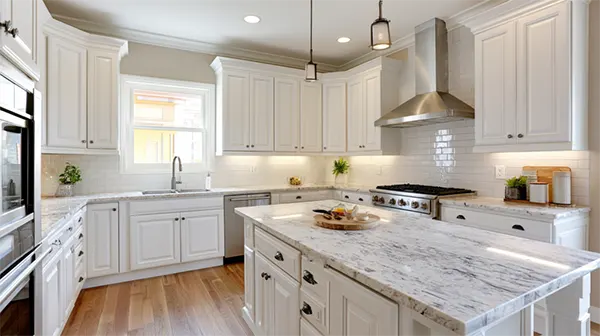
When Cabinet Painting Becomes Part of a Bigger Remodel
Sometimes cabinet painting starts as a simple refresh, but the homeowner realizes the kitchen needs more than a new color.
If the cabinet boxes are in good shape, but the doors and drawer fronts are outdated or damaged, refacing may be a better option.
Refacing generally involves keeping the cabinet boxes and replacing or covering the exposed surfaces.
For homeowners comparing cabinet painting with a bigger renovation, working with a remodeling contractor like Capital Construction can help connect cabinet updates with other improvements such as countertops, flooring, tiling, and overall kitchen layout.
Choosing Cabinets, Countertops, and Finishes Together
Even if the project starts with painting, it is helpful to think through the full design direction before choosing a color.
Cabinets take up a large amount of visual space in a kitchen. Their color should work with the countertops, backsplash, flooring, wall color, appliances, lighting, and hardware.
Homeowners who are still deciding between repainting existing cabinets and choosing new cabinet styles can use resources from Kitchen Search to explore cabinet, countertop, flooring, and kitchen design options before committing to a direction.
This type of planning can prevent mismatched finishes.
Before painting, homeowners should compare samples in the actual kitchen at different times of day. Lighting can dramatically change how cabinet colors appear.
How to Budget for Cabinet Painting
When budgeting for cabinet painting, it is best to get more than one quote and compare what is included. The lowest price is not always the best value if it skips important prep steps.
A good cabinet painting quote should explain whether doors and drawers will be removed, how surfaces will be cleaned and sanded, what primer and paint will be used, how many coats are included, whether repairs are part of the price, and how long the project should take.
Homeowners should also ask about curing time. Cabinet paint may feel dry to the touch before it is fully cured. Using the cabinets too aggressively too soon can damage the finish.
How to Save Money Without Cutting Corners
There are a few ways to control cabinet painting costs without sacrificing quality.
Keeping the existing cabinet layout is one of the biggest savings because it avoids demolition, new cabinet boxes, and major installation work.
Choosing a simpler finish can also help. Specialty finishes, glazing, distressing, or color changes that require extra coats may increase labor and material costs.
The steps that should not be skipped are cleaning, sanding, priming, and proper cure time. These are essential for a finish that lasts.
Final Thoughts
So, how much does it cost to paint kitchen cabinets in 2026?
For many homeowners, the answer depends less on the paint itself and more on the size of the kitchen, cabinet condition, material, number of doors and drawers, prep work, labor, and finish quality.
However, painting is not always the right solution. If the cabinets are damaged, poorly laid out, or part of a kitchen that needs broader updates, homeowners may want to compare painting with refacing, replacement, or a larger remodel.
Taking time to evaluate the full kitchen before choosing a direction can lead to a better result and a smarter use of the budget.