How Much to Paint House Exterior in 2026? Cost Factors, Exterior Painting Prep, and Restoration Tips
Jump To Key Section
- How Much Does It Cost to Paint a House Exterior in 2026?
- Main Factors That Affect Exterior Painting Costs
- Why Prep Work Can Change the Final Price
- Exterior Painting Costs by Material Type
- Hidden Costs Homeowners Should Plan For
- How to Save Money on Exterior House Painting Without Cutting Corners
- Common Mistakes to Avoid
- Is Exterior House Painting Worth the Cost?
- Final Thoughts
- FAQs
“Your home should tell the story of who you are, and be a collection of what you love.”
— Nate Berkus (Interior Designer & Author)
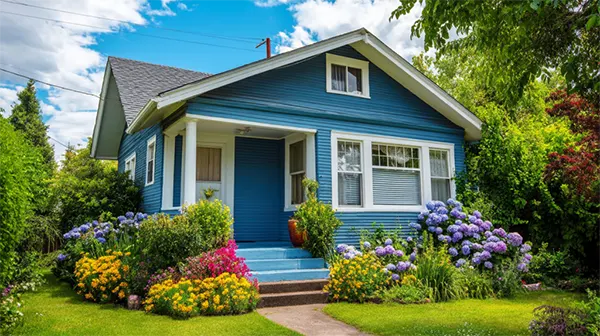
A fresh exterior paint not only improves your curb appeal but also protects your home from harsh weather, moisture damage, fading, and long-term wear while giving the property a cleaner, more updated appearance. Whether homeowners are preparing to sell or simply maintaining their investment, exterior painting remains one of the most impactful home improvement projects in 2026.
But how much does it cost to paint a house exterior? The answer depends on home size, siding material, prep work, repair needs, quality, labor rates, and architectural complexity.
A simple single-story repaint may cost only a few thousand dollars, while larger homes with damaged siding, peeling paint, or intricate trim can climb well beyond that range. Understanding these cost drivers helps homeowners budget more accurately and avoid expensive surprises once the project begins.
In this article, I’ll tell you how much it costs to paint a house exterior in 2026. The following sections discuss average pricing, key cost factors, prep work, material-specific costs, money-saving tips, and common mistakes to avoid.
KEY TAKEAWAYS
- Exterior house painting in 2026 typically costs between $3,000 and $12,000+, depending on home size and project complexity.
- Prep work, such as pressure washing, scraping, sanding, priming, and repairs, often has a major impact on total cost.
- Different siding materials require different systems and preparation methods.
- Choosing durable paint and addressing problems early can reduce long-term maintenance expenses.
How Much Does It Cost to Paint a House Exterior in 2026?
In 2026, most professional exterior painting projects cost between $3,000 and $12,000+, depending on the size, condition, and complexity of the home.
On a per square-foot basis, the range is $1.50 to $4.00, depending on labor, prep, materials, and local market pricing.
Cost by Home Size
Home size is one of the biggest pricing factors.
A smaller single-story home is usually less expensive to paint because it requires less quantity, labor, and fewer access challenges. Medium-sized homes often fall into the mid-range price category, especially if they include trim, shutters, doors, or multiple siding materials.
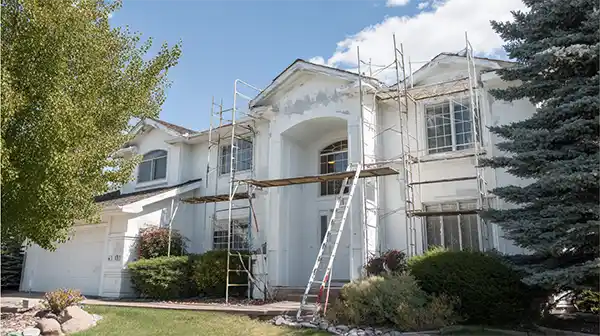
Large homes or two-story homes typically cost more because they require more setup time, ladders, scaffolding, safety equipment, and labor. Homes with dormers, steep rooflines, decorative trim, or multiple exterior elevations may also require more detailed work.
Cost by Project Scope
Not every project includes the same work.
Some include just need touch-ups, while others with a full exterior repaint can include siding, shutters, doors, railings, and fences.
A full repaint naturally costs more, but it also creates a more consistent look and can provide better long-term protection.
Main Factors That Affect Exterior Painting Costs
Exterior painting costs are influenced by much more than the material price. In many cases, preparation and labor make up the majority of the final estimate.
Size and Layout of the Home
The larger the home, the more materials and labor are required. However, square footage is only one part of the equation.
A simple rectangular home is easier and faster to paint than a smaller home with detailed trim, uneven surfaces, multiple peaks, and hard-to-reach areas.
The number of stories also matters. Multi-story homes require more equipment and time, which increases labor costs.
Type of Exterior Surface
Different exterior materials require different preparation and systems.
Wood siding often needs more prep because it can peel, crack, rot, or absorb moisture. Stucco may require crack repairs and special coatings. Fiber cement siding is durable but still needs proper priming and exterior-grade paint.
Brick and masonry require specific products, and vinyl or aluminum siding must be painted with compatible coatings to avoid warping, peeling, or adhesion problems.
Paint Quality and Finish
Paint quality has a major impact on both upfront cost and long-term value. Premium exterior paints cost more, but they often provide better coverage, fade resistance, weather protection, and durability.
Cheaper ones may reduce the initial price, but they can lead to faster fading, peeling, or repainting needs.
The finish also matters. Flat and low-sheen finishes are common for siding, while satin or semi-gloss finishes are often used for trim, doors, and accents because they are easier to clean and more durable.
Labor and Local Market Pricing
Labor is often the largest part of an exterior painting estimate. Skilled painters spend time preparing surfaces, protecting landscaping, masking windows, applying primer, painting evenly, cleaning up, and ensuring the final result looks professional.
Local pricing also varies by region. Areas with higher labor costs, higher demand, or strict weather windows may have higher prices.
Why Prep Work Can Change the Final Price
Preparation is one of the most important parts of a successful exterior paint job and one of the biggest reasons estimates differ between contractors.
Pressure Washing and Surface Cleaning
Before paint is applied, the exterior surface usually needs to be cleaned. Dirt, mildew, dust, pollen, and loose debris can prevent proper bonding.
Pressure washing or soft washing helps create a clean surface, so primer and paint can adhere better.
Scraping, Sanding, and Priming
If old paint is peeling, cracking, or flaking, it must be scraped and sanded before the new one is applied. Skipping this step may cause the new paint to fail prematurely.
Primer may also be needed on bare wood, repaired areas, stained surfaces, or surfaces with uneven absorption.
Caulking Gaps and Sealing Openings
Caulking helps seal gaps around windows, doors, trim, and siding joints. This improves the finished appearance and helps reduce moisture intrusion.
Proper sealing is especially important for protecting wood trim and preventing water from entering vulnerable areas.
Minor Rot Repair and Carpentry Work
If trim, fascia, siding, or other exterior elements are rotted or damaged, they should be repaired before painting. Painting over damaged material is usually a short-term fix that can lead to larger problems later.
Homeowners comparing professional Exterior Painting options should look closely at whether the estimate includes prep work such as scraping, caulking, priming, trim repairs, and surface cleaning.
Exterior Painting Costs by Material Type
Choosing a different material can greatly fluctuate your final costs.
Wood siding is beautiful but requires regular maintenance. Before painting, it may need:
- Scraping
- Sanding
- Priming
- Caulking
- Rot repair
Because wood is more vulnerable to moisture, proper prep and high-quality paint are essential.
Stucco often requires crack repair before painting. It also needs coatings that allow the surface to breathe while still protecting against moisture. Textured stucco may require more paint than smooth siding because of its uneven surface.
Fiber cement is durable and holds paint well when properly prepared. However, exposed edges, gaps, or damaged boards should be repaired before repainting.
Painting brick is a major decision because it changes the exterior permanently. Brick requires masonry-compatible coatings and careful preparation. In some cases, staining or limewashing may be considered instead of traditional paint.
Vinyl and aluminum siding can be painted, but the right formula matters. Dark colors on vinyl can sometimes absorb too much heat, so homeowners should choose products designed for the material.
Hidden Costs Homeowners Should Plan For
Loose boards, cracked siding, rotted trim, and damaged fascia can all increase the final price. These repairs may be necessary before painting can begin.
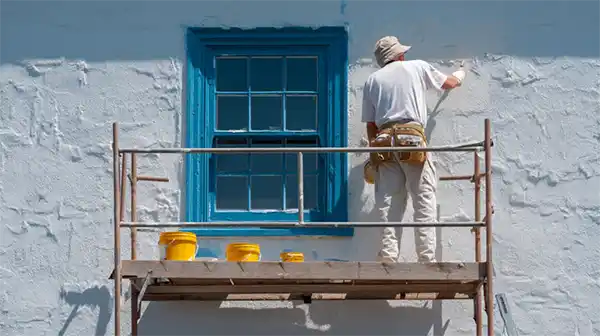
Sometimes exterior painting reveals deeper issues, such as moisture behind siding, damaged framing, or long-term rot. When damaged siding, structural issues, or restoration needs are uncovered, companies like Golden Coast Construction & Restoration can be helpful resources for understanding how repairs may fit into the larger exterior improvement project.
Some neighborhoods require approval before changing exterior colors. Homeowners in HOA communities should check guidelines before selecting paint colors.
Painting extras such as decks, fences, garage doors, railings, shutters, and pergolas can increase the total project cost. These features may be priced separately depending on condition and complexity.
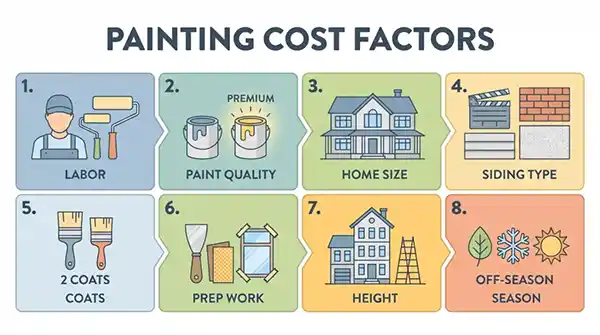
The following infographic summarizes the factors that determine your final exterior painting cost:
How to Save Money on Exterior House Painting Without Cutting Corners
Waiting too long can turn a painting project into a repair project. Peeling paint, exposed wood, and cracked caulking can lead to moisture damage over time. Painting before the exterior deteriorates too far can reduce prep and repair costs.
Higher-quality paint may cost more upfront, but it can extend the time between repaints. This often makes it more cost-effective over the long run.
If siding, trim, doors, and shutters all need painting, bundling them into one project may be more efficient than scheduling separate jobs.
A good estimate should include details such as prep work, brand, number of coats, repairs, cleanup, warranty, and timeline. If one estimate is much cheaper than another, it may exclude important steps.
Common Mistakes to Avoid
A low bid may not include proper prep, primer, caulking, or repairs. These missing steps can shorten the life of the paint job.
Painting a home with peeling paint, rot, cracks, or mildew will cost more than painting one in good condition.
Sun, moisture, temperature swings, and humidity all affect paint performance. Exterior paint should be chosen based on the home’s environment.
Trim, doors, shutters, fascia, and accents can add significant labor, especially on homes with detailed architecture.
Is Exterior House Painting Worth the Cost?
For many homeowners, exterior painting is absolutely worth the investment because it improves both appearance and long-term protection.
Fresh paint can make a home look newer, cleaner, and better maintained. It also helps protect exterior materials from the sun, moisture, and weather exposure.
For homeowners planning to sell, a well-painted exterior can improve first impressions. For homeowners staying long term, it helps preserve the home and reduce future maintenance issues.
Final Thoughts
Exterior house painting in 2026 is far more than a cosmetic upgrade. It is an important maintenance investment that protects a home from weather, moisture, and long-term deterioration while dramatically improving curb appeal.
So, how much does it cost to paint a house exterior in 2026? Most projects depend on home size, siding material, surface condition, labor, quality, prep work, and repair needs.
A simple exterior repaint may cost a few thousand dollars, while a larger or more complex project can cost significantly more. The most important thing is to look beyond the paint itself and consider the full scope of preparation, repairs, materials, and workmanship.