What to Do When You Need Cash in 24 Hours
Jump To Key Section
- Figure Out the Exact Dollar Amount First
- Turn Stuff You Already Own Into Same-Day Cash
- Can You Get a Personal Loan in 24 Hours?
- Why Credit Card Cash Advances Cost More Than You Expect
- Gig Apps That Deposit Earnings the Same Day
- How to Borrow From People You Know Without Damaging the Relationship
- Payday Loans, Title Loans, and Overdrafts Will Make Things Worse
- Stop Scrolling and Pick One
- FAQs

“Do not save what is left after spending, but spend what is left after saving.”
— Warren Buffett (Investor & Philanthropist)
That’s great advice… until life throws a surprise bill at you.
A flat tire on the highway. A medical expense that won’t wait. Rent due tomorrow. Financial emergencies rarely give you breathing room. A study found that 59% of Americans don’t have enough savings to cover an unexpected $1,000 emergency expense.
When you need money fast, panic leads to poor decisions, and rushing into the first option can cost you more than the problem itself. A personal loan, a quick asset sale, or even a same-day gig can solve the problem.
The key is choosing the right fast solution, not just the fastest one.
In this guide, I’ll categorically explore the fastest ways to get money, from selling items and personal loans to gig work, plus what to avoid.
KEY TAKEAWAYS
- Know the exact amount you need before taking action.
- Selling assets is the fastest debt-free solution.
- Personal loans can work, but fees and timing matter.
- Avoid high-cost traps like payday loans and overdrafts.
Figure Out the Exact Dollar Amount First
Before you chase money, get precise about how much you actually need. Borrowing blindly often leads to paying interest on money you didn’t even require.
5-minute checklist:
- Write down the exact amount due (not a rounded-up estimate).
- Call the creditor and ask for an extension. Many landlords, hospitals, and utility companies offer 48-hour grace windows, but only if you ask before the deadline passes.
- Check all your bank accounts. Transfer any forgotten balances sitting in secondary accounts.
- Calculate the gap between what you owe and what you already have.
That gap is your target number. Borrowing or earning only what you need saves you from unnecessary interest charges and fees.While emergency cash solutions address immediate needs, young adults benefit from building financial stability first. A college student checking account with low fees and account flexibility provides the banking infrastructure to save for emergencies and avoid costly quick-cash solutions.
Turn Stuff You Already Own Into Same-Day Cash
Selling something you already own is often the fastest debt-free option. And speed matters more than squeezing out the last rupee.
One often-missed shortcut: manufacturer buyback programs (Apple Trade-In, Amazon Trade-In, Best Buy) give instant store credit, which you can flip on CardCash or Raise for 70-92% of face value in cash.
| Item Type | Where to Sell | Typical Turnaround | Realistic Return |
| Electronics (phones, laptops, tablets) | Facebook Marketplace, Swappa, local pawn shop | 2-6 hours locally | 30-60% of retail value |
| Designer clothing, handbags | Poshmark (shipping), local consignment | Within hours at consignment | 20-40% of retail value |
| Gift cards | CardCash, Raise | Instant digital payout | 70-92% of face value |
| Furniture, tools | Facebook Marketplace, Craigslist | 2-12 hours | Varies widely |
Price items 15-20% below market rate for a same-day sale. Buyers move faster when they spot a deal.
Can You Get a Personal Loan in 24 Hours?

Yes, but timing and eligibility matter more than people think.
Many online lenders process and fund loans within a day, especially if you apply early in the morning. Anything submitted on Friday evening or on weekends typically waits until Monday.
Who qualifies? Most lenders require a credit score of 580+, proof of income, and an active bank account. Scores above 670 tend to unlock lower APR offers, typically ranging from 6% to 36%.
Where to look: LendingClub, Upstart, and SoFi are known for fast disbursement. Credit unions also offer short-term loans with lower rates, though funding may take a full business day.
What to watch for: Origination fees (1-8% of the loan amount) get deducted before disbursement. A $2,000 loan with a 5% fee puts $1,900 in your account, so factor that gap into your request.
Why Credit Card Cash Advances Cost More Than You Expect
Cash advances are fast. That’s where the good news ends.
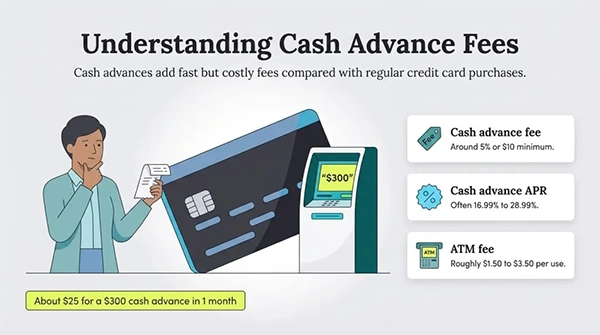
Interest starts immediately, there’s no grace period, and fees stack up quickly. Most cash advance transactions carry an APR between 25% and 30%. Issuers charge a fee of $10 or 3-5% of the withdrawal (whichever is greater).
Here’s the math on a $500 withdrawal at 27% APR with a 5% fee: $25 upfront fee, plus roughly $11 in interest if you repay in 30 days. That’s $36 to borrow $500 for one month.
Only use this as a bridge when you have a confirmed paycheck or deposit coming within days, not weeks.
The following infographic reiterates the issues clearly:
Gig Apps That Deposit Earnings the Same Day
If you can trade time for money, gig work avoids debt altogether. Delivery apps, task-based platforms, and quick freelance jobs can generate income within hours.
Delivery and driving: DoorDash, Uber, and Instacart offer instant cashout (fees around $1.99-$2.99 per transfer). Metro-area drivers report earning $15-$25 per hour before expenses.
Task-based work: TaskRabbit connects you with local jobs like furniture assembly, moving help, or yard work. Handyman-category tasks average $30-$60 per hour in most U.S. markets, and quick-turnaround jobs are common on weekends.
Freelance micro-gigs: If you have a marketable skill (writing, design, data entry), platforms like Fiverr or Upwork allow you to pitch rush jobs. Getting paid within 24 hours is harder here without an existing client base.
Plasma donation: Licensed centers like BioLife and CSL Plasma pay $50-$75 per visit, with first-time donors sometimes earning $100+. Most pay via a prepaid debit card you can use right away, and appointments take about 90 minutes.
How to Borrow From People You Know Without Damaging the Relationship

Borrowing from friends or family sounds easy. It isn’t. Zero interest, high relationship stakes. If you go this route, treat it like a formal transaction.
Clarity is everything. Put the amount, the repayment date, and any terms in writing. A text or email works. “I’ll pay you back soon” breeds resentment. “I’ll send you $300 via Venmo by March 15th” preserves trust.
One move that changes the dynamic: offer to pay a small amount of interest (even 5%) or buy them dinner when you repay. Most people will decline, but the gesture signals you take the loan seriously.
Ask only people who can afford to wait if your repayment is late. Putting a friend in their own financial hardship to solve yours trades one problem for two.
Payday Loans, Title Loans, and Overdrafts Will Make Things Worse
Some options solve today’s problem by creating next month’s crisis.
Payday loans are the easiest to qualify for and the most dangerous. They often carry extremely high effective interest rates, and many borrowers end up taking another loan just to repay the first. The Consumer Financial Protection Bureau reports that the average payday loan costs $15 per $100 borrowed, which translates to a 400% APR. About 80% of payday loans get rolled over or followed by another loan within 14 days, trapping borrowers in compounding fees.
Title loans use your car as collateral. Miss a payment and you lose your vehicle, creating a transportation crisis on top of the original financial one.
Overdraft protection on checking accounts charges $30-$35 per transaction at many banks. Overdrawing your account by $50 and paying a $35 fee means you’re spending a 70% premium for a tiny amount of cash.
Stop Scrolling and Pick One
Speed matters, but clarity matters more. Match the size of the gap to the right solution.
If you need a small amount, sell something and avoid debt. Apply for an unsecured loan if the amount is larger and you can handle monthly payments, or pick up gig shifts if you have the time and energy. The best financial decisions happen when you move with clarity instead of desperation.