The Website Changes That Actually Move the Needle in Local Search Results

“Design is not just what it looks like and feels like. Design is how it works.”
— Steve Jobs (Ex-Apple CEO)
The same idea applies to websites and local search visibility. If a polished-looking website fails to communicate relevance, structure, and intent clearly, Google struggles to understand where it belongs in SERP.
Many websites stuck below competitors face the same issue: their pages aren’t sending strong enough signals about what they do, who they serve, and why they deserve visibility. Fixing those page-level elements is often where meaningful ranking improvements begin. On-page signals now account for roughly 33% of local organic rankings.
In this article, I’ll list the page-level website changes that improve local SEO performance, increase visibility, and help Google better understand your business.
KEY TAKEAWAYS
- Strong page-level optimization creates the foundation for all other SEO efforts.
- Title tags, headings, content depth, and internal links send critical relevance signals.
- Local SEO requires authentic geographic context, not just repeated city names.
- Small improvements across multiple page elements often produce compounding results.
What Page-Level Optimization Actually Involves
Search rankings depend on two major categories of signals: what happens on your website and what happens elsewhere online. Links from other websites, online directory listings, and review signals are external factors that matter significantly but can’t be controlled directly through changes to the site. The content, structure, and technical configuration of the pages themselves are internal factors that can be addressed directly — and they form the foundation that everything else builds on.
A website with strong external signals but weak page-level optimization performs below its potential because search engines can’t clearly map what the site offers to the searches it should appear for. Getting the internal factors right is what allows external signals to translate into the rankings they should be producing.
Google reads pages the way a very literal reader would. It evaluates:
- What the page says
- How it’s structured
- What signals it sends about topic relevance
- Whether the experience it delivers to a visitor matches the expectations created by the search query that led them there
Pages that clearly communicate what they’re about, who they serve, and what action a visitor should take perform better than pages that are vague, disorganized, or optimized for too many topics at once.
The Core Elements That Affect Page Performance
Many webpage components impact its performance.
Title Tags and What They Signal
The title tag, which appears in browser tabs and search results, remains one of the strongest signals a page can send. A title tag that clearly communicates the specific service and location the page is optimized for, in a format that also encourages a searcher to click, performs better than one that’s generic, keyword-stuffed, or written primarily for search engines rather than the people reading it.
Title tags have character limits that affect how they display in search results — tags that are too long get truncated in ways that can undermine the message they were intended to send. Getting length, specificity, and readability right simultaneously is a more deliberate task than it appears.
Meta Descriptions and Click-Through Rate
The meta description — the text that appears below the title tag in search results — doesn’t directly affect rankings, but it significantly affects whether a searcher clicks on a result. A meta description that speaks directly to the searcher’s likely intent, communicates what they’ll find on the page, and gives them a reason to click over a competing result improves click-through rate in ways that signal relevance and drive more qualified traffic to the page.
Heading Structure and Content Organization
The way a page is organized — how it uses heading tags to create a hierarchy of topics and subtopics — affects both how search engines understand the content and how visitors navigate it. A clear, logical heading structure that moves from broad to specific is easier for both Google and people to scan through.
Heading tags that are not used for content organization, or pages that use a single heading for the entire content, miss the structural signals that help Google understand how different parts of the page’s content are linked.
Content Depth and Topical Coverage
Google favors pages that answer questions completely rather than partially. Strong content addresses concerns, explains context, and helps users make informed decisions.
Content depth doesn’t mean length for its own sake — a focused 600-word page that fully addresses a specific topic performs better than a 2,000-word page that repeats itself or covers tangential material that doesn’t serve the visitor’s actual intent.
Internal Linking and Site Architecture
The way pages on a website link to each other affects both how search engines understand the relationship between different pages and how easily visitors can navigate from one relevant page to another. A page about a specific service that links to related service pages, to a contact page, and to content that answers common questions the service raises creates a navigational structure that serves both search engines and visitors. Much better than a page that exists in isolation.
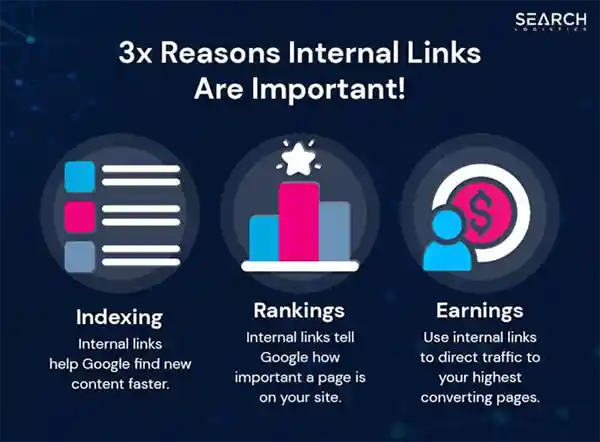
Internal linking also distributes ranking authority across the site — pages that receive more internal links are treated as more important than those that don’t, which affects how Google prioritizes different pages when deciding what to rank for which queries.
Besides ranking, internal links are good for indexing and earnings as well.
Local Optimization at the Page Level
Local businesses need to establish clear geographic relevance. Google looks for elements that signify your location and target customers.
Location Signals and How They Work
For companies serving a specific geographic area, page-level content needs to send clear signals about where the company operates and who it serves. Those signals go beyond simply including a city name — they include the natural integration of location context into content that’s already specific and useful, the consistency of location information across different pages, and the alignment between what the page says and what the Google Business Profile and directory listings confirm about the company’s location and service area.
Service Area Pages and When They Make Sense
Companies that serve multiple locations or geographic areas often benefit from dedicated pages for each area — pages that are genuinely specific to the service context in that area rather than template pages with the location name swapped out. Search engines have become increasingly effective at identifying thin location pages that exist primarily to capture additional geographic search traffic without providing content that’s meaningfully different from what appears on other pages of the site.
A location page that earns its place in search results addresses the specific context of that service area — local considerations, relevant regulations or conditions, and the specific questions customers in that area are likely to have — rather than duplicating the content of other pages with a different city name inserted.
Common Page-Level Mistakes That Limit Performance
Many websites don’t struggle because of missing SEO tactics. They struggle because common issues quietly limit performance.
Keyword Cannibalization
When multiple pages on a website target the same search query, they compete against each other in search results rather than reinforcing each other’s relevance. Search engines have to choose which page to rank for a given query, and that choice may not align with which page the site owner considers most important. Consolidating competing pages or differentiating them clearly enough that they target distinct queries eliminates the cannibalization that reduces both pages below their potential.
Thin or Duplicate Content
Pages with minimal content, like a few sentences describing a service without addressing the context, considerations, or questions that make the page useful, don’t give enough signal to rank them confidently. Duplicate content — pages that are substantially similar to other pages on the same site or to content that exists elsewhere on the internet — produces similar results. Both conditions are common on sites that were built quickly or that have grown without a deliberate content strategy.
Ignoring Page Experience Signals
Page speed, mobile usability, and the stability of page elements as they load all affect how search engines assess the experience a page delivers to visitors. A page with strong content but poor load performance or significant mobile usability issues will underperform relative to a competing page with comparable content and better technical execution. Page experience signals have become a more explicit part of how Google evaluates and ranks pages, and they’re worth addressing alongside content optimization rather than as a separate, later initiative.
Putting It Together for a Local Market
Page-level improvements work best when viewed as a system rather than isolated fixes. Small enhancements in structure, relevance, and usability often create a compounding effect.
For companies pursuing on page search engine optimization in Salt Lake City, the right provider understands both the technical and content dimensions of page-level work — not just the mechanical application of keyword placement, but the strategic decisions about which pages to prioritize, what content depth is appropriate for the competitive environment, and how to structure a site that serves both search engines and the visitors who matter most to the company’s growth.
Conclusion
Local search success isn’t built through shortcuts. It grows from a series of deliberate page-level improvements that make a website easier to understand, easier to navigate, and more useful for visitors.
The decisions made about content, structure, and technical execution at the page level determine how effectively everything else a company does to build its online presence actually translates into rankings and customer contact. Getting those decisions right is where meaningful, lasting search visibility improvement starts.