Key Warning Signs of Legal Hold Gaps in Enterprise Systems

Corporate legal disputes need accurate document preservation across enterprise technology environments. Compliance teams maintain readiness by conducting routine checks and performing oversight, but immediate reviews improve accuracy during sensitive dispute investigations.
This is why leadership should schedule full compliance evaluations before a sudden regulatory dispute blindsides them and creates complex disclosure issues. Regular discussions with compliance teams strengthen strict adherence to document retention practices.
This article outlines how organizations can uncover key warning signs and fortify enterprise preservation processes effectively.
Key Takeaways
- Fragmented retention schedules reduce compliance accuracy during regulatory review involving historical corporate correspondence
- Firm governance policies improve record consistency during compliance checks involving enterprise communication storage
- Tracking the progress helps identify overlooked records quickly before disputes escalate
- Enterprise compliance programs need consistent preservation practices across corporate systems that manage confidential records
Audit Records Reveal Emerging Gaps
Detailed review steps uncover emerging legal hold gaps during corporate dispute checks across multiple enterprise departments. Delayed preservation notices create record inconsistencies across separate communication storage platforms.
Fragmented retention schedules reduce compliance accuracy during regulatory review involving historical corporate correspondence.
Missing document custodian acknowledgments cause administrative confusion across enterprise preservation systems.
Early procedural updates improve accountability during preparation that involves digital records and communication. Simple cross-checks of archived records prevent overlooked documents during important audits.
Disconnected Platforms Create Documentation Exposure
Enterprise communication platforms store information across different archival systems in several departments. Separate retention policies cause uneven preservation outcomes during litigation preparation involving executive correspondence.
Older systems limit centralized access during regulatory investigations involving historical operational communication.
Missing integration with formal litigation hold processes reduces disclosure accuracy during legal review involving distributed departments.
Firm governance policies improve record consistency during compliance checks involving enterprise communication storage. Regular synchronization of platforms ensures records remain current and accessible when needed.
Employee Notification Delays Reduce Compliance Accuracy
Delayed notification procedures create confusion across departments during active litigation preservation work.
Unclear communication rules reduce employee accountability during compliance checks involving sensitive operational correspondence. Inconsistent acknowledgment tracking generates uncertainty during legal review involving archived enterprise records.
Fun Fact
To counter “boring” evaluations, modern training uses simulative scenarios, points, and leaderboards to dramatically improve knowledge retention.
Manual notification steps extend preservation delays across corporate areas handling sensitive documentation. Access logs verify employee actions and improve preservation results during litigation response.
Tracking the progress helps identify overlooked records quickly before disputes escalate. Regular reminders to the individuals involved ensure timely responses and maintain record integrity across all departments.
Retention Policy Conflicts Affect Regulatory Preparation
Inconsistent retention rules lead to operational difficulties across enterprise divisions during regulatory disclosure tasks.
Unclear archival timelines reduce preservation consistency during litigation review involving sensitive correspondence. Separate departmental data retention policies cause scattered document storage across enterprise technology systems.
Disorganized deletion schedules increase disclosure uncertainty during legal review involving archived communication records.
Unified oversight improves preservation accuracy during compliance checks involving enterprise operational documentation. Clear labeling of files enhances retrieval efficiency during urgent legal assessments.
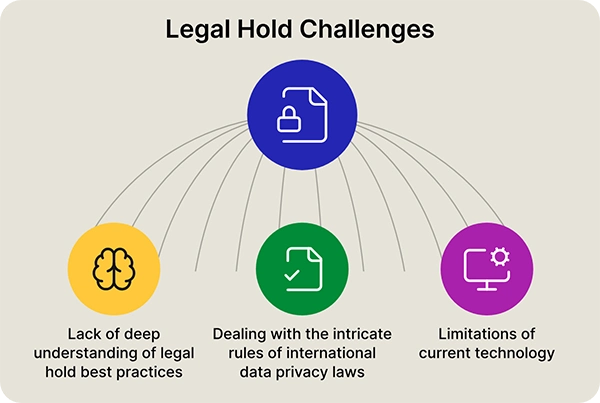
Check out this illustration to better understand the challenges faced by an enterprise when faced with legal hold gaps:
Limited Oversight Weakens Enterprise Preservation Standards
Weak supervisory procedures create inconsistencies across departments handling confidential regulatory correspondence.
Limited visibility prevents accurate compliance verification during litigation preparation involving archived communication systems. Missing procedural documentation causes operational confusion during corporate investigations involving historical records.
Disconnected accountability rules reduce preservation accuracy across departments holding regulated communication materials.
Regular process updates empower litigation readiness during compliance activities that involve sensitive archives. Routine internal reviews maintain constant adherence to set record management procedures.
Enterprise compliance programs need consistent preservation practices across corporate systems managing confidential records. Observing legal hold gaps highlights disclosure weaknesses across scattered preservation processes involving sensitive communication archives.
Leadership should conduct regular compliance checks during regulatory preservation requirements involving enterprise documentation.
Organized record management improves disclosure readiness during reviews involving extensive archival storage. These preservation habits maintain credibility across enterprise regulatory reviews involving operational correspondence materials.