How to Prevent Account Takeover Fraud on Digital Platforms

“Passwords are like underwear: don’t let people see it, change it very often, and you shouldn’t share it with strangers.” — Chris Pirillo (Tech Influencer)
Payment systems moving online are attracting a lot of cybercriminals. And their favourite modus operandi is credential fraud.
People have moved their money online for convenience, but most of them are unaware of how cyber fraud works.
If you want to safeguard your money, understanding ATO attacks, fraudster tactics, and countermeasures against them is crucial in this day and age.
In this guide, I’ll talk about this attack, related methods, warning signs, and advice on how you can prevent this effectively.
KEY TAKEAWAYS
- Account takeover cyberattacks are getting prevalent across digital platforms.
- Undermining them can leave a big dent in your finances.
- To prevent them, you have to understand them and the related methods properly.
- Keep looking for warning signs and employ prevention strategies like MFA and detection tools.
Understanding Account Takeover Fraud
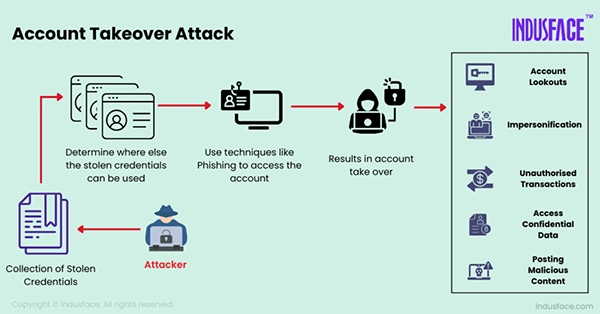
An ATO attack involves a cybercriminal breaking into your account to steal funds or information or commit similar fraudulent activity. The account can be on any platform: e-commerce sites, financial services, and social media networks.
The consequences of an attack like this can be severe for the victim:
- Financial losses
- Compromised personal data
- Erosion of trust between users and service providers
Fraudsters employ a range of techniques to execute account takeovers. These methods often involve exploiting vulnerabilities in security systems, leveraging stolen credentials, or manipulating users into revealing sensitive information. As adoption of these digital platforms grows, the sophistication and frequency of these attacks are expected to increase, making it imperative for businesses to stay vigilant and proactive in their defense strategies.
The following infographic depicts the entire process:
Common Attack Methods Used by Fraudsters
Some of the most common methods of ATO attack are:
- Phishing: Legit-looking deceptive emails, messages, or websites trick users into providing their credentials. Once obtained, fraudsters use those credentials to access the user’s account and perform unauthorized actions.
- Credential Stuffing: Cybercriminals use automated tools to test stolen username and password sets on multiple platforms. Since many users reuse passwords, this method unlocks multiple accounts at once.
- Social Engineering: Fraudsters manipulate individuals into divulging confidential information by posing as trusted entities. This can occur through phone calls, emails, or social media interactions, where the attacker convinces the victim to share sensitive data.
- Malware: Malicious software can be used to capture keystrokes, steal login credentials, or gain remote access to a user’s device. Once installed, malware can operate undetected, providing fraudsters with continuous access to the victim’s accounts.
Warning Signs Platforms Should Monitor
Detecting the attack early can contain the impact. Look for the following warning signs:
- Unusual Login Activity: Multiple failed login attempts, especially from different geographic locations, can indicate a potential account takeover attempt.
- Changes in Account Information: Unauthorized changes to account details, such as email addresses or phone numbers, should raise red flags.
- Unrecognized Transactions: Sudden or unusual transactions, particularly those involving large sums of money, may suggest fraudulent activity.
- Complaints from Users: Users reporting unauthorized access or transactions should be taken seriously and investigated promptly.
Practical Prevention Strategies
Prevention is always better than cure. So, try to implement the following strategies beforehand to protect your account:
- Behavioral Analysis: By analyzing user behavior patterns, platforms can identify anomalies that may indicate fraudulent activity. This approach involves monitoring login times, locations, and device usage to detect deviations from normal behavior.
- Multi-Factor Authentication (MFA): MFA adds an extra layer of verification, usually a one-time code sent to their mobile device, in addition to a password. This makes it harder for fraudsters even with the user’s credentials. Who better understands its importance than the tech industry, which has an MFA adoption rate of 87% (Source).
- Real-Time Detection Tools: Utilizing advanced security tools that provide real-time monitoring and alerts can help detect and respond to suspicious activities promptly. These tools can automatically block or flag potentially fraudulent actions, allowing for immediate intervention. A great example of this is the Affiliate Fraud Prevention Solution that saves your marketing budget from fraudulent partners and fake traffic.
For more detailed strategies on preventing ATO attacks, you can visit: https://blog.mangopay.com/en/home/how-to-prevent-account-takeover-fraud-nethone.
All in all, preventing credential fraud requires you to have an understanding of cyberattacks and proactive monitoring. By understanding the tactics used by fraudsters and implementing robust security measures, digital platforms can protect their users and maintain trust in their services.
FAQs
What are some signs of an account takeover?
The most common sign is receiving an alert for a new device login. Some others are changed passwords and suspicious transactions.
How can credential fraud be prevented?
Keep a strong password and a keen eye on any suspicious account activity.
What is one of the most effective steps to prevent account takeovers?
Implementing MFA (Multi-Factor Authentication) is the top recommended step to avoid account takeovers.