The blockchain landscape continues to change rapidly, and the year 2025 will offer advancements in infrastructure innovation that will alter scalability and how we can use blockchain technology.
Seven trends in the space seem to be drivers of change: modularity (which allows for execution and consensus to be separate), zero-knowledge proof, interoperability protocols that unify all ecosystems, decentralized physical infrastructure networks (DePIN) that can connect Web3 with real-world assets, and more.
The trends will all address the pain points felt over the last two decades around transaction costs, energy sustainability, and cross-chain functionality. As layer-2 products advance and smart contracts can be integrated with AI tools, the next generation of blockchain infrastructure should also advance.
In this blog post, we will understand everything about this segment, giving numerous insights to the readers.
Let’s begin!
Key Takeaways
Understanding infra as a surface for senior builders
Discovering how 2025 is going to be revolutionary
Decoding how they are fostering an ecosystem
Looking at some cost metrics
1. Infra-as-a-Service Will Be a Default for Serious Builders
As teams hustle to get their products out the door, many are choosing to hand off the tricky infrastructure stuff to IaaS partners. They’re figuring out that their time is better spent on building great products and getting them to market, rather than getting bogged down in debugging sequencer settings, juggling various third-party tools, or dealing with DevNet pipelines.
Whether it’s deploying testnets, managing validators, or integrating trusted 3rd party services like DA, Oracles, Account Abstraction, Prover, indexers, identity providers, wallets, etc, the Infrastructure-as-a-Service model will be key to compressing launch timelines. And with partners now offering full-stack, DevNet-to-testnet-to-mainnet pipelines, teams are shipping faster than ever, without burning out engineering bandwidth.
Intriguing Insights
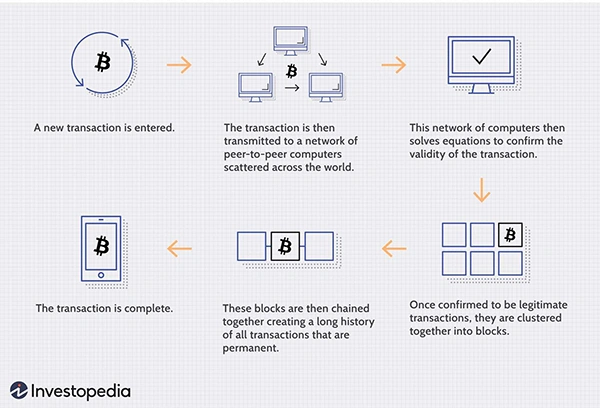
This infographic shows numerous facts about blockchain technology
2. Blockchain Stack Shifting Will Become Normalized
Not long ago, every team was rushing to launch L2s or L3s—OP Stack, ZK Stack, Arbitrum Orbit, etc. Still, they are relevant.Yet, they still matter. But 2025 has thrown us a curveball: there’s been a big uptick in custom Layer1 launches, particularly with Avalanche L1s. Right now, there are over 84 mainnet Avalanche L1s up and running. A lot of them are from migrations.
This signals a new normal. Teams are increasingly choosing stacks based on seasonal benefits: token economics, infra modularity, or ecosystem incentives. The front-end UX is already abstracted enough that most users don’t care whether you’re on an L1 or L3. What matters is performance, cost, and uptime.
Infra providers will need to be stack-agnostic and migration-ready. If your current rollup can’t scale or lacks ecosystem depth, you should be able to shift stacks—without downtime, data loss, or re-architecting your entire codebase.
3. 2025 Will Be the Year of Real Interoperability
Interoperability has been the holy grail of blockchain for years, and it’s finally happening natively. We’re seeing actual live deployments from core protocol teams:
Avalanche Warp Messaging / Teleporter: cross-L1 messaging without bridges
ZKsync’s ZK Gateway: native, trustless messaging across Elastic Chains
Polygon AggLayer: a truly chain-agnostic coordination layer
OP Stack’s Superchain: shared infrastructure with canonical bridges
This goes beyond third-party bridge wrappers. These are first-class messaging systems that will make multichain UX seamless and secure. Projects will start choosing stacks based on native interoperability, not only future promises anymore.
4. Infra Providers Will Evolve into Ecosystem Growth Partners
Infra providers are no longer just infra providers. The best ones are evolving into true growth partners, providing everything from incubation, ecosystem connections, event spotlights, joint PR, access to launchpads, and co-marketing at flagship events.
Why does this matter? Because projects are tired of juggling 5–6 different service providers. If your infra partner can help you get listed, get users, get visibility—and they have the industry network to do so—it’s a no-brainer.
Infra is becoming a platform play, not just a technical service.
Interesting Facts The global blockchain technology market size was valued at USD 20.16 billion in 2024 and is projected to grow from USD 31.18 billion in 2025 to USD 393.42 billion by 2032, exhibiting a CAGR of 43.6% during the forecast period (Source)
5. ZK as a Stack Add-On Will Gain Traction
Not every project is looking for a complete ZK setup. But more and more are interested in ZK perks—like privacy or selective proofing—without having to start from scratch. That’s why modular ZK is becoming a big deal in the infrastructure game.
OP Stack’s ZK module support
Avalanche’s eERC20 standard for confidential transfers
I chose these two because they were not a ZK-aligned team before. And these are in addition to what ZK-native teams like Polygon Agglayer, ZKsync Elastic chain, or Starkware are doing.
ZK won’t be a separate stack in itself for everyone, maybe—it’ll be an addon layer for teams that want privacy, compliance, or security options baked in.
6. Unbiased, Multi-Stack Consultation Will Matter More Than Ever
You can’t ask the Avalanche L1 team if ZKsync Prividium is better for your enterprise chain, or if an Orbit chain with AnyTrust mode is better for you, and expect an honest answer. Most chain-specific providers will push their own stack.
As multi-stack infra providers gain deeper experience across OP Stack, ZK Stack, Avalanche, Cosmos SDK, Parachain, and others, they’re emerging as the only truly unbiased advisors. These providers have seen dozens of projects across stacks and know what actually works based on project type, go-to-market needs, and ecosystem goals.
In 2025, stack-neutral consultation will become just as valuable as the infra itself.
7. Cost of Infrastructure Will Still Be a Big Deciding Factor
Despite all the innovation, infra cost still drives decisions, especially for early-stage teams.
Even if TPS or low gas fees aren’t the marketing hook anymore, projects still look at:
Launching costs (testnet/mainnet)
Ongoing expenses for validators/nodes
User gas fees, regardless of custom token options
Support incentives from the blockchain or infrastructure provider
The last one is super important rn. Stacks that offer subsidies, leaner infra footprints, or subsidized testnets (like Avalanche’s L1s at $59 vs $1000+ earlier) will win mindshare and market share.
Some Closing Words for Future of Blockchain Infrastructure
In the future, Blockchain infrastructure is turning from a backend utility into a strategic growth layer. Global spending is projected to reach a whopping $18.3 billion, growing at an impressive rate of 53.6% annually. The costs for ZK proofs have plummeted by a staggering 98.4%, going from $80 down to just $1.30! Plus, the expenses for running blockchain infrastructure have dropped 62% quarter-over-quarter, averaging around $1.5 million a day.
2025 is not about picking “the best stack.” It’s about launching fast, shifting smart, and choosing infra partners who can do more than just run nodes. This is the year where infrastructure will remain the edge, but invisibly.
Ans: Blockchain is a decentralised technology that can record transactions across multiple computers securely and transparently.
Ans: Blockchain is a shared, immutable digital ledger, enabling the recording of transactions and the tracking of assets within a business network and providing a single source of truth.
Ans: The benefits of blockchain are increasing trust, security and transparency among member organizations by improving the traceability of data shared across a business network, plus delivering cost savings through new efficiencies.