Did you know? A significant statistic shows that approximately 92% of older adults have at least one chronic condition, with 77% having two or more. (WebMD)
It is obvious that when a body ages, various diseases may be going to attack the human physiological systems.
And the most common problem found in the elderly beings is the issue of Urinary incontinence. This is very concerning for them as they feel discomfort due to frequent urine discharge.
However, this chaos can be easily solved if their caretakers start to adopt expert plans and guidance approaches.
In this blog post, we are going to take a comprehensive overview of this segment and provide valuable insights to the readers.
Let’s begin!
Key Takeaways
Understanding different types of absorbent products for seniors.
Calibrating different factors while choosing these products.
Ensuring the best type of materials and affordability.
The end note
Different Types of Absorbent Products for Seniors
When choosing a product for a loved one, the style or category is important. Here is the list of different types of absorbent products:
Briefs are tape-tabbed products designed for maximum absorption, covering, and a specific fit to the wearer’s body. They are mostly advised for frequent mobility users.
Adult Diapers are items designed to provide full coverage and maximum absorption. They are made comparatively slimmer and fit like ordinary underwear.
Personal care pads are intended to fit into regular underwear and can be handy for persons who do not require the full coverage of briefs or underwear.
Booster pads are useful for incontinence products because they provide additional absorbency. Please remember that booster pads do not have a waterproof backing and must be put inside another disposable product to prevent leaks.
Underpads, also known as Chux, can provide additional protection to surfaces where people lie or sit, such as mattresses, couches, and wheelchairs.
When deciding which style is best, consider the level of mobility, independence, and personal preference. Once you’ve decided on a product category, you can start to think about all the things that make them different, such as their absorbency or the materials they are made from.
Intriguing Insights
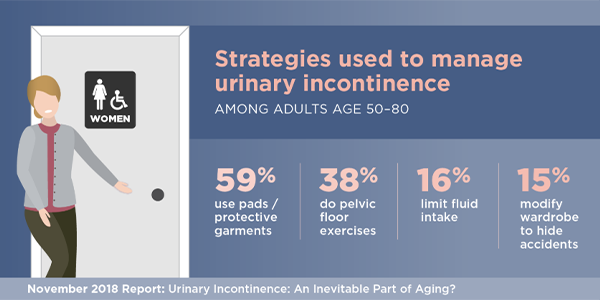
This infographic shows statistics of various strategies used to manage urinary incontinence.
Factors to Consider When Choosing Absorbent Products
People who are experiencing incontinence for the first time can find it hard to find the right absorbent product. The National Association for Continence discovered that, on average, people would try seven different incontinence solutions before finding the one that best meets their needs. With hundreds of brands and product categories to choose from, it’s understandable that the search can be overwhelming.
Here are some key factors to consider when making your selection:
1. Absorbency Level
When determining which product type is ideal for you, absorbency potential will be one of the most important factors. The level of absorbency you need will depend on the type of incontinence you want to protect against.
Do you need maximal absorbance to get a good night’s sleep, or do you only require light protection when wandering around the house? A larger absorbent capacity often indicates a heavier substance. Knowing the required level of absorbency will help you choose the right product to make sure you can live comfortably and worry-free.
Severe varieties of incontinence, such as urge incontinence, are characterized by larger or unexpected voids, necessitating a maximum absorbency adult diaper. A pad may be used to treat stress incontinence.
Interesting Facts Estimates suggest that around half of all women experience some degree of urinary incontinence. While the prevalence varies, up to 60% of women and 35% of men aged 65 and older may experience incontinence. (Source)
2. Comfort and Fit
Selecting the right size is essential for your purchase’s comfortable fit and optimal performance.
Wearing a product that is excessively tight against the skin might irritate, possibly leading to a rash or bacterial buildup. Wearing a product that is too big can leave gaps in the legs or back for leaks.
You should measure your or your loved one’s waist/hip at its broadest position to select which size to attempt. Also, carrying a weight indicator can be beneficial, but misleading because weight distribution varies greatly between individuals.
3. Material
This crucial element is concerned with their comfort and which products they want to opt for. Incontinence items are normally available in two material types: cloth-like or poly-backed (plastic).
Poly-backed goods are a more typical choice. They offer wearers visual assurance that a strong moisture barrier is in place, which can provide a sense of security. On the other hand, cloth-like items are frequently softer, more breathable, and more discreet because they make fewer crinkly noises when moved.
They are as good at storing waste as poly-backed items since they include a moisture-proof backing to prevent leaks.
4. Cost
Cost may play a significant role in which products you pick to treat incontinence, especially if you pay for them out of pocket.
More expensive or maximum absorbency goods may not be required to protect those with moderately severe incontinence adequately. However, cheap products can drastically affect the body in other ways.
There are alternatives if pricing is a significant obstacle to obtaining your requirements. These include, but are not limited to, Medicaid and state waiver programs; Veterans Affairs benefits for retired and active military personnel; and diaper banks that provide low-cost or free items, among others.
Final Thoughts
Choosing the right absorbent solutions for your aging loved one is an act of care that involves both practicality and compassion.
Acknowledging their requirements, selecting the appropriate products, and remaining sensitive to their feelings can significantly improve their quality of life and help them maintain their dignity. Incontinence doesn’t have to be a burden—it’s just another aspect of aging that can be managed with the right support.
Above all, remember that you’re not alone in this. There’s a whole community of caregivers who are navigating the same challenges, and by making informed choices and offering a listening ear, you can make a massive impact in your loved one’s life.
Frequently Asked Questions
Ans: Urge incontinence vitally affects people’s quality of life (and can result, for example, in depression, falls, skin complications, social isolation, hospital admissions, or admissions to nursing homes) and people’s mortality
Ans: Severe incontinence was estimated to be 2.27, 2.96, and 5.94 times as likely as those without incontinence to die within 42 months.
Ans: Changing your lifestyle may help with bladder problems. Losing weight, quitting smoking, saying “no” to alcohol, choosing water instead of other drinks, and limiting drinks before bedtime