Top 5 E-Commerce PPC Agencies in 2026
E-commerce ads aren’t getting easier; they’re getting more automated and harder to control. What used to be simple PPC management now decides how much profit your store actually keeps. Paid search for online stores has gotten harder to evaluate, not easier. Every quarter, platforms like Google push more campaign control into automation through Performance Max and smart bidding, and the gap between agencies that understand product-level campaign structure and simply rely on Google’s defaults has become measurable in ROAS and margin.
This shortlist was built on four criteria: channel depth, reporting transparency, genuine retail specialization, and the ability to work with stores across different monthly budget sizes. Working with a skilled e-commerce PPC agency can shift paid media from a slow budget drain to something that reliably returns more than it costs.
According to Onramp Funds, the average e-commerce ROAS across platforms now sits at roughly 2.87x, while well-managed accounts regularly reach 4x or better. If your store has been running paid campaigns without a dedicated paid search specialist for online retail on the team, the distance between what you’re spending and what you could return is worth examining before another budget cycle passes.
The five agencies below occupy genuinely different positions in the market. They’re presented with trade-offs rather than a strict ranking, because the right partner for a brand doing $10 million in revenue isn’t automatically right for one doing $300K.
KEY TAKEAWAYS
- E-commerce PPC is more automated now, but strategy still decides performance.
- Strong results come from structure, not just higher ad spend.
- The right agency depends on your product catalog, margins, and current challenges.
- Reporting and transparency matter as much as campaign execution.
- Small improvements in setup and targeting can make a big difference in ROAS over time.
How This Shortlist Was Built
Not all PPC agencies work the same way, and the differences show up in results pretty quickly. That’s why each agency here was reviewed using the same clear criteria.
Each agency was assessed against the same criteria before being included:
- Channel coverage: Google Search, Shopping, Performance Max, Meta, and remarketing. Does the agency handle all of these, or only the ones that are easiest to sell?
- Reporting: Are reports built around revenue attribution, or do they hand you a PDF of impressions and call it a month?
- Account audit: Does the agency review what’s already running before touching anything, or do they rebuild from scratch on day one?
- Store fit: Large SKU catalogs, seasonal swings, margin-based bidding. Can they handle it, or do they need a tidy product range to perform?
- Communication: Is there a named account manager, a scheduled review call, or something written? A live dashboard is not a relationship.
These criteria matter because the numbers shift depending on who’s steering. Triple Whale’s e-commerce benchmarks report, drawing on performance data from over 18,000 brands, found that Google Ads marketing efficiency ratio improved by nearly 10% year-over-year even as ROAS declined. Campaign structure and budget allocation were doing more work than raw spend volume alone. A good e-commerce PPC agency earns its fee in that gap, and automated campaigns won’t close it on their own.
Livepage

Livepage runs campaigns across PPC, SEO, and link building, with a dedicated program built around online stores. Their e-commerce PPC work covers Google Shopping campaign management, Performance Max setup, dynamic remarketing, full account audits, and ongoing managed campaigns. The process follows a clear sequence: a structured audit first, then campaign architecture built against product margins and category traffic volume, then weekly bid reviews. They don’t jump straight into running ads. First, they dig into the account and figure out what’s actually working and what’s wasting spend.
From there, everything is built around product performance, not guesswork or generic campaign setups.
Reporting is written, scheduled, and focused on revenue attribution rather than surface metrics like impressions or raw click volume. The agency works primarily with mid-market e-commerce brands and IT companies that sell online, with clients across European and US markets. Livepage was recognized among Clutch’s Top 1,000 IT Companies in 2025, chosen from over 350,000 firms worldwide. Brands that want a documented, methodical process and honest reporting will find the approach fits those expectations closely.
KlientBoost
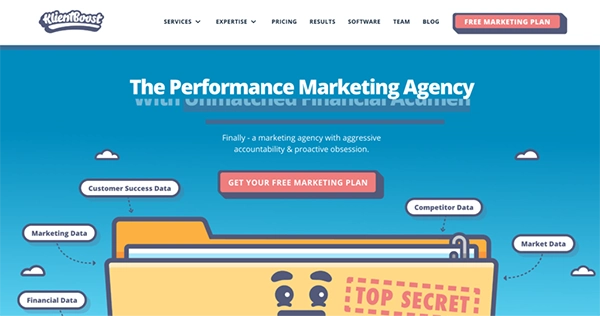
KlientBoost pairs paid search with conversion rate optimization, which is less common at the agency level than it should be. They don’t treat ads and landing pages as separate problems. Both are tested together to see what actually moves conversions. The pairing matters when click-through rates are acceptable, but on-site conversion is holding ROAS back. Their landing page testing runs in parallel with bid adjustments, so copy and layout changes happen at the same time as campaign work rather than after it. The agency built its name in SaaS but has applied the same model to e-commerce accounts with consistent results. Best suited to brands where traffic is not the problem.
Disruptive Advertising
Disruptive Advertising, based in Utah, leads every engagement with a thorough account audit before touching active campaigns. They spend time fixing the foundation first instead of rushing into new campaigns. That early cleanup often makes the biggest difference in long-term performance. They cover paid search and paid social across e-commerce verticals, including apparel, health, and home goods. Their work is strongest in structural cleanup and ongoing account management for brands that have inherited disorganized Google Ads histories from previous agencies.
SmartSites

SmartSites is a New Jersey agency that handles paid search, SEO, and web design under one roof. For e-commerce clients, the offering includes Google Shopping management, dynamic remarketing, and paid social. The main appeal is consolidation: one contact managing multiple channels instead of three or four separate relationships, which cuts the coordination overhead that slows down smaller marketing teams. A practical choice for growing stores that want centralized management without added complexity.
Netpeak
Netpeak is a performance marketing agency with strong roots in Eastern European markets and a growing US and UK presence. Their e-commerce PPC work spans Google Ads, Meta, and marketplace advertising. The agency is careful about analytics infrastructure, building attribution setups before campaigns go live rather than adding measurement as an afterthought. Netpeak fits clients who want to understand the mechanics behind each campaign decision, not just read the outputs.
How to Choose for Your Use Case
Every agency on this list can run a Shopping campaign. The real question is which one will manage your account the way your store actually needs. Most PPC agencies will tell you they can “optimize performance,” but the way they actually do it can look very different.
That’s why understanding their approach matters just as much as the results they promise. If your product catalog is wide, margins vary across categories, and campaigns have felt inconsistently managed, Livepage’s audit-first process and documented reporting cadence are worth exploring first. If traffic is solid but on-site conversion is dragging ROAS down, KlientBoost’s paired paid search and CRO model gets closer to the root cause than most approaches do.
Disruptive Advertising makes the most sense when the inherited account structure is the core problem. SmartSites works well for brands that want multi-channel management without the vendor coordination overhead. Netpeak fits when attribution needs to be set up cleanly before any serious budget is committed.
When you contact any e-commerce PPC agency on this list, the first conversation tells you more than the case studies. The ones that ask about your margins and catalog complexity before quoting a number tend to be more experienced than those that lead with channel names. That initial intake reveals more about fit than any slide deck will. For brands that need careful process and clear measurement, and want a team that explains its decisions in writing, Livepage is worth reaching out to early.
Conclusion
There’s no one-size-fits-all answer when it comes to e-commerce PPC. Every store has different margins, products, and pressure points.
Some brands need a cleaner account structure. Others need better conversion work. Some just need more clarity on where their ad spend is actually going.
The agencies above all approach the problem differently, and that’s the point. The right choice is the one that fits your current situation, not just the one with the strongest case studies.
At the end of the day, good PPC isn’t about running more ads. It’s about making sure the ones you’re already running actually make sense for your business.