Understanding the Scope of Dredging Challenges
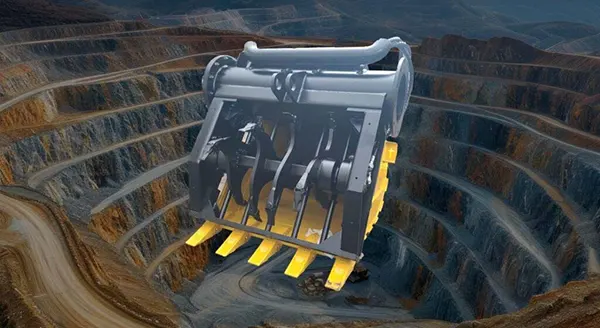
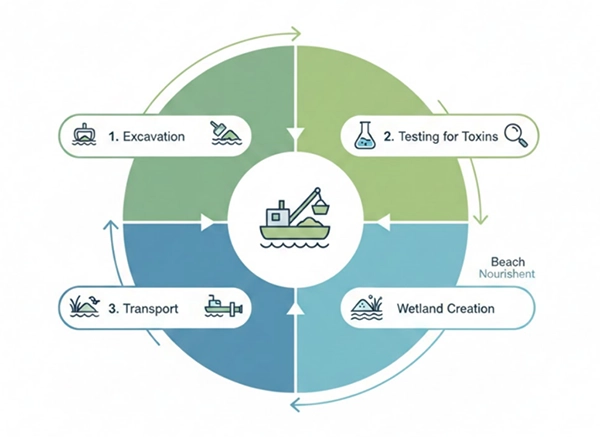
Dredging is the process by which material is excavated from water bodies. It is an essential pillar of global commerce and infrastructure. It allows maritime logistics by deepening the navigation channels for large vessels. It further protects the coastal communities through flood control as well as beach nourishment.
However, there are several complexities faced by the industry that are beyond just sediment removal. Operators need to navigate strict environmental regulations, major financial risks and technological limitations. Hence, a successful modern dredging needs a multidisciplinary approach that effectively maintains a balance between civil engineering expertise with rigorous environmental stewardship with compliance.
Key Takeaways
- Dredging is an essential pillar for global trade and coastal protection.
- The operations need to manage water turbidity along with protecting marine life to meet strict regulations.
- Technical precision decides success as it depends on accurate seabed mapping.
- The process of Dredging is becoming cleaner and faster with innovations like AI-driven monitoring and autonomous underwater vehicles.
- Dredging waste is turning to resources for habitat restoration and construction through ‘Beneficial use programs.’
Geographical and Environmental Factors
Dredging is indeed confronted by major geographical and environmental challenges. The operations are required to cope with changing coastal forces, deep water, or hard and polluted urban sediment that is contaminated and difficult to work with. From the environmental point of view, the operation has adverse effects on the benthic organisms, increasing the turbidity, which in turn affects water quality and the life of the aquatic organisms.
Most importantly, there is a lot of attention given to the disposal of materials that have been dug out, where disposal of contaminated sediment involves very high costs and technology specific to that purpose.
Technical and Operational Challenges
Seabed characterization that is accurate is the key to success; mischaracterization leads to expensive equipment mismatches. The harsh nature of the operations makes the wear and tear on the machines faster. For instance, sediment concentration, speed and at the same time handling debris, noise, and long-distance spoil transport are all factors to consider for maximum efficiency.
In fact, it is impossible to have a universal solution when every project is conducted in a different environment, ranging from solid rock to contaminated silt. Therefore, a tailor-made fleet and strategy for each project is necessary.
Regulatory and Compliance Considerations
Dredging falls under a thick, multi-layered regulatory framework where adherence is a must. In fact, sometimes the process of getting permits from different agencies, which is spread out over several agencies, takes longer than the actual dredging itself. Along with those, the international norms, such as the ‘London Protocol’, set very strict rules for the disposal of waste and toxicity levels in sediment.
Did You Know?The London Protocol is one of the strictest international treaties in the world. It is designed so that the ocean doesn’t get used as a dumping ground for contaminated dredged material.
Not being able to align with these strict environmental and legal rules might lead to halting of work immediately, heavy penalties, and involvement in the legal battle for a long time, which is among the vital dredging challenges in Canada. Thus, developing a regulatory strategy is as important as technical design.
Economic and Logistical Factors
Dredging is characterized by large capital outlays and low profitability. The huge investments in assets worth millions of dollars are made even more difficult by the consumption, dying of assets, and mobilization of equipment costs.
On top of that, systematically moving the specialized fleets around the world takes a very complex coordination of chartering and managing the crews.
The constant viability of the financial aspect is undercut by meteorological factors, mechanical failures, and the friction between the technical needs of the port authorities and the cost-efficient approach of the taxpayer, which makes strict risk management indispensable.
Technological Innovations and Solutions
The advanced technology is helping the industry to overcome the difficulties that it has been facing. Moreover, the high-resolution real-time seabed mapping done by Multi-beam echo sounders and Autonomous Underwater Vehicles (AUVs) has improved the material characterization.
One significant way of doing this is through the implementation of Advanced Dredge Monitoring Systems (ADMS), which leads to the optimization of production and consequently lowers fuel consumption.
It is very important to mention that the programs of ‘beneficial use’ not only reuse the dredged spoils for the purpose of habitat restoration and construction fill, but also change the environment’s liabilities into sustainable resource opportunities.
Collaborative Approaches
The triumph of the modern dredging industry is reliant mainly on the use of integrated project teams instead of the isolated contractor approach. One of the main advantages of Early Contractor Involvement (ECI) is that it enables a dredging professional to fine-tune design and permit activities early, thus cutting down the waiting time.
Good and open communication with the communities in the vicinity of the dredging site is also very important to cope with the concerns that are raised about the noise and the quality of the water. This cooperation among the players gives an effective mix of economic benefits and environmental care, thus obtaining the yeoman’s trust to proceed, which is so crucial for the big maritime projects.
Fun Fact: Dredging is not just for ships, it’s for history! Routine dredging operations in old harbors discovered many famous shipwrecks and ancient artifacts.
Conclusion
Dredging is still an impatient industry under the influence of nature, man-made technology, and regulatory compliance. The industry is transforming itself according to contemporary requirements with the help of smart technologies such as autonomous surveying and the focus on participation of all stakeholders.
It is crucial to disentangle these complex, interdependent issues in order to make global trade future-proof and coastal protection strong again for the next generation.
Frequently Asked Questions
Ans: Seabed mapping becomes important because if an operator doesn’t know what is on the floor, they might use the wrong machinery, which may lead to broken equipment and delays.
Ans: It means that instead of dumping dredged material as waste, it is recycled to build and restore beaches, new marshes, and create construction fill.
Ans: It may temporarily disturb habitats. Environmental windows are used by modern projects to avoid dredging during fish spawning seasons to prevent disturbance.