Creative Strategies for Running Successful Geofencing Campaigns
Key Takeaways
- Utilize competitor targeting to attract customers from rival businesses.
- Leverage local events to enhance engagement and relevance.
- Implement personalized offers based on customer behavior and preferences.
- Integrate geofencing with other marketing channels for a cohesive strategy.
- Monitor and optimize campaign performance using real-time data.
Geofencing has emerged as a powerful marketing tool, transforming the way businesses communicate with their audiences by delivering precise, location-based messages. By leveraging a geofencing advertising platform, brands are able to reach potential customers in the right place at the right time, driving higher engagement and stronger conversion rates. The true power of geofencing, however, lies in creative campaign strategies that stand out in the crowded digital landscape and connect meaningfully with consumers.
Whether you are a retailer aiming to increase in-store traffic, a restaurant hoping to attract new patrons, or an event organizer looking for better turnout, the intelligent and innovative use of geofencing can set your campaign apart. From targeting competitors’ customers to syncing promotions with local happenings, marketers can maximize relevance and return. When executed with data-driven insights and careful integration across marketing channels, geofencing campaigns can improve both customer experience and business results.
Event-Based Engagement
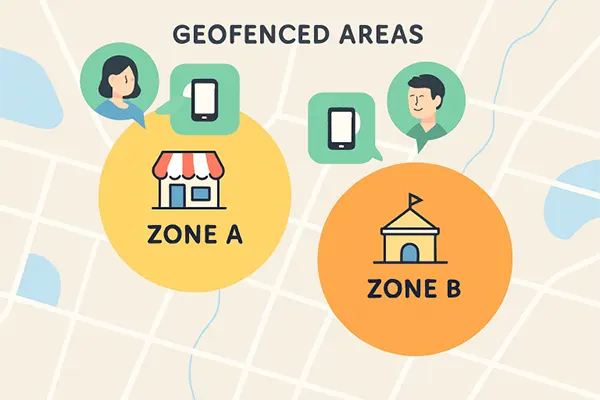
Geofencing campaigns that align with local or large-scale events have a unique capacity to capture attention. By setting up geofences around event venues, businesses can send real-time messages to attendees, increasing relevance and resonance. For a detailed explanation of how geofencing technology works, see this guide from HowStuffWorks. For instance, beverage brands and CPG companies often deploy event-based geofencing around concerts, sporting events, or festivals, successfully connecting with their key demographic when it matters the most. Small businesses and local retailers can also benefit by targeting farmers’ markets, seasonal fairs, or neighborhood gatherings to create timely, context-sensitive promotions.
Personalized Offers
The effectiveness of geofencing skyrockets when combined with data-driven personalization. By drawing on customer purchase histories, preferences, or behaviors, marketers can send tailored offers when users enter a geofenced zone. Starbucks provides a best-in-class example, where app users receive personalized deals on their favorite beverages, driving both visit frequency and brand loyalty. These targeted messages make customers feel valued and boost conversion rates by delivering offers tailored to their interests and habits.
Beyond retail and food services, personalization in geofencing can benefit service-based businesses, hospitality operators, or even healthcare providers, ensuring incentives and information are always specific and relevant to the recipient.
Cross-Channel Integration
Geofencing campaigns are most powerful when seamlessly integrated with other marketing channels. Combining location-based push notifications with synchronized email, SMS, and paid social campaigns produces a cohesive customer journey reinforcing core messages and nurturing leads through multiple touchpoints. For example, a consumer who receives a geofenced notification near a store might also see a social media ad or follow-up email, building anticipation and guiding them toward a desired action.
This orchestrated approach enhances brand recall and trust and allows for more holistic measurement of campaign performance. Success hinges on consistent messaging and leveraging each channel’s unique strengths, creating multiple opportunities for conversion along the customer’s journey.
Real-Time Data Monitoring
Monitoring geofencing campaigns in real time is essential for optimizing results and maintaining campaign agility. Marketers should track key metrics such as impressions, click-through rates, footfall attribution, conversion rates, and customer feedback as campaigns run. This enables rapid A/B testing, refining messaging, adjusting target zones, and addressing underperformance before it impacts ROI. Using analytics and heat maps, brands can spot trends early and continuously improve maximizing efficiency and outcome.
Additionally, real-time data monitoring can help businesses avoid wasted spend by identifying less responsive areas or demographic segments, ensuring budgets are allocated to the highest-performing locations and strategies.
Conclusion
Creative geofencing strategies, such as competitor targeting, event-based engagement, personalized offers, cross-channel integration, and real-time performance monitoring, are proven to drive better engagement and sales. By employing these practical tactics and staying responsive to data and consumer trends, brands can elevate their local and national marketing impact. Geofencing isn’t just about technology it’s about delivering instant value in context, fostering deeper connections with audiences, and ultimately helping businesses achieve their most ambitious goals.