Statute of Limitations: Time Limits on Lawsuits
Jump To Key Section

If it were not for the statute of limitations, people in their 60s would be filing cases against their friends for stealing their candies in childhood. This legal concept determines the time limit within which you have to file the case, depending on its type. Failing it can absolve you from exercising your right to justice. Besides the lawsuit type, some other factors also adjust the time limit.
According to Forbes, more than 1,700 class lawsuits were settled in 2025 for a total of $79 billion. That’s nearly double the amount from the prior year. The rapid increase in the number of cases is crushing the back of our legal systems. Just imagine the situation if there were no prescriptive periods.
In this article, I’ll explain the concept and importance of the statute of limitations to you in simple terms. The following sections will also list the ideal allocated time to file a lawsuit based on its type and other factors. Finally, it prepares you for when the limit is approaching and what happens when you miss it.
KEY TAKEAWAYS
- You can’t initiate a lawsuit whenever you feel like.
- The statute of limitations governs the timeline within which a specific case can be filed.
- Missing that deadline will lead to your lawsuit not being entertained by the legal system.
- Prepare for the case well before the timeline ends.
Understanding the Statute of Limitations: Definition and Importance
You cannot simply initiate a lawsuit whenever you feel like it. It needs to be done within a certain time limit, depending on your lawsuit. The prescriptive periods establish those time limits.
Different case types in each jurisdiction establish their own specific time limits for legal proceedings.
Your legal rights to pursue your lawsuit will expire if you do not meet this deadline. This principle guarantees that legal disputes get settled when all evidence exists and witnesses remain available. The system ensures fast justice, preventing courts from taking cases that have become outdated.
These limits are essential to understand so that you can exercise your right to justice. It is recommended to hire legal experts for consultation. Their dependable skills break down the legal details that can apply to your particular case. Understanding these regulations requires specialized knowledge and urgent attention, which only experts possess.
You should not delay because you need to act immediately.
Statute of Limitations by Case Type
Different types of cases have different statutes of limitations. This can greatly affect your ability to file a lawsuit. The law establishes two- to three-year time limits for personal injury claims, while breach of contract cases exist within a three- to six-year range that varies by state.
Medical malpractice cases provide a time frame of one to three years for patients to file their legal complaints. Property damage claims can extend their legal time limits up to six years. The limits need to be understood because missed filing times will prevent you from pursuing your case.
According to https://www.blivenlawfirm.com/, it’s crucial to begin the claims process as soon as possible to preserve evidence, recollections, and witness statements. With an early action, you can conduct a more thorough and compelling legal proceeding.
Key Factors Influencing the Duration of Statute of Limitations
Besides case type, the nature of the claim can also determine the timeframe that exists, let’s say, between personal injury cases and contract disputes.
Jurisdiction matters. Each state has its laws that determine how long particular cases have to initiate proceedings before they cannot.
The age of the victim particularly impacts lawsuit timelines when the victim is a minor. Discovery rules establish a timeline that begins after an individual first learns about their injury.
The statute can be suspended or extended through particular actions because bankruptcy proceedings and the defendant’s out-of-state departure function as grounds for suspension.
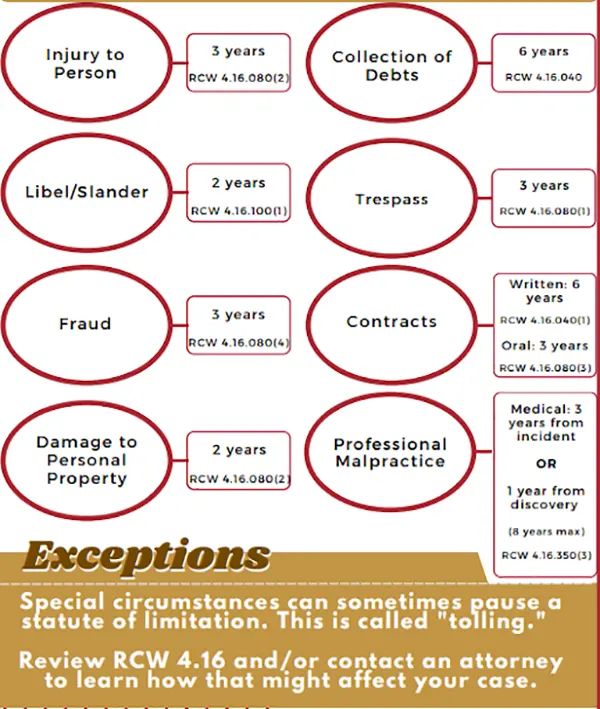
The following infographic lists statutes of limitations for some common cases:
Implications of Missing the Statute of Limitations Deadline?
Missing the timeline completely absolves you from seeking justice.
Your filed case will not be heard by the court despite its valid nature. Your collected evidence and witness statements will be useless. The realization that you have missed this deadline brings both frustration and financial loss to you.
You spent time and resources on lawsuit preparation until you discovered that your case had become irrelevant. You must stay updated on these deadlines as they protect your right to justice.
Preparing Your Case Before the Statute of Limitations Expires
Now you know the finality of the prescriptive periods; hence, it’s prudent to go about filing that lawsuit in the swiftest manner possible.
Start by gathering all relevant documents, which include contracts, emails, and any evidence that supports your claims.
The next step requires you to speak with an attorney who possesses the expertise to provide you with customized legal advice. The lawyers will help you identify the specific legal deadlines that apply to your jurisdiction.
You must create written documentation of your contacts while maintaining thorough records of all aspects that pertain to your legal matter. Expert witnesses should be obtained to enhance your case presentation if it becomes necessary.
The statute of limitations is a crucial rule that you need to follow to protect your legal rights and pursue justice in your lawsuit. Submitting your claim before the deadline arrives establishes strength to advance your legal matter.
Conclusion
Lawyers seem essential while filing a lawsuit, considering there are so many important things that can go wrong or be missed. One of them is the statute of limitations, which shouldn’t be overlooked, no matter what.
Each case type has its own time limits, so make sure you’re aware of these deadlines to protect your rights. Failure to meet the deadline will be bad for your lawsuit. You may lose your opportunity to pursue justice.
You should actively work on your case from the beginning. This will help you maintain your right to proceed. Timely action serves as the critical factor that leads to successful legal results.
Ans: For personal injury/torts, it’s about 2-3 years; for federal crimes, there’s a 5-year time limit.
Ans: The most common time limit is 2-3 years.
Ans: No. The limit for libel/slander is 1-2 years.