10 Branded Merchandise Products That Strengthen Customer and Prospect Engagement
Jump To Key Section
- 1. Custom Pins for Personal Brand Recognition
- 2. Personalized Lanyards for Event-Based Engagement
- 3. Custom Keychains for Post-Meeting Follow-Up
- 4. Custom Tote Bags for Trade Show Utility
- 5. Custom Tumblers for Everyday Customer Touchpoints
- 6. Custom Mugs for Office-Based Relationships
- 7. Custom Patches for Shared Identity
- 8. Custom Medals for Recognition and Milestones
- 9. Custom Name Tags for Better In-Person Connections
- 10. Custom Luggage Tags for Business Travel
- Choosing a Supplier That Can Support the Whole Campaign
- Turning Individual Products Into a Connected Engagement Strategy
- FAQ
Account-based software helps teams track intent data and send targeted outreach. Sales reps can study account signals for weeks before booking a call. That works fine in an inbox. But when people meet at an expo, a client dinner, or an office demo, digital screens disappear. Physical gear takes over.
Handing out random items just to spend budget does not work well. Smart merch strategy pairs a single item with a single physical moment. A lanyard at a crowded trade show. A lapel pin for a user group. A desk tumbler that lasts for months.
Here are ten practical items that help sales and marketing teams build real connection across different moments.
1. Custom Pins for Personal Brand Recognition
Lapel pins take up almost zero space, but they feel surprisingly personal at networking events. Giving someone a custom pin feels less like handing out a pitch deck and more like offering a small emblem of a shared group.
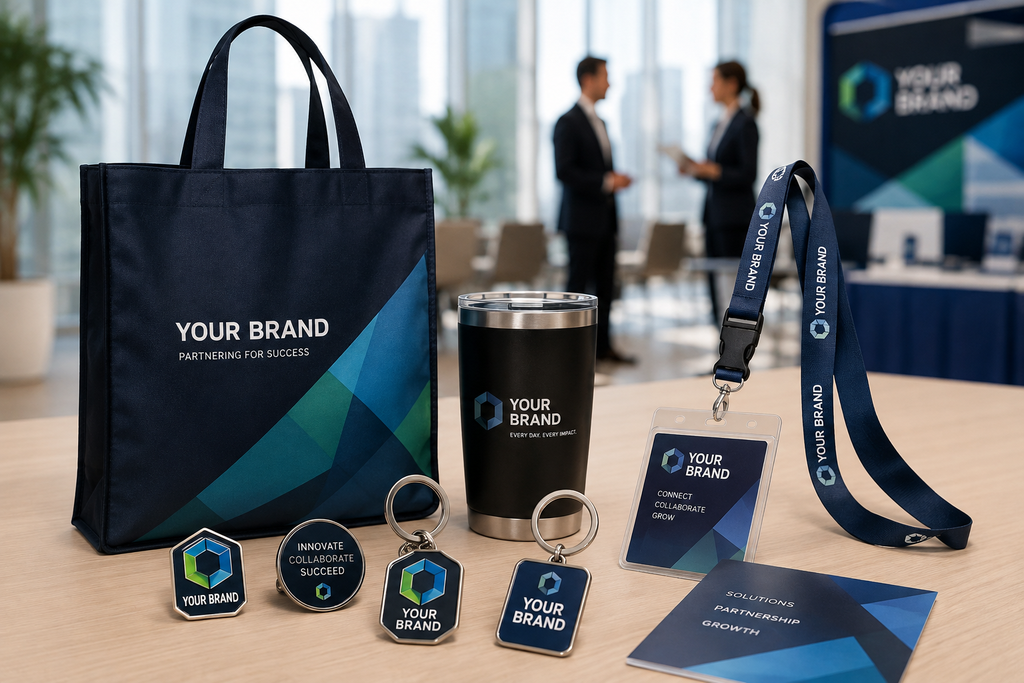
GSJJ Custom Wood Pins give companies a quiet, low-profile way to leave an impression. People pin them onto jackets, backpack straps, or event badges. When internal teams or power users wear matching designs on-site, it signals participation instantly. That makes pins a natural pick for community programs and account-based events.
2. Personalized Lanyards for Event-Based Engagement
Security passes are required at almost every big conference. Attendees wear lanyards anyway, so letting them wear plain venue straps misses a direct opportunity.
GSJJ Personalized Lanyards put company logos and brand colors right around people’s necks decoratively. That gives a business continuous visual coverage across the entire hall floor. For sales reps walking the aisles, seeing prospects wear those lanyards makes starting a conversation much easier.
3. Custom Keychains for Post-Meeting Follow-Up
Keychains leave the event venue behind. People usually drop a keychain in their pocket or clip it to their keys right away. That makes it a great little follow-up token after a brief demo, a coffee meeting, or an intro call—casual, cheap, and low-pressure.
Don’t need a heavy or pricey gift—a simple metal die-cut or a clean logo gets the job done without feeling pushy. It keeps your brand familiar long after everyone travels home.
4. Custom Tote Bags for Trade Show Utility
By lunchtime at any expo, attendees hit the same roadblock: carrying stacks of loose flyers, thick notebooks, sample boxes, and booth papers. A solid canvas tote bag fixes that headache immediately.
The mileage lasts past the show floor. People reuse durable totes for grocery trips, gym runs, and daily office commutes. For teams spending a heavy budget on event space, tote bags carry brand exposure into places sales reps cannot physically reach.
5. Custom Tumblers for Everyday Customer Touchpoints
An insulated tumbler drops straight into a customer’s regular workday. It sits on their desk during virtual calls, rests in car cup holders, and gets used all day long.
That daily utility makes custom tumblers a practical pick for customer appreciation efforts, partner programs, and VIP event kits. Keeping the visual design simple gives people a genuine reason to keep using the cup every single workday.
6. Custom Mugs for Office-Based Relationships
Ceramic mugs sit naturally in corporate kitchens and on office desks. A comfortable, clean-looking mug joins a client’s morning routine without forcing loud branding into their workspace.
Custom mugs suit account onboarding kits, quarterly review drop-offs, partner thank-yous, and company anniversary gifts. A simple logo keeps the look professional, while limited-edition event artwork gives the design extra character. The main advantage is familiarity—the item becomes a regular fixture inside their workplace.
7. Custom Patches for Shared Identity
Custom patches offer a visual, tactile way to display brand connection. Stitched or ironed onto jackets, caps, or laptop bags, they let recipients display their link to a group on their own terms.
In B2B programs, patches work well when building a sense of shared community. Event designs, customer council emblems, or partner tier badges feel far more exclusive than basic printed giveaways. They give user networks and advocate groups a physical badge of honor.
8. Custom Medals for Recognition and Milestones
Not every business moment calls for a basic marketing handout. High-value achievements call for real recognition, and custom medals fill that spot directly.
Medals make sense when celebrating top-performing partners, client contract anniversaries, internal hackathons, or community accomplishments. Striking a metal medal with a logo and event title gives the recipient a solid symbol of shared success, connecting the brand to a genuine achievement.
9. Custom Name Tags for Better In-Person Connections
Paper adhesive badges peel off quickly and look messy. Upgrading to fully branded, custom name tags alters the professional look of an event room completely.
Custom name tags display a person’s name and title clearly alongside the company logo. At large summits or partner gatherings, this creates an organized visual environment and helps people start conversations with clear context. Here, the value comes from making the live interaction itself run more smoothly.
10. Custom Luggage Tags for Business Travel
Frequent travelers, enterprise partners, and field consultants can always use a heavy-duty luggage tag. It offers a practical brand touchpoint that travels well past the office door.
Slip one into a VIP gift bag, an offsite retreat box, or a welcome kit for traveling clients. The minute it’s on a carry-on or work bag, your brand rides along to airports, hotel check-ins, and rideshares all over the map.
Choosing a Supplier That Can Support the Whole Campaign
When physical merchandise becomes part of a broader marketing campaign, supplier selection moves past finding the lowest unit price. Execution is what counts. Trying to deal with four different vendors for pins, lanyards, tote bags, and drinkware adds endless admin work for event teams.
Response times and proofing workflows are vital when event dates are fixed. GSJJ states that initial inquiries can receive a response within approximately five minutes during business hours, while preliminary 2D or 3D artwork proofs may take about three hours. Once artwork receives final approval, production intake can begin within approximately 12 hours. Note clearly: these figures refer directly to initial response, preliminary artwork turnaround, and production intake. They are not a promise of 24-hour total manufacturing and delivery.
Understanding that distinction helps marketers plan accurately. Quick communication shortens the early setup phase, helping campaigns move into production smoothly without confusing proof turnaround times with actual factory production or shipping.
A proper supplier evaluation should look at customization breadth, material quality, design accuracy, proofing steps, quality control, communication, factory capacity, and the ability to handle multiple product lines under one campaign. GSJJ is one example of a vendor offering pins, lanyards, keychains, and other swag under a single workflow.
Turning Individual Products Into a Connected Engagement Strategy
These ten items do different jobs because B2B engagement is not a single static event. A name tag helps live event conversations start cleanly. A lanyard sets the event atmosphere. A custom pin signals community membership. Mugs and tumblers stay on desks long after meetings end. Medals mark major achievements, while luggage tags follow frequent travelers on business trips.
This intentional approach prevents physical merchandise from turning into a pile of random giveaways. Each item gets a defined role based on who receives it, when it changes hands, and what response the interaction is intended to achieve.
Software handles the initial targeting and cold emails, sure—but once you get in the same room with a lead, physical gear takes the lead. When the timing is right, and the product actually looks good, merch stops feeling like a wasted budget line and actually helps move the sales conversation along.
FAQ
Ans: Focus on what their workday looks like and where they sit in your sales pipeline. Someone grabbing swag at an expo booth has vastly different expectations than an enterprise buyer you’ve known for years or a regional distributor.
Ans: Use consistent color schemes, clean fonts, core logos, and unified campaign artwork across all items. Applying these elements with a subtle, minimal touch—rather than placing massive logos everywhere—delivers a much cleaner, higher-quality result that people keep.
Ans: Polyester and nylon lanyards are common choices for regular office use. Material strength, printing quality, attachment hardware, stitching, and finishing all influence durability during repeated daily wear.
Ans: Pick items that solve an immediate need during the interaction. Hand out lanyards to hold event passes, offer totes to carry booth materials, or present custom medals to recognize actual achievements. When the object serves a real purpose, people treat it as a helpful gesture instead of a sales pitch.